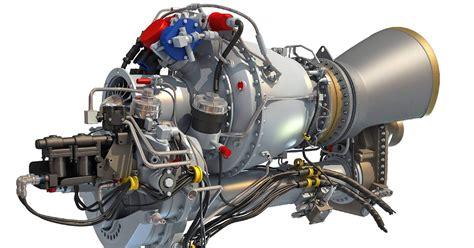
A turboshaft engine is a special type of jet engine designed to generate shaft power for machinery instead of just producing thrust. These engines are commonly found in applications like helicopters and auxiliary power units where a lightweight yet powerful engine is essential. The basic operation of a turboshaft engine follows the same principles as a turbojet. It includes key components like a compressor, combustor, and turbine within its gas generator.
The main distinction between a turboshaft and a turbojet lies in the addition of a power section, which consists of turbines and an output shaft. Typically, the power turbine is not mechanically linked to the gas generator. This setup, known as a ‘free power turbine,’ allows the speed of the power turbine to be optimized for the machinery it powers, eliminating the need for an extra reduction gearbox within the engine. The power turbine efficiently extracts nearly all the energy from the exhaust stream, transmitting it through the output shaft to the connected machinery.
Turboshaft engines share similarities with turboprop engines, and many models are available in both types. The key difference is that turboprop engines must be built to handle the stresses of an attached propeller. In contrast, turboshaft engines do not require the same level of robustness since they typically drive a transmission supported by the vehicle itself, rather than being solely dependent on the engine.