Definition
VHF Direction Finding (VDF) is a method of radio direction finding. It involves using radio waves to determine the direction of a station or object. This concept was introduced by the International Telecommunication Union (ITU) and later adopted by ICAO. In civil aviation, VHF is the primary communication means, making VDF a well-known term among aviation professionals.
Description
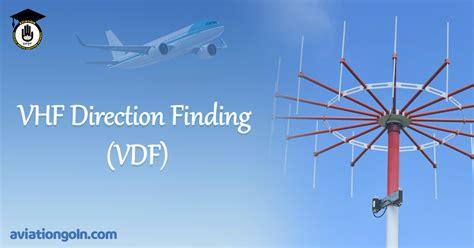
A VHF direction finder is a ground-based radio aid that includes a directional antenna system and a VHF radio receiver. The receiver is tuned to the operating frequency of an air traffic services unit. When it receives a transmission from an aircraft, the VDF identifies the direction from which that transmission originated. VDF stations can operate independently or in an array. Individually, they only provide the direction of the transmitting station. When multiple VDFs work together, they can calculate the position by determining where the bearings intersect. While VDF primarily uses VHF, other systems like UHF Direction Finders (UDF) operate on UHF frequencies used by state aircraft.
Principle of Operation
The receiving antenna of a VDF has three or more elements mounted around a pole. Each element picks up the same signal at slightly different times, allowing the system to calculate the direction of the signal’s source. For instance, if element 1 receives the signal first, followed by element 2 and then element 3, we can deduce the aircraft’s location based on where the signal was received first. Real systems consider precise phase differences, enhancing their ability to determine the exact bearing of the signal. ICAO classifies the accuracy of these systems: Class A (within 2 degrees), Class B (within 5 degrees), Class C (within 10 degrees), and Class D (worse than Class C).
Applications
VDF enhances air traffic controllers’ situational awareness. For decades, it has provided insights into aircraft positions. Even as a standalone tool, it helps determine where an aircraft is located. When integrated with surveillance systems, it can highlight which target made the last transmission. In the early radar days, a light would flash from the center of the display toward the transmitting aircraft. Today, modern systems use VDF arrays to show approximate locations on the display, such as drawing circles around calculated positions. This capability is especially useful in busy airspaces, helping controllers focus on smaller areas rather than scanning the entire screen.
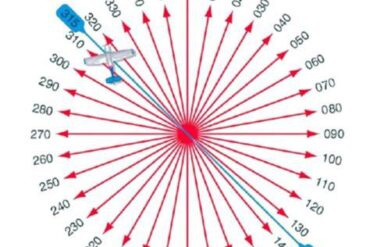
Additionally, VDF assists with navigation. Pilots can request bearing information from ground stations, receiving QDM (magnetic bearing to) or QDR (magnetic bearing from) data to help them determine their position and direction. For homing, pilots may request a series of QDMs, increasing the frequency of requests as they approach the VDF station. VDF approaches are non-precision instrument approaches, with aerodrome information published in national AIPs, such as Cranfield (EGTC).
Lastly, VDF equipment can help law enforcement locate unauthorized ATC frequency transmissions.
Radiotelephony Procedures
Currently, there is no standard ICAO phraseology for VDF procedures. However, ICAO Annex 10 Volume II outlines general communication procedures when direction-finding equipment is utilized. According to the UK CAA CAP 413 Radiotelephony Manual, pilots may need to transmit specific-length messages for accurate bearing or position determination. When providing this information, the aeronautical station must specify the accuracy class. Position data is given in coordinates, with degrees and minutes followed by the appropriate directional terms (NORTH/EAST/SOUTH/WEST). Pilots must read back this information for confirmation.
Example:
Pilot: TOWER, DVK1208, REQUEST QDM
Controller: DVK1208, QDM 110 DEGREES, CLASS B
Pilot: QDM 110 DEGREES, CLASS B, DVK1208