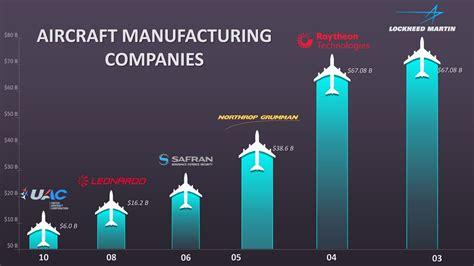
The global airplane manufacturing industry stands as one of the most technically sophisticated and economically significant sectors in the modern economy, driven by national defense needs, commercial aviation demand, and cutting-edge technological innovation. With a market value surpassing $424 billion in 2024 and projections estimating it will soar past half a trillion dollars by 2032, this high-stakes industry remains dominated by two powerful giants: Boeing and Airbus. Despite challenges and competition from regional and emerging players, these two companies shape not only the sky above but also the strategic, economic, and political landscapes below.
The Duopoly That Shapes the Skies: Boeing and Airbus
Together, Boeing, headquartered in Chicago, and Airbus, based in Leiden, the Netherlands, have created a duopoly that commands nearly complete control over the large commercial aircraft segment. These companies have pioneered the development of advanced, long-range, fuel-efficient aircraft that have become essential to global commerce and mobility.
Boeing’s storied legacy includes the iconic 7-series—from the workhorse 737 to the long-haul 787 Dreamliner. Airbus counters with its A-series, led by the A320neo family, the A330, and the revolutionary double-deck A380, which was once the world’s largest passenger aircraft. Airbus currently holds the edge in deliveries, a trend that intensified after Boeing faced grounding issues and production halts tied to its 737-MAX aircraft.
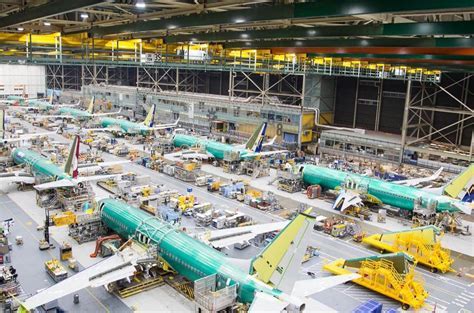
While the competition between these two is deeply rooted in innovation and engineering, it is also deeply entangled with geopolitics. Airbus is a product of European collaboration and subsidies, while Boeing draws significant strength from U.S. defense contracts and political backing. This rivalry has resulted in years of litigation at the World Trade Organization, with each side accusing the other of unfair state support.
Boeing: A Legacy Under Scrutiny
Founded in 1916, Boeing once set the gold standard in commercial aviation. The 747 redefined international air travel, and the 777 and 787 helped airlines unlock new long-haul route possibilities with improved fuel efficiency. However, Boeing’s dominance has been recently threatened by a series of crises.
Most notably, the 737-MAX disasters—two fatal crashes traced back to software flaws—led to the grounding of the aircraft worldwide. Subsequent issues with detaching aircraft doors, quality lapses in the 787 Dreamliner, and persistent production delays have severely eroded customer confidence. While Boeing remains an indispensable player in commercial and military aviation, these challenges have exposed deep structural and cultural vulnerabilities.
Airbus: Precision, Efficiency, and Momentum
Airbus, created in 1970 as a joint European venture, has steadily grown into the world’s largest commercial aircraft manufacturer. Its aircraft families, especially the A320neo, have become the cornerstone of short- to medium-haul fleets for many airlines, particularly low-cost carriers. Airbus’s willingness to innovate—evident in its early adoption of fly-by-wire systems and its commitment to sustainable aviation—has helped the brand maintain a modern, forward-thinking reputation.
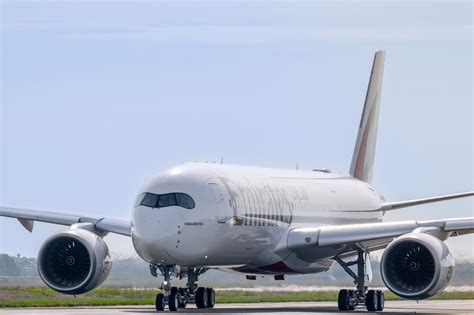
The A350 program is Airbus’s answer to Boeing’s 787, delivering range, efficiency, and passenger comfort on long-haul routes. Meanwhile, the now-discontinued A380 remains a technological marvel, albeit a commercial challenge in an era increasingly favoring twin-engine efficiency over four-engine jumbo capacity.
Rising Challengers in a High-Barrier Market
Though Boeing and Airbus dominate, the skies are slowly opening to new competitors—particularly in Asia, where governments see aviation as both an economic opportunity and a geopolitical imperative.
In China, the state-owned Commercial Aircraft Corporation of China (Comac) is developing the C919, a narrow-body aircraft aimed squarely at the 737 and A320 market. While certification delays and production issues have plagued its rollout, Comac has the full backing of Beijing’s industrial policy.
In Russia, the United Aircraft Corporation (UAC) is expanding programs such as the MC-21, also targeting the narrow-body segment. Meanwhile, Japan’s Mitsubishi Aircraft Corporation has worked on the SpaceJet program, formerly MRJ, though it faces repeated delays and questions about its commercial viability.
Regional Heavyweights: Embraer and Bombardier
In the regional aircraft space, Embraer and Bombardier have carved out strong reputations.
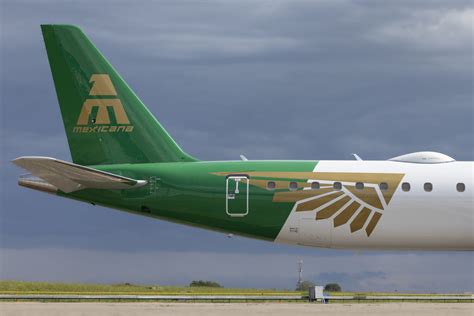
Embraer, based in Brazil, is a dominant force in the under-150-seat market with its E-Jet and newer E2 series. These jets are prized for their cost-efficiency and operational flexibility, especially on short-haul routes where large narrow-bodies are uneconomical.
Bombardier, headquartered in Canada, exited the commercial jet business in 2020, selling its CSeries (now the Airbus A220) to Airbus. The company has since focused exclusively on business jets, such as the Challenger and Global series, which are prominent in the private aviation sector.
Military Aviation Powerhouses: Lockheed Martin, Boeing, and Airbus
The military aircraft market is another lucrative domain. Boeing and Airbus maintain strong defense portfolios, but Lockheed Martin stands out as the dominant player in military aviation.
Known for aircraft such as the F-16 Fighting Falcon and the F-35 Lightning II, Lockheed Martin commands billions in U.S. and allied defense contracts. Boeing, while more diversified across commercial and defense segments, still generates nearly 40% of its revenue from government defense work. Airbus, in contrast, sees just under 20% of its revenues from defense, though it is a significant supplier of transport aircraft and helicopters to NATO-aligned nations.
The Backbone: Aerospace Suppliers and Component Giants
No airplane manufacturer operates in isolation. A network of aerospace suppliers provides critical systems—from engines to avionics and from composite materials to landing gear.
Leading suppliers include:
- Raytheon Technologies (RTX): Through its subsidiary Pratt & Whitney, it provides engines for both commercial and military aircraft.
- General Electric (GE): Renowned for producing powerful jet engines, especially in partnership with Safran through the CFM International joint venture.
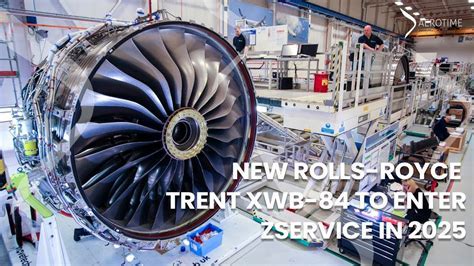
- Rolls-Royce: A leader in wide-body jet engines, supplying models like the Trent 1000, which powers the Boeing 787.
- Honeywell: Specializes in avionics, auxiliary power units (APUs), and flight safety systems.
These suppliers are integral not only in new aircraft production but also in maintenance, repair, and overhaul (MRO) operations—another multi-billion-dollar global industry.
Certification and Safety: The Gatekeepers of the Skies
Before an aircraft can enter service, it must pass a rigorous certification process enforced by aviation regulatory agencies such as the Federal Aviation Administration (FAA) in the U.S. and the European Union Aviation Safety Agency (EASA) in Europe.
Certification involves an exhaustive evaluation of every component and operational feature—from airframe integrity and engine performance to electronic systems and emergency protocols. The process can take years and involve thousands of flight hours and simulations. It also includes type certification, production certification, and airworthiness directives, all essential to ensuring the safety of global air travel.
The Impact of COVID-19: A Reset for the Industry
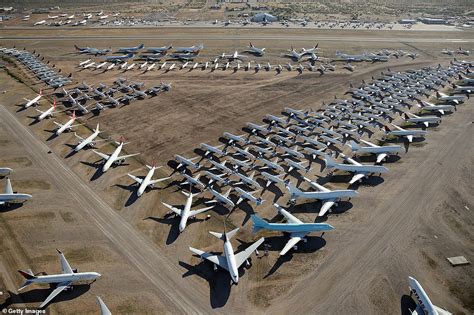
The COVID-19 pandemic delivered a seismic shock to aircraft manufacturers. As international travel collapsed in 2020, airlines canceled or deferred orders, slashing demand for new aircraft virtually overnight. Boeing and Airbus were forced to cut production rates, furlough workers, and reevaluate long-term growth projections.
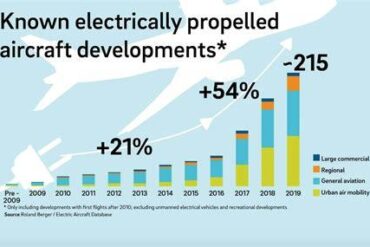
The rebound has been uneven. Domestic travel recovered faster, boosting narrow-body jet demand. International and business travel has lagged, delaying the recovery of wide-body orders. In response, manufacturers have diversified into cargo aircraft production, digital manufacturing techniques, and sustainability initiatives, including research into hydrogen propulsion and hybrid-electric aircraft.
Conclusion: The Future of Flight Is Competitive, Strategic, and Complex
The airplane manufacturing industry remains an arena of global competition, technological advancement, and strategic influence. With Boeing and Airbus setting the pace, and a new generation of manufacturers rising in Asia, the next decade will see an evolving balance of power.
Suppliers and governments play a vital role in shaping outcomes. As the world focuses on net-zero emissions and next-gen aircraft technologies, manufacturers must adapt quickly or risk obsolescence. Certification bodies will maintain their critical role as arbiters of safety. And airlines will increasingly demand flexibility, sustainability, and digital integration in their fleet investments.
The skies are not just a domain of travel—they are a reflection of industrial capability, national ambition, and human ingenuity. In this high-altitude theater, the winners will be those who can combine engineering excellence, strategic foresight, and relentless innovation.