The airline industry operates in a world of complex logistics, competitive pricing, and exclusive privileges, many of which remain hidden from public view. One such advantage is the Zonal Employee Discount (ZED) fare, a discreet yet invaluable benefit designed for airline employees and their eligible companions. In this article, we explore the depths of ZED fares: what they are, how they work, who can use them, and why they remain a coveted tool for globe-trotting industry insiders.
What Is a ZED Fare and Who Can Use It?
A ZED fare is a deeply discounted, space-available ticket that allows airline employees to travel on other carriers that have interline agreements. This system, which originated in the 1990s, enables staff from one airline to travel on another’s network at mutually agreed-upon prices. The key criteria for eligibility include:
- The traveler must be a current employee of a ZED-participating airline.
- Eligibility often extends to eligible family members and retirees.
- Access usually begins after six months of employment.
Each airline decides which partners they form ZED agreements with and what classes of service are available under those agreements.
ZED Fare Tiers: Low, Medium, and High Explained
ZED fares are not fixed prices but rather tiered based on flight distance and fare level—typically categorized as ZL (Low), ZM (Medium), and ZH (High). These classifications are determined by bilateral agreements and can differ between airlines. The longer the flight or the higher the fare tier, the more the traveler pays.
- ZL (ZED Low): Best suited for short-haul flights, offering the lowest cost.
- ZM (ZED Medium): A balanced option used on mid-range routes.
- ZH (ZED High): Used for long-haul international flights, and often significantly more expensive.
Some airlines also offer premium fare types such as VAL (Value) and SF (Service Fee) fares, often reserved for business or first-class availability, depending on interline agreements.
The Role of myIDTravel in Booking ZED Tickets
Most ZED bookings are facilitated through the myIDTravel platform, a portal designed to simplify interline travel for airline staff. Within this system, employees can:
- Search ZED partner airlines
- View eligible classes (economy, business, etc.)
- Check taxes and fees
- Book and pay for travel coupons
Fees from myIDTravel are minimal and are typically charged per flight segment or coupon issued.
Understanding Taxes and Additional Fees
While ZED fares themselves are low, travelers must still pay departure taxes, customs fees, and airport surcharges. These fees can sometimes exceed the fare itself—particularly on shorter routes. For example:
- ORD to CDG (Paris): Expect around $80 in return taxes.
- ORD to SYD (Sydney): Typically $0 outbound, but about $80 on return.
- DUB (Dublin): Often as low as $26 roundtrip.
- UK departures are the most expensive, with APD (Air Passenger Duty) reaching $170 or more.
Access to Business Class: Myth or Reality?
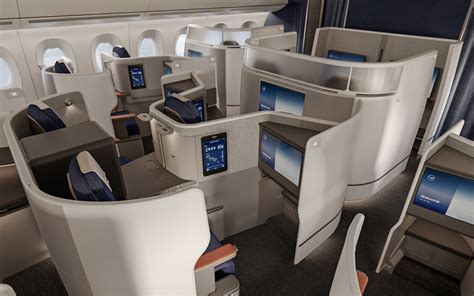
A common misconception is that ZED fares are limited to economy class. While this is true for many U.S.-based airlines, including American Airlines (AA), others—especially European carriers like British Airways, KLM, and Lufthansa—offer premium cabin ZED tickets.
If a business class ZED is available, it will be listed in the myIDTravel system under codes such as F (First), C (Business), or J (Premium Business). Pricing may be modestly higher, but the comfort and convenience of lie-flat seating often justify the cost.
ZED Fare Strategies for Smart Travel Planning
For employees based at smaller outstations or cities with limited direct flights, strategic planning is key. Since ZED tickets are space-available (standby), flexibility is vital. Experienced non-revenue travelers often:
- Monitor flight loads several days in advance.
- List for multiple airlines with ZED agreements.
- Use tools like StaffTraveler to view real-time load predictions.
- Prioritize departure from major hubs with multiple daily departures.
If your goal is Europe, consider that flights like RDU–LHR may appear promising but lack fallback options if denied boarding. Conversely, choosing JFK or LAX, where multiple OneWorld and SkyTeam partners operate, increases your odds.
Benefits of European ZED Carriers
European airlines often provide a smoother ZED experience due to more transparent policies and advanced check-in procedures. Many carriers including LOT, Finnair, Iberia, and SAS:
- Offer seat assignments up to 30 hours prior to departure.
- Allow online check-in and seat changes.
- Provide better cabin upgrade options with ZED business class fares.
The Cost-Benefit of Long-Haul ZED Flights
When used wisely, ZED fares offer unparalleled cost-efficiency for long-haul travel. A few real-world examples underline this point:
- LAX–SYD roundtrip: As a ZH economy fare, this may cost $378, compared to $80 on own airline with no interline fee.
- LHR–JTR (Santorini) on British Airways: A business ZED ticket can be £80 one-way, offering lie-flat comfort for a fraction of the market price.
- ATL–JNB (Johannesburg): A reported $150 ZED fare—excellent value considering the distance and duration.
These fares become even more appealing when flying to or from countries with low aviation taxes.
Airline-Specific Limitations and Variations
While many ZED benefits are shared, individual airline policies significantly affect access. For instance:
- American Airlines (AA) ZED agreements are coach-only.
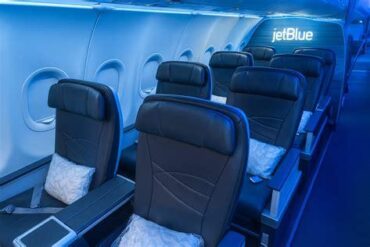
- Alaska Airlines (AS) and JetBlue (B6) may allow business class travel under certain conditions.
- Domestic flights on one’s own airline, like AA, are typically free or nearly free, unlike ZED interline routes.
Always consult the AA Travel Guide, ZED Agreement Summary, or the flyzed.info database before attempting to list or board.
Final Considerations: A Tool of Freedom and Flexibility
ZED fares offer a rare combination of affordability and global mobility to those within the airline industry. While the learning curve may seem steep—especially for newcomers—the payoff in flexibility, value, and access is substantial. It allows employees to transform layovers into leisure, to pivot plans with short notice, and to explore the world on a budget that defies traditional travel economics.
The key to mastering ZED travel lies in meticulous planning, load monitoring, and a willingness to adapt. With hundreds of interline agreements spanning all major alliances, ZED unlocks a form of travel that is as liberating as it is exclusive.