Federal aviation safety came under renewed scrutiny after two commercial aircraft were forced to abort their landings at Ronald Reagan Washington National Airport (DCA) due to the incursion of a U.S. Army Black Hawk helicopter into restricted airspace. The event, which occurred on Thursday, May 1, 2025, at approximately 2:30 p.m., raised immediate concerns among lawmakers and regulatory agencies, particularly in light of a recent fatal midair collision that had already heightened aviation tensions in the National Capital Region.
A Breach in Critical Airspace
According to the Federal Aviation Administration (FAA), the helicopter was en route to the Pentagon and reportedly overflew the Pentagon helipad as part of a directed maneuver by Pentagon air traffic control. During this maneuver, Delta Air Lines Flight 1671 and Republic Airways Flight 5825 were ordered to initiate go-arounds—an emergency procedure where aircraft abort their landing due to obstructions or dangers on the runway or in the flight path. Both aircraft eventually landed without incident, but the near-miss alarmed officials and reignited a debate about the safety of mixing military and civilian flight operations near the nation’s capital.
The FAA and National Transportation Safety Board (NTSB) have launched a joint investigation to determine how the helicopter came to operate within protected airspace just months after revised safety protocols were issued.
A Troubling Echo of January’s Disaster
This alarming incident comes in the shadow of the January 29, 2025 tragedy, when a collision between an American Airlines commercial jet and an Army Black Hawk helicopter killed 67 people. Following that catastrophe, the FAA implemented stringent restrictions on helicopter traffic around DCA. The rules aimed to separate nonessential military operations from commercial airspace near one of the most tightly controlled regions in the United States.
The U.S. Army, in a statement, maintained that the Black Hawk involved in Thursday’s event was flying in accordance with “approved flight procedures” and was under the direction of Pentagon air traffic control. However, this assurance did little to calm rising political anger or the perception that these procedures were either misinterpreted or misapplied in a high-risk area.
Swift Reactions From Federal Officials
The political backlash was immediate. Transportation Secretary Sean Duffy took to social media to express his frustration, stating, “Our helicopter restrictions around DCA are crystal clear.” He vowed to seek answers from the Department of Defense, demanding clarity on what led to the deviation from established protocol.
Senator Ted Cruz, the Republican chair of the Senate Commerce, Science, and Transportation Committee, was especially scathing in his response. “Just days after military flights resumed in the National Capital Region, the Army is once again putting the traveling public at risk,” Cruz posted. He credited the quick reflexes of air traffic controllers and pilots with preventing what could have become another large-scale aviation disaster.

Renewed Legislative Momentum
On Capitol Hill, Thursday’s airspace breach has galvanized bipartisan support for new legislation aimed at tightening oversight and reducing the risks of military-civilian airspace conflicts. Senator Maria Cantwell, the senior Democrat on the same Senate committee, stated that it is “far past time” for Defense Secretary Pete Hegseth and the FAA to “give our airspace the security and safety attention it deserves.” Her call for accountability underscores the growing impatience among lawmakers for decisive regulatory reforms.
Multiple sources indicate that congressional hearings may be scheduled in the coming weeks to assess whether the current interagency coordination mechanisms between the FAA and the military are sufficient—or fundamentally flawed.
Operational and Procedural Oversight Under Scrutiny
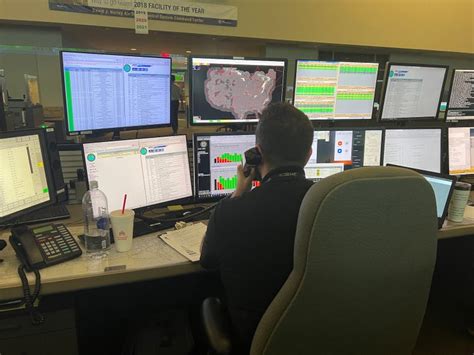
The core issue, aviation experts argue, lies in the fragmentation of authority over Washington D.C.’s airspace. While civilian aircraft are primarily managed by the FAA, military aircraft are often subject to separate procedures and control towers—such as those based at Joint Base Andrews and the Pentagon. This dual control structure can cause dangerous overlaps if not meticulously coordinated.
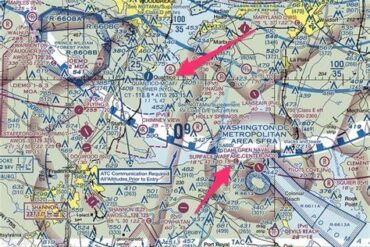
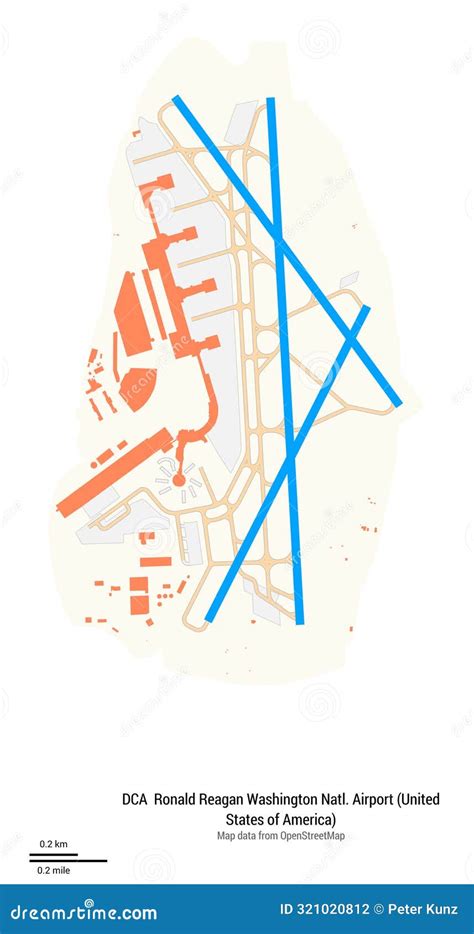
Experts say that airspace congestion near DCA is compounded by the airport’s unusual location. Situated just four miles from the White House and within sight of the Capitol, DCA is among the most restricted and carefully monitored civilian airports in the world. Military aircraft operating in the region are expected to follow standard separation minima and adhere to temporary flight restrictions (TFRs) issued by the FAA in response to national security or safety concerns.
In this latest case, the details around coordination failures—whether due to miscommunication, procedural lapse, or human error—remain at the heart of the ongoing FAA and NTSB investigations.
Echoes of a System Under Strain
The incident adds to a series of recent near-miss events that have shaken public confidence in U.S. air travel. Though go-arounds are a standard aviation procedure, the proximity of a military helicopter to two descending commercial jets in tightly controlled airspace is anything but routine.
Public and political memory remains fresh with the horror of January’s midair collision. That tragedy occurred when a Black Hawk helicopter failed to clear the designated flight path of an American Airlines Airbus A321, leading to an explosive midair collision that stunned the nation and forced emergency re-evaluation of military operations in civilian airspace.
The Path Forward for Aviation Safety
Both the FAA and the Department of Defense now face growing pressure to install real-time collaborative decision-making protocols, enhance digital flight tracking integration, and expand automated conflict detection systems that can prevent such incursions.
Industry insiders suggest that current safety systems lack sufficient interoperability between civilian and military air traffic management platforms. A shared platform that communicates flight paths, no-fly zones, and restricted altitudes in real time may be critical to preventing further errors.
In the wake of Thursday’s incident, aviation watchdogs are calling for a mandatory buffer zone that would physically separate inbound commercial aircraft from any military flight paths near DCA.
A Pivotal Moment for National Airspace Reform
As investigations continue, the latest close call represents more than a technical violation—it reveals deep structural cracks in how American airspace is managed near high-stakes regions. With key lawmakers, regulatory bodies, and aviation experts calling for accountability, the question now becomes whether bureaucratic inertia will yield to meaningful change.
Thursday’s near-miss at Washington National Airport is not just a singular episode of operational failure. It is the symptom of an aviation system increasingly under stress and in need of urgent modernization. In a region where every inch of airspace is strategic, even minor deviations can carry the weight of national consequence.