Modern military aviation is filled with breathtaking displays of power, precision, and aerodynamic mastery. While aerial stunts have existed since the earliest days of flight, today’s high-performance fighter jets have elevated aerial maneuvering into an art form that combines cutting-edge engineering with extraordinary pilot skill. From tightly coordinated formation flights to gravity-defying post-stall maneuvers, these demonstrations reveal just how capable modern combat aircraft have become.
The Evolution of Extreme Jet Maneuvering
Aerial acrobatics did not begin with jet aircraft. Early aviators were already experimenting with daring loops, rolls, and other unconventional flight attitudes more than a century ago. However, the arrival of jet propulsion transformed what was possible in the sky. Greater thrust, higher speeds, advanced flight controls, and revolutionary aerodynamic designs opened the door to maneuvers that previous generations of pilots could only imagine.
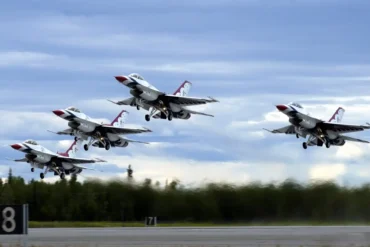
Military demonstration teams played a major role in popularizing these displays. Organizations such as the U.S. Navy’s Blue Angels and the U.S. Air Force’s Thunderbirds became ambassadors of aviation excellence, thrilling millions of spectators with precision flying that often appears impossible from the ground.
Today, fifth-generation fighters equipped with sophisticated flight-control systems and thrust-vectoring technology can perform aerial feats that seem to challenge the laws of physics themselves.
Blue Angels Diamond 360: Precision Measured in Inches
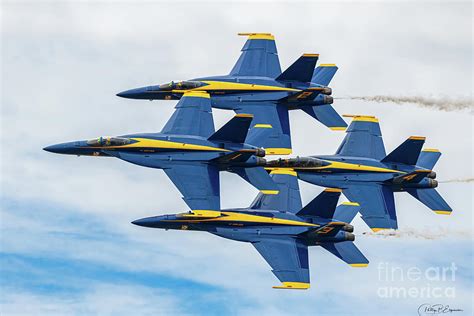
The Blue Angels have spent decades perfecting some of the most demanding formation flying ever attempted. Flying Boeing F/A-18 Super Hornets, the team routinely performs maneuvers that require absolute trust among pilots and flawless aircraft control.
One of their most iconic demonstrations is the Diamond 360. Four jets fly in a tight diamond-shaped formation while executing a sweeping turn around the audience. What makes this maneuver so astonishing is not the turn itself but the incredibly small separation between aircraft.
During the performance, the jets maintain distances of less than two feet from one another. At speeds exceeding 400 miles per hour, even the slightest deviation could have catastrophic consequences. Every movement of the control stick must be deliberate, smooth, and perfectly synchronized with the other pilots.
To spectators, the formation appears almost frozen in place, moving as a single machine rather than four separate aircraft. It is a remarkable demonstration of discipline, concentration, and years of training.
The Double Farvel: Flying Upside Down in Formation
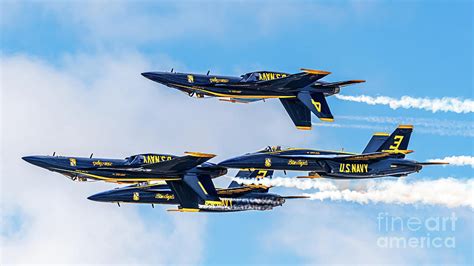
If the Diamond 360 highlights precision, the Double Farvel showcases precision under extreme conditions.
During this signature Blue Angels maneuver, two pilots within the diamond formation simultaneously roll their aircraft inverted while maintaining their relative positions. The challenge is amplified by the fact that the remaining aircraft continue flying upright, creating a visually stunning mix of orientations within the same formation.
The maneuver becomes even more impressive when considering the speed involved. The aircraft are traveling at approximately 385 knots, leaving virtually no margin for error. Once inverted, the pilots must carefully adjust their positioning while managing different visual references and maintaining exact spacing.
The result is one of the most technically demanding formation demonstrations in military aviation. It highlights not only the capabilities of the Super Hornet but also the exceptional skill required to operate at such close proximity while upside down.
The F-22 Raptor Tail Slide: Defying Conventional Flight
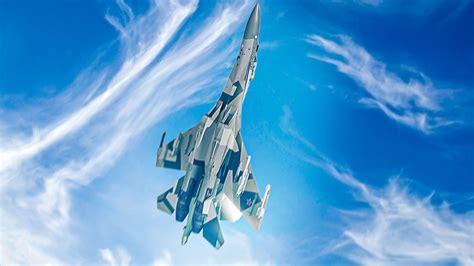
Among modern fighter jets, few aircraft capture the imagination quite like the F-22 Raptor. Designed for air superiority, the aircraft combines stealth, speed, agility, and advanced avionics into a single platform. One of the most dramatic demonstrations of its capabilities is the Tail Slide.
The maneuver begins innocently enough with a steep climb. Instead of completing a loop, however, the pilot continues pitching the aircraft vertically until forward motion nearly disappears. For a brief moment, the fighter appears suspended in the sky.
This is where the spectacle truly begins.
As the aircraft runs out of upward momentum, gravity takes control and the jet starts falling backward tail-first. To observers, the sight is almost surreal. Conventional aircraft rely heavily on airflow across their control surfaces, but the F-22’s thrust-vectoring engines provide additional control even when traditional aerodynamic forces become ineffective.
The aircraft hangs vertically before sliding backward through the air, creating one of the most dramatic visual displays in modern aviation. The pilot then lowers the nose and transitions smoothly back into controlled flight.
The Tail Slide demonstrates how modern fighter technology has expanded the boundaries of maneuverability far beyond what traditional aircraft designs could achieve.
Thunderbirds Calypso: Extreme Formation Flying
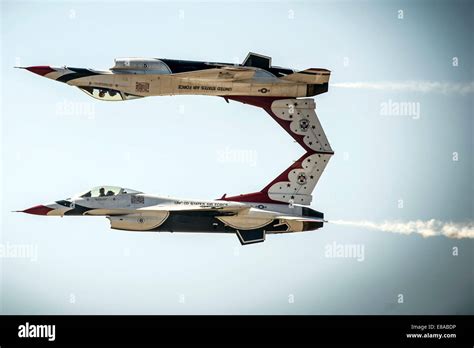
The U.S. Air Force Thunderbirds have developed a reputation for combining speed, elegance, and astonishing precision. Flying the highly agile F-16 Fighting Falcon, the team performs maneuvers that emphasize close coordination and flawless timing.
One of their most impressive routines is the Calypso maneuver. Two F-16s fly side by side with only a few feet separating them. As spectators watch, the upper aircraft rolls into an inverted position while maintaining formation with the lower jet.
The visual effect is extraordinary. The aircraft appear almost connected as they pass overhead, their vertical stabilizers seeming dangerously close to touching. Yet every movement is carefully planned and executed.
The Calypso highlights the extraordinary confidence and situational awareness required of demonstration pilots. Maintaining such close spacing while one aircraft rotates through a full roll demands constant concentration and exact control inputs.
For audiences, it is one of the most memorable moments of any Thunderbirds performance.
Reflection Pass: The Ultimate Optical Illusion
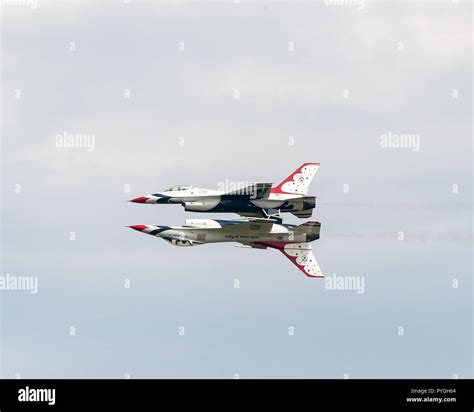
Another Thunderbirds signature maneuver transforms two fighter jets into what appears to be a single aircraft and its mirror image.
Known as the Reflection Pass, the demonstration involves two F-16s flying in opposite orientations. One aircraft remains upright while the other flies inverted directly beneath it. The spacing between the jets is astonishingly small, often only a few feet.
From the ground, the arrangement creates a remarkable illusion. The lower aircraft appears to be a reflection of the upper jet, as though the sky itself has become a giant mirror.
Beyond its visual appeal, the maneuver showcases the extraordinary handling characteristics of the F-16 and the exceptional training of the pilots. Flying upside down while maintaining precise alignment with another aircraft requires continuous adjustments and unwavering focus.
The Reflection Pass remains one of the most recognizable and crowd-pleasing demonstrations in military aviation.
The Falling Leaf: Controlled Chaos in the Sky
Among all advanced fighter maneuvers, few appear stranger than the Falling Leaf.
Unlike precision formation displays, the Falling Leaf looks almost chaotic. The aircraft rocks, yaws, and drifts from side to side while descending in an unpredictable-looking pattern. To spectators unfamiliar with the maneuver, it can appear as though the pilot has temporarily lost control.In reality, the opposite is true.
The Falling Leaf originated as a training exercise designed to help pilots recover from stalled flight conditions. Modern fighters, especially aircraft such as the F-22, can intentionally enter these unusual attitudes while maintaining a surprising degree of control.
Thanks to thrust-vectoring systems and advanced flight computers, the aircraft can continue maneuvering even at extremely low airspeeds where conventional aerodynamic controls become less effective.
As the jet oscillates from side to side while descending, it resembles a leaf drifting toward the ground. The maneuver dramatically illustrates the unique characteristics of modern fighter designs, many of which are intentionally aerodynamically unstable to maximize combat agility.
The Falling Leaf serves as a powerful reminder that instability, when managed by sophisticated technology and skilled pilots, can become a tremendous advantage rather than a weakness.
Why These Jet Maneuvers Continue to Fascinate Aviation Fans
The most spectacular jet maneuvers are more than airshow entertainment. They represent the intersection of human skill, engineering innovation, and aerodynamic science. Every formation pass, inverted roll, and post-stall maneuver demonstrates years of pilot training and decades of aircraft development.
Whether it is the Blue Angels maintaining impossibly tight formations, the Thunderbirds creating breathtaking aerial illusions, or the F-22 Raptor seemingly defying gravity, these performances reveal the remarkable capabilities of modern military aviation. They remind audiences that even in an age dominated by technology, extraordinary human expertise remains at the heart of every unforgettable flight demonstration.