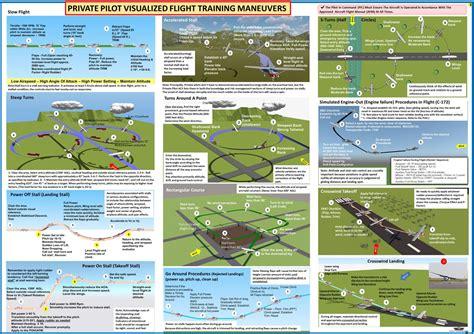
Straight and Level
Objective: Maintain a steady altitude, heading, and airspeed in coordinated flight.
- Power: Adjust as needed, typically between 2300 and 2400 RPM.
- Attitude: Use primary flight controls to set and hold attitude.
- Trim: Set at the desired airspeed to relieve pressure on the controls.
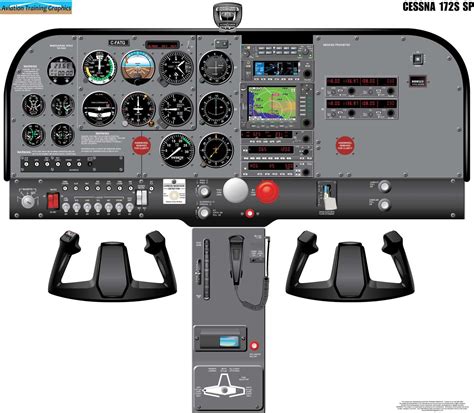
Climb
Objective: Hold proper attitude, airspeed, and coordination to climb efficiently with climb power.
- Power: Full throttle.
- Attitude: Adjust and maintain at Vx (64 KTS) or Vy (76 KTS).
- Trim: Set to relieve pressure at target airspeed.
- Recover: Level off at the desired altitude using coordinated controls.
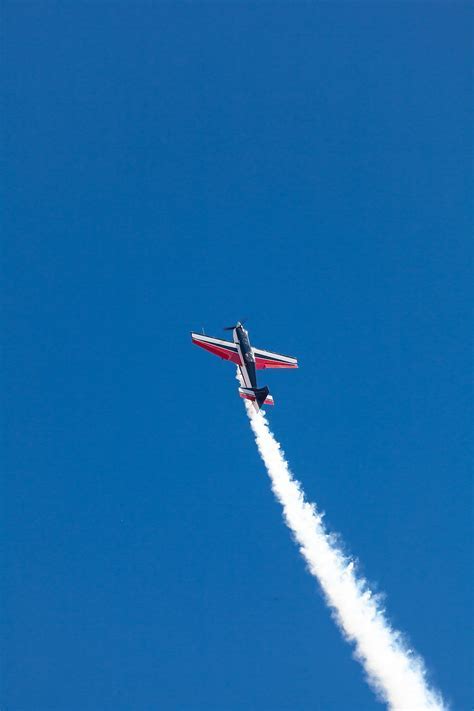
Descent
Objective: Control the airplane in descent while staying coordinated at proper speeds and settings.
- Power: Mixture rich, set to 1800 RPM, aim for a 500 FPM descent rate.
- Attitude: Use primary flight controls to establish and maintain descent.
- Trim: Adjust to relieve pressure at chosen airspeed.
- Recover: Level off smoothly and restore cruise power with coordinated inputs.
Level-Off
Objective: Transition back to straight and level coordinated flight after a climb or descent.
After Climb:
- Attitude: Use primary controls to level the aircraft.
- Power: Set to 2300 RPM at target airspeed.
- Trim: Relieve pressure as needed.
After Descent:
- Power: Set to 2300 RPM.
- Attitude: Use primary controls to hold level.
- Trim: Adjust to reduce control force.
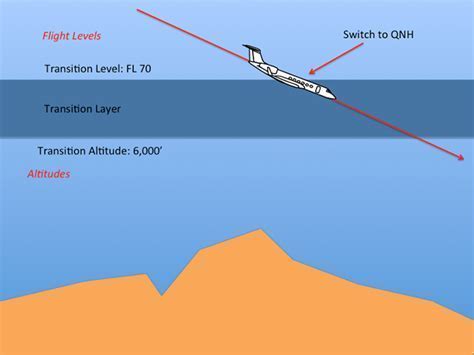
Level Turn
Objective: Hold a steady altitude, coordinated flight, and speed while maintaining a bank in either direction.
- Power: Cruise setting between 2300 and 2400 RPM.
- Attitude: Maintain with primary flight controls.
- Recover: Roll out on the assigned heading using coordinated controls.
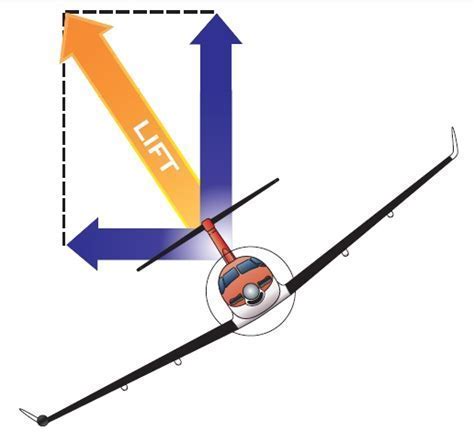
Climbing Turn
Objective: Maintain coordinated flight while climbing and turning.
- Power: Full.
- Attitude: Use primary controls to hold climb and bank.
- Trim: Set to reduce pressure at desired airspeed.
- Recover: Level off on heading and altitude using coordinated controls.
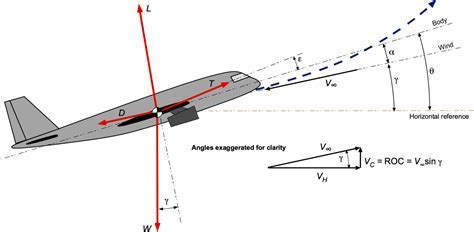
Descending Turn
Objective: Control aircraft during a descending turn while remaining coordinated.
- Power: Mixture rich, 2200 RPM, aim for 500 FPM descent.
- Attitude: Use primary controls to maintain descent.
- Trim: Set for control pressure relief.
- Recover: Level off on heading and altitude, gently restore cruise power.
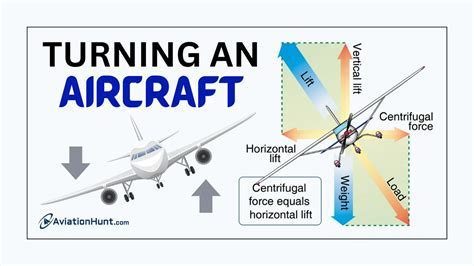
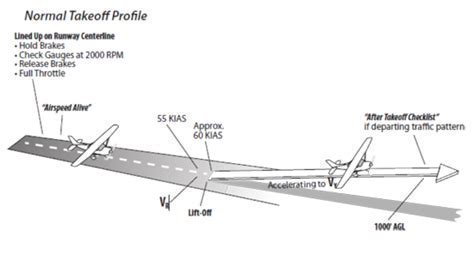
Normal Takeoff
Objective: Make a smooth transition from takeoff roll to climb.
- Run-Up: Complete.
- Flaps: Set to 0°.
- Checklist: Pre-takeoff complete.
- Clearance: Obtain.
- Throttle: Full in 2 seconds.
- Engine Instruments: Verify normal.
- Airspeed: Confirm alive.
- Rotate: At 60 KTS.
- Attitude: Pitch for Vy (76 KTS).
- Climb: Maintain 76 KTS.
- After Takeoff: At 500’, perform after-takeoff check.
- Climb: Continue.
Crosswind Takeoff
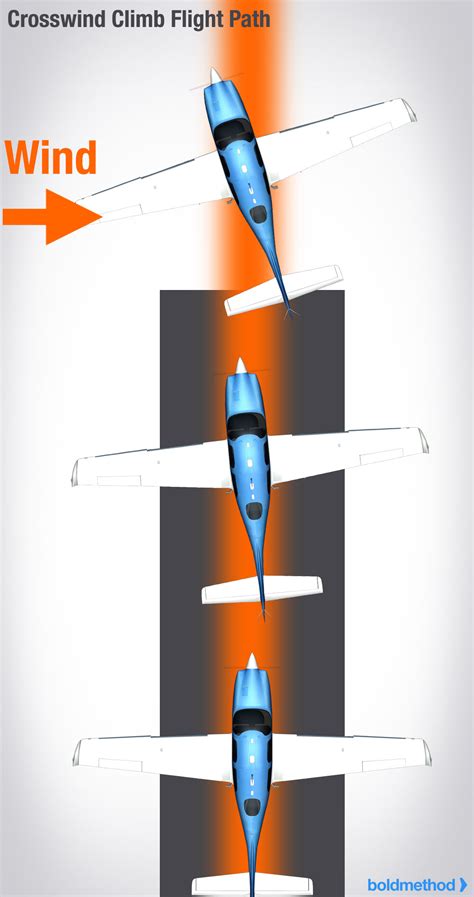
Objective: Maintain control during a crosswind takeoff and establish a good climb.
- Run-Up: Complete.
- Flaps: 0°.
- Clearance: Obtain.
- Controls: Full deflection into wind.
- Throttle: Full.
- Instruments: Check engine instruments.
- Airspeed: Alive.
- Aileron: Gradually reduce input.
- Rotate: At 60 KTS onto upwind wheel.
- Attitude: Pitch for Vy – 76 KTS.
- Correction Angle: Apply into wind.
- Climb: 76 KTS.
- After Takeoff: Confirm climb.
- Climb: Check.
Slow Flight (Clean)
Objective: Control and maneuver the aircraft at slow speeds in clean configuration.
- Clearing Turns: Complete.
- Power: Mixture rich, 1800 RPM.
- Pitch: Maintain altitude slightly above stall warning, about 2 KTS above.
- Power: Adjust as needed to hold altitude.
- Maneuver: Two 90° turns with 10° bank.
- Recover: Throttle full.
- Attitude: Maintain altitude, heading, coordination.
- Flaps: Verify flaps 0°.
- Return: Establish straight and level.
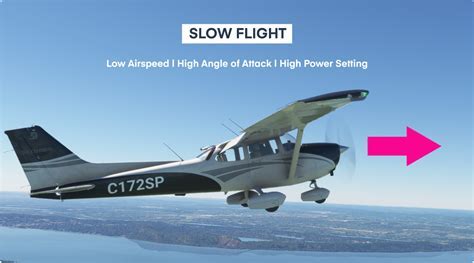
Slow Flight (Dirty)
Objective: Perform slow flight in dirty configuration while staying coordinated and controlled.
- Clearing Turns: Complete.
- Power: Mixture rich, 1800 RPM.
- Flaps: Add full flaps below VFE (102 KTS) in three steps.
- Pitch: Hold 2 KTS above stall warning.
- Power: Adjust to maintain altitude.
- Maneuver: Two 90° turns with 10° bank.
- Recover: Throttle full.
- Attitude: Maintain heading, altitude, coordination.
- Flaps: Go to 25°, pitch for 76 KTS, then gently to 10° and 0°.
- Return: Straight and level flight.
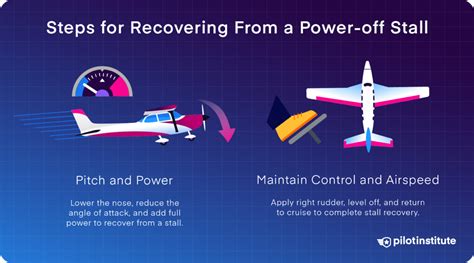
Power-Off Stall
Objective: Learn stall characteristics during landing and practice proper recovery techniques.
- Clearing Turns & Altitude: 3,500’.
- Power: Mixture rich, 1800 RPM.
- Pitch: Maintain altitude.
- Flaps: Add full flaps below VFE.
- Descent: At 76 KTS, descend at 500 FPM. At 3000’, reduce power to idle.
- Stall: Maintain 3000’ as if simulating runway, wait for stall.
- Recovery Pitch: Reduce angle of attack.
- Power: Full throttle.
- Flaps: Go to 25°, pitch for Vy (76 KTS), retract flaps as climb stabilizes.
- Altitude: Return to entry altitude.
- Return: Establish straight and level.
Power-On Stall
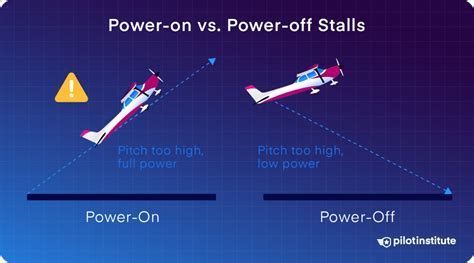
Objective: Recognize and recover from takeoff stall conditions.
- Clearing Turns & Altitude: Complete.
- Power: Mixture rich, 1800 RPM.
- Pitch: Maintain altitude.
- Throttle: Below 70 KTS, set 2300 RPM.
- Pitch: Gradually raise nose until stall.
- Coordination: Maintain coordination.
- Recovery Pitch: Reduce angle of attack.
- Power: Full throttle.
- Attitude: Set for Vy (76 KTS).
- Configuration: Confirm positive rate.
- Altitude: Return to entry altitude.
- Return: Straight and level flight.
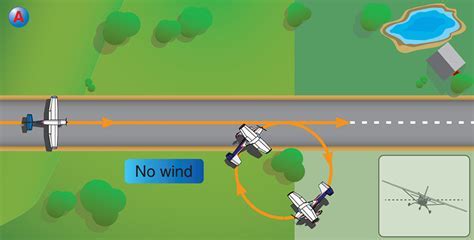
Turns Around a Point
Objective: Fly a circular path around a point while managing wind drift and holding altitude.
- Clearing Turns: Complete.
- Power: Mixture rich, 2300-2400 RPM.
- Altitude: 600-1000’ AGL.
- Point: Choose an easy-to-see, safe landing option nearby.
- Entry: Enter on downwind about 1/4 mile from point.
- Turn: Start when abeam the point.
- Bank: Adjust to keep radius; max 45° bank.
- Continue: Make two full circles.
- Exit: Outbound on downwind.
- Climb: Resume normal VFR altitude.
- Return: Straight and level.
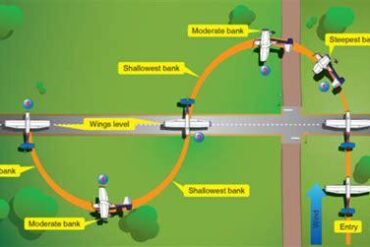
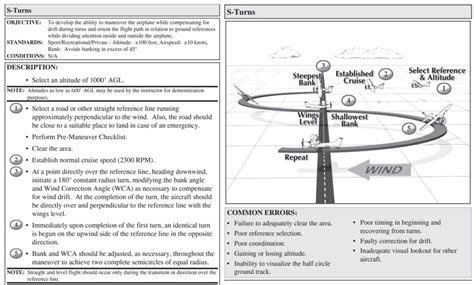
S-Turns Across a Road
Objective: Follow an S-turn pattern using ground references while correcting for wind and staying coordinated.
- Clearing Turns: Complete.
- Power: Mixture rich, 2300-2400 RPM.
- Speed: Maintain 100 KTS.
- Altitude: Between 600-1000’ AGL.
- Road: Use a 2-mile straight road, perpendicular to the wind.
- Entry: Start downwind; first turn left.
- Turn: Cross over road, initiate turn.
- Bank: Adjust for a smooth 1/4 mile semicircle, max 45° bank.
- Wings Level: Level over road, perpendicular.
- Turn: Reverse direction.
- Repeat: Steps 7 and 8 until complete.
- Exit: On downwind.
- Climb: Return to a safe cruising altitude.
- Return: Straight and level.
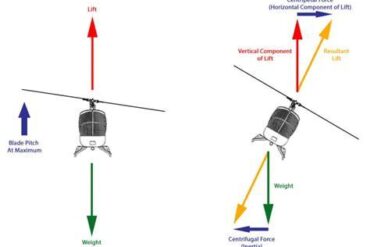
Steep Turns
Objective: Perform two full 360° turns at a 45° bank angle, keeping altitude, coordination, and orientation stable while dividing attention effectively.
- Complete clearing turns.
- Pick a cardinal or section line heading.
- Set mixture to rich and adjust power to 2300 RPM.
- Maintain airspeed at 100 knots.
- Begin a level turn with a 45°–50° bank.
- Once passing through 30° of bank, apply more back pressure to hold altitude.
- Add power as needed to keep airspeed steady.
- Maintain coordinated flight throughout.
- Roll out of the turn by reducing bank 10° before reaching your target heading. Ease back pressure when passing back through 30° of bank.
- Reduce power to maintain 2300 RPM.
- Keep coordination smooth.
- Re-establish straight and level flight.
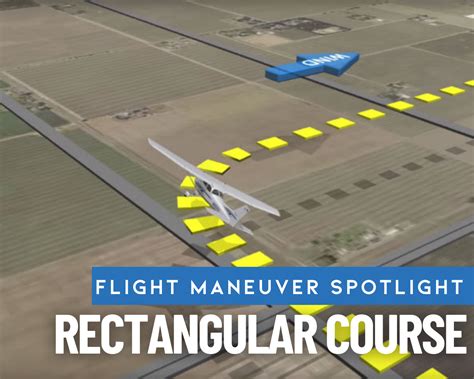
Rectangular Course
Objective: Fly a clean rectangular pattern while correcting for wind, holding altitude, and keeping control coordinated. Divide attention between the ground track and aircraft control.
- Begin with clearing turns.
- Set power between 2300 and 2400 RPM.
- Hold airspeed at 100 knots.
- Stay between 600 and 1000 feet AGL.
- Choose a field about 1 mile by 1/2 mile, aligned with wind and safe for a potential landing.
- Enter the pattern at midfield, on a 45° to downwind. Stay about 1/4 mile away on downwind.
- Apply wind correction as necessary.
- Begin turns abeam the field boundary.
- Roll out abeam the next boundary, keeping 1/4 mile spacing and adjusting for wind.
- Repeat steps 7 and 8 for two full laps.
- Exit on the downwind leg.
- Climb to a safe VFR cruising altitude.
- Return to straight and level flight.
Traffic Pattern
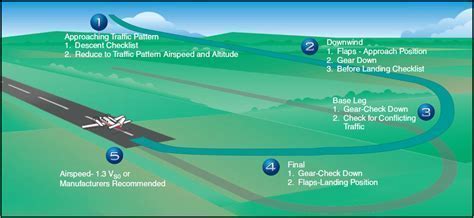
Objective: Fly each leg of the traffic pattern accurately and safely in preparation for a landing.
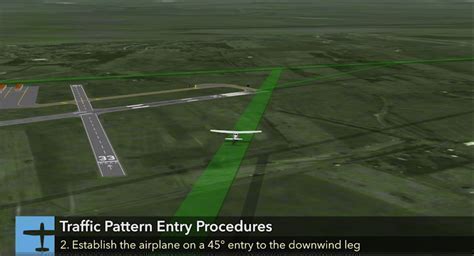
- Enter at midfield on a 45° angle to the downwind leg, at pattern altitude.
- Complete the B.C.G.U.M.P.S. checklist.
- On downwind, throttle to 2000 RPM and keep speed below 100 knots. Maintain about 1/2 to 3/4 mile spacing from the runway. The runway should sit at the two-thirds point on the wing.
- When abeam your landing point (or traffic to follow), reduce throttle to 1800 RPM. Ensure you’re below VFE, then extend flaps to 10°. Trim for a 500 FPM descent and keep speed below 90 knots.
- Turn base when you’re 45° from the landing point. Adjust power to hold 500 FPM descent. Add wind correction. Extend flaps to 25°. Trim to hold 80 knots.
- Turn final, aligning with the centerline. Apply any needed wind correction. Extend full flaps. Trim for 76–80 knots.
- Land according to conditions.
Normal Landing
Objective: Transition from descent to touchdown on the main wheels, keeping alignment with the centerline.
- Enter the traffic pattern.
- Complete the B.C.G.U.M.P.S. checklist.
- Get landing clearance.
- Use a normal descent in landing configuration on final.
- With full flaps, adjust pitch to maintain 76–80 knots.
- Use power to stay on the glidepath.
- Begin the roundout when you reach your visual landing cue over the centerline.
- Touch down on the main wheels over the runway centerline.
- Decelerate down the centerline.
- Pull elevator fully aft.
- Exit runway at a safe speed and earliest safe location.
- Complete the after-landing checklist.
Forward Slip
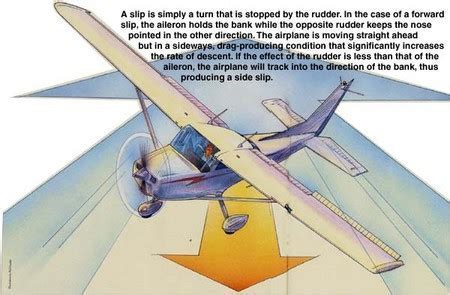
Objective: Sharpen the descent angle by using opposite control inputs during the approach.
- Set full flaps as per B.C.G.U.M.P.S. checklist.
- Use normal approach airspeed.
- Reduce throttle to idle.
- Apply full rudder deflection.
- Bank into the wind with ailerons to stay aligned.
- Adjust pitch as needed to hold airspeed.
- Recover to normal descent once back on glidepath.
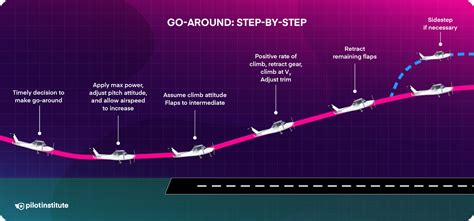
Go-Around
Objective: Shift smoothly from approach descent to climb in preparation for another landing.
- Apply full throttle.
- Pitch for level flight immediately.
- Reduce to flaps 25° right away. At 76 knots and a positive climb rate, retract to flaps 10°, then flaps 0°.
- Maintain VY climb at 76 knots.
- Sidestep runway to the right if needed.
- Climb and remain in the pattern for another landing.
- Notify ATC.
Crosswind Landing
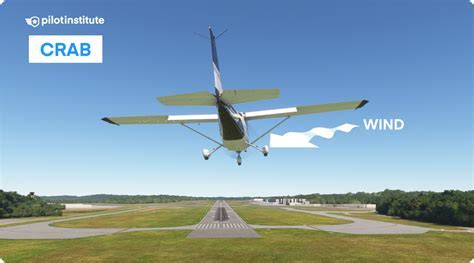
Objective: Touch down smoothly on the main wheels in various crosswind conditions while staying aligned with the runway centerline.
- Enter the traffic pattern.
- Complete the B.C.G.U.M.P.S. checklist.
- Get landing clearance.
- On final, lower the upwind wing and apply downwind rudder to maintain runway alignment.
- Set full flaps and pitch for 76–80 knots.
- Maintain glidepath with power.
- Round out using the same visual cues as a normal landing.
- Touch down on the upwind wheel first, over the centerline.
- Use smooth wind correction while decelerating. Stay on the runway centerline.
- Exit runway at a safe speed and early point.
- Complete the after-landing checklist.
Soft-Field Takeoff
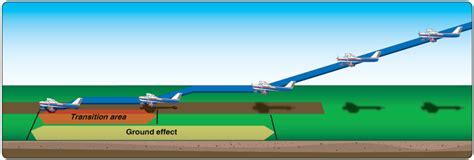
Objective: Lift off at the lowest safe airspeed, stay in ground effect, then transition to climb.
- Complete the run-up.
- Set flaps to 25°.
- Get takeoff clearance.
- Hold full elevator back pressure.
- Apply full throttle.
- Set takeoff attitude, then slowly reduce elevator pressure once the nose lifts.
- Confirm all engine instruments are in the green.
- Confirm airspeed is alive.
- Lift off at the slowest safe speed.
- Stay in ground effect, gently relaxing back pressure.
- Accelerate to VX (64 knots) or VY (76 knots).
- After 100 feet AGL, climb at 76 knots.
- Keep climbing at 76 knots.
- Raise flaps and verify climb configuration.
- Confirm continued climb.
Soft-Field Landing
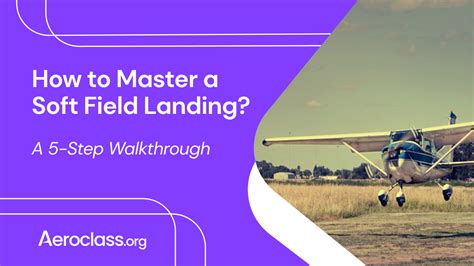
Objective: Land gently on main wheels over a soft or uneven surface.
- Enter traffic pattern.
- Complete B.C.G.U.M.P.S. checklist.
- Get clearance.
- Use normal descent in landing configuration.
- With full flaps, pitch to maintain 76 knots.
- Hold glidepath using power.
- Level off at the visual landing point.
- Begin roundout over centerline.
- In the flare, add power to soften the touchdown.
- Touch down on the main wheels gently.
- Gradually pull elevator back while slowly reducing power and decelerating.
- Exit runway safely.
- Run through the after-landing checklist.
Short-Field Takeoff
Objective: Take off in the shortest possible distance and climb to clear obstacles.
- Complete the run-up.
- Set flaps to 25°.
- Get clearance.
- Use the very start of the runway for positioning.
- Hold brakes.
- Apply full static power.
- Verify engine instruments are in the green.
- Release brakes.
- Keep controls neutral.
- Maintain directional control.
- Confirm airspeed is alive.
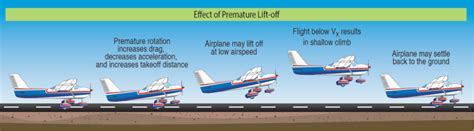
- Rotate at 60 knots.
- Hold VX (64 knots) until clearing the obstacle at 50 feet, then climb at VY (76 knots).
- Continue climbing at 76 knots.
- Run through the after-takeoff checks.
- Confirm sustained climb.
Short-Field Landing
Objective: Touch down safely beyond a 50-foot obstacle and stop within the shortest distance.
- Enter the traffic pattern.
- Complete the B.C.G.U.M.P.S. checklist.
- Obtain landing clearance.
- Descend in normal landing configuration.
- With full flaps, pitch for 65 knots.
- Control glidepath with power.
- Round out using visual cues to minimize float.
- Touch down on main wheels over the centerline.
- On rollout, immediately retract flaps, slowly pull elevator back, and apply max braking while staying centered.
- Exit runway promptly and safely.
- Complete after-landing checks.
Emergency Approach and Landing (Simulated)
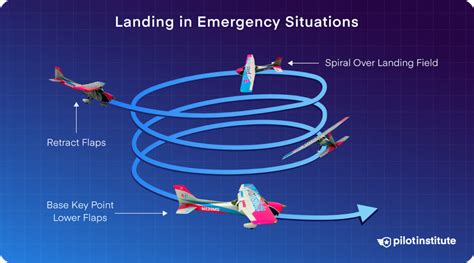
Objective: Respond to an emergency by securing life and minimizing airplane damage. Stay focused on control, procedure, and field selection.
- Glide at best glide speed, Vg (76 knots).
- Choose a field into the wind, clear of obstructions and terrain hazards.
- Run the memory checklist first, then the full paper checklist. Apply flaps as needed.
- Fuel: Mixture rich, fuel pump on, switch tanks.
- Air: Carb heat ON.
- Spark: Check magnetos are ON.
Lost Procedures
Objective: Figure out your position after becoming lost during flight.
- Climb to at least 3000 feet AGL.
- Run through your enroute checklist.
- Search for major landmarks for up to 10 minutes.
- Use VOR or GPS to cross-check position.
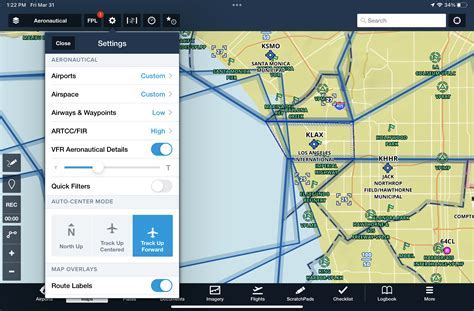
- Call for help: use the last ATC frequency, known ATC, FSS, or emergency on 121.50