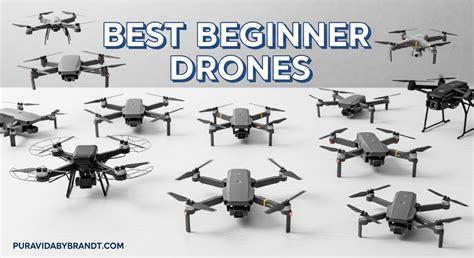
Choosing a first drone in 2026 is no longer a matter of accepting a crude camera, short flight time, and difficult controls just to get airborne. Modern consumer drones have become remarkably capable, compact, and approachable. Some can launch from your hand, track a moving subject, avoid obstacles, or even fly without a traditional controller. Others are designed specifically to teach the fundamentals of piloting before you move toward more advanced aircraft.
That variety is exciting, but it also makes choosing the right beginner drone surprisingly difficult. A new pilot may see impressive specifications and assume the most expensive model is automatically the best choice. In practice, the ideal first drone depends on what we want to learn and how we intend to use it. A traveler may value portability, while a photography enthusiast may prioritize sensor size and stabilization. Someone interested in FPV flying needs an entirely different machine.
For this guide, we have focused on eight of the best drones for beginners in 2026, considering ease of operation, stability, camera performance, obstacle protection, portability, flight controls, battery life, and overall value. The selection ranges from inexpensive training platforms to sophisticated camera drones that can remain useful long after a new pilot has mastered the basics.
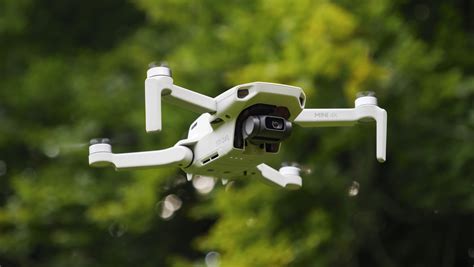
The DJI Flip is one of the most interesting choices for beginners who want excellent aerial footage without spending much time learning complicated controls. Its compact design and enclosed propellers make it feel less intimidating than a conventional camera drone, while automated flight modes allow new users to concentrate on the experience rather than constantly worrying about manual positioning.
At around $399 with a controller, the Flip occupies an appealing middle ground. It weighs less than 250 grams and folds into an exceptionally small package, making it practical for hiking, travel, and casual outdoor photography. Its propeller guards provide another layer of protection, particularly for beginners who are still developing their spatial awareness. The drone also automatically powers on when unfolded, reducing the number of steps between taking it out of a bag and getting into the air.
DJI Flip: Best Beginner Drone for Easy Autonomous Flying
The most distinctive feature of the DJI Flip is that a traditional controller is not essential. We can operate the drone through the DJI application, while several automated modes can be activated directly. Hand launching and landing make the experience even more approachable, particularly for someone who has never handled a conventional drone.
The Flip can follow a person, circle around a subject, perform a spotlight-style flight, or climb rapidly into the air for an elevated perspective. These automated movements can also be configured for different distances. For beginners interested in creating social-media footage, this is a significant advantage because we can produce dynamic-looking shots without first mastering complex stick movements.
The camera is equally impressive for such a small aircraft. A 48MP 1/1.3-inch CMOS sensor captures photographs with good detail and natural color, while RAW support gives photographers more flexibility during editing. Video recording reaches 4K at 60 frames per second in HDR, and stabilization keeps footage smooth during normal flight. D-Log support is another advantage for creators who expect their editing skills to develop over time.
The Flip is not perfect. Strong winds can still make a lightweight drone move noticeably, and pilots who want to learn traditional manual flying may find its automated nature less educational. Nevertheless, for a first drone designed primarily around easy aerial photography, the DJI Flip is exceptionally compelling.
DJI Mini 4K: Best Affordable Drone for Learning to Fly
If the priority is learning genuine drone-piloting skills without risking a large financial investment, the DJI Mini 4K deserves serious consideration. At around $269, it provides a traditional drone experience while keeping the cost low enough that a beginner may feel less nervous about making an inevitable mistake.
Unlike the Flip, the Mini 4K does not have propeller guards or sophisticated obstacle-avoidance systems. That limitation is important. New pilots should practice in large, open areas before attempting to fly close to trees, buildings, fences, or other obstacles. Yet this simplicity is also part of the attraction. We have to learn how the aircraft responds to our inputs rather than relying heavily on autonomous protection.
The included RC-N1C controller connects to a smartphone and provides a live camera view. Three flight modes are available: Normal, Sport, and Cine. Cine mode slows the aircraft’s movements, making it particularly useful for smooth footage and for beginners who are still becoming comfortable with the controls.
The Mini 4K also includes several automated camera movements, including Circle, Boomerang, Rocket, Helix, and Dronie. These modes make it possible to create more sophisticated footage while we continue developing manual flying skills.
Its 1/2.3-inch sensor is smaller than the one found on the DJI Flip, and video recording tops out at 4K/30fps or 2.7K/60fps. Daytime images can still be sharp and attractive, but low-light performance is noticeably weaker. The absence of D-Log also limits advanced color grading. For a beginner drone at this price, however, those compromises are reasonable.
The Mini 4K makes the most sense for someone who wants to learn the fundamentals first and upgrade later. It is affordable, familiar, and straightforward, making it one of the strongest entry points into conventional drone flying.
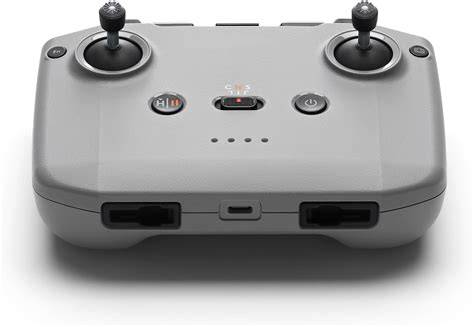
DJI Neo 2: Best Beginner Drone for Hands-Free Creativity
The DJI Neo 2 takes the beginner concept in another direction. Instead of emphasizing traditional piloting, it is designed around spontaneous content creation. It is small, relatively inexpensive, and capable of following a person without requiring a complicated setup.
At roughly $259 without a controller, the Neo 2 is positioned as a particularly accessible option. Its built-in display allows users to select automated flight modes directly from the aircraft, while gesture controls provide another way to control movement. We can launch the drone, use hand gestures to influence its direction and distance, and concentrate on whatever activity we are documenting.
That approach makes the Neo 2 particularly attractive for cyclists, hikers, travelers, and other creators who may not want to carry a controller everywhere. Automated modes can follow a moving subject, circle around it, or create a dramatic upward shot. A Dolly Zoom preset adds another cinematic effect that would normally require considerably more flying and editing knowledge.
Safety is another strong point. The Neo 2 reportedly features omnidirectional obstacle detection, while full propeller protection helps protect both the aircraft and nearby objects. For a beginner, that combination can reduce some of the anxiety associated with flying around trees and structures.
The 12MP 1/2-inch CMOS camera uses a two-axis gimbal and records 4K video at up to 100fps, although autonomous flights are limited to 4K/60fps. The footage is crisp, but the drone lacks RAW and Log recording. Instead of removable storage, it provides 49GB of built-in storage.
The Neo 2 is therefore less suitable for serious photographers than the Mini 5 Pro, but it is exceptionally appealing for people who simply want a small flying camera that can follow their adventures.
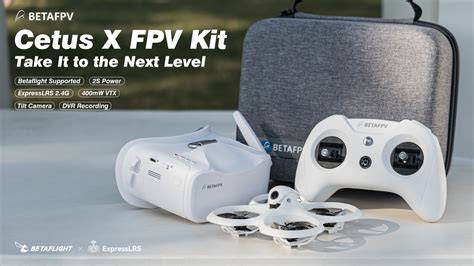
BetaFPV Cetus X Kit: Best Beginner FPV Drone
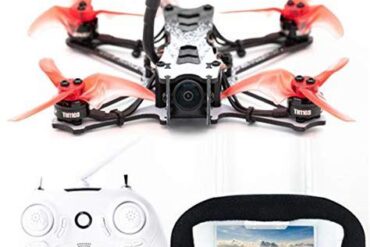
Traditional camera drones and FPV drones teach very different skills. An FPV aircraft puts us directly into the pilot’s perspective, demanding faster reactions and greater awareness of the drone’s movement. The BetaFPV Cetus X Kit makes that intimidating category much easier to enter because it includes almost everything a beginner needs.
For approximately $255, the kit includes the drone, controller, FPV goggles, multiple batteries, and replacement components. That matters because FPV flying is considerably harder on equipment than relaxed camera-drone flying. Crashes are part of the learning process, so having replacement parts included is reassuring.
The Cetus X uses durable PA12 plastic construction and measures approximately 135 x 135 x 60 mm. Its compact size makes it easier to practice indoors or in confined outdoor areas, although pilots should always consider their surroundings and local rules before flying.
The included VR03 goggles provide an analog video feed at 800 x 480 resolution. While the theoretical transmission range can reach much farther, walls and buildings reduce practical range considerably. Beginners will generally get the most reliable experience when flying relatively close to themselves.
Three flight modes provide a useful progression. Normal mode is designed for learning, Sports mode increases speed to approximately 29 mph, and Manual mode removes many of the aircraft’s safety features. Manual flying should therefore come only after we are comfortable with the fundamentals.
Battery endurance is the major compromise. Each flight lasts only around three to four minutes, making the additional batteries extremely useful. For someone specifically interested in learning FPV, however, the Cetus X offers a much more approachable starting point than assembling a complete FPV system from individual components.
HoverAir X1 Pro: Best Beginner Drone for Adventure Tracking
The HoverAir X1 Pro is aimed at much the same audience as the Neo 2: people who want the drone to become an automated camera operator rather than a technical hobby in itself. Its enclosed propellers, hand-launch capability, and compact design make it approachable for users who have never flown a conventional drone.
The drone can automatically follow a subject at speeds of up to 26 mph, circle around a person, zoom outward, create a bird’s-eye view, and perform a Dolly Zoom. These modes are particularly useful when we are traveling alone because the drone can capture footage that would otherwise require another person to operate a camera.
A small screen on the aircraft allows us to select shooting modes without carrying a controller. For more control, the X1 Pro can be paired with a beacon. This small device provides physical controls, displays the live feed, and helps serve as a homing point for the drone.
The camera uses a 1/2-inch CMOS sensor mounted on a two-axis gimbal. It can record 4K/60fps video and 1080p/120fps footage for slow-motion sequences. Subject tracking is one of its major strengths, making it a practical option for sports, outdoor adventures, and travel content.
There are drawbacks. JPEG-only photography limits flexibility for serious editing, while the roughly $699 price places it well above the Neo 2. Some connectivity and return-to-beacon issues have also been reported. For beginners who value autonomous adventure footage above everything else, though, the X1 Pro remains an intriguing alternative.
Potensic Atom 3: Best DJI Alternative for Beginner Creators
The Potensic Atom 3 demonstrates how competitive the consumer-drone market has become. DJI remains the benchmark, but Potensic has increasingly focused on delivering advanced imaging capabilities without reaching the highest price levels.
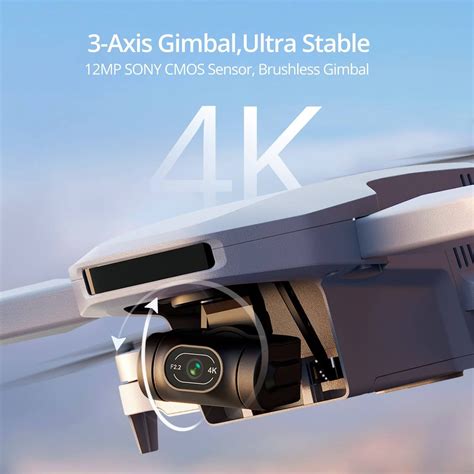
The Atom 3 uses a 1/1.3-inch CMOS sensor, produces 50MP photographs, and records 4K video at 60fps. A three-axis gimbal helps keep footage stable, while P-Log recording gives users greater control over dynamic range and color during post-production.
For a beginner who expects to become a more serious creator, those specifications are meaningful. We can begin with automatic flight modes and basic editing, then gradually explore manual exposure, Log footage, and advanced color grading without immediately needing to replace the aircraft.
AI-assisted object detection supports common automated movements such as subject tracking, circling, and upward reveals. However, the Atom 3 lacks the comprehensive obstacle-avoidance systems found on some competing drones. That means beginners need to remain attentive to trees, buildings, power lines, and other hazards.
Low-light performance is another weakness. Its f/2.8 aperture and camera system struggle more at night, particularly with sharpness and accurate colors. Availability is also important: according to the supplied reference material, the Atom 3 is officially available in the U.K. and EU but is not officially sold in the U.S. because of current regulatory restrictions affecting foreign drones.
For buyers in supported markets, the Atom 3 offers a compelling combination of camera quality, stabilization, and advanced recording options.
DJI Avata 360: Best Beginner Drone for Immersive 360-Degree Video
The DJI Avata 360 addresses a different beginner problem: framing the shot. Traditional camera drones require us to point the camera in the right direction at the right moment. A 360-degree drone can capture the surroundings first and let us decide the final composition afterward.
That capability comes from dual 64MP 1/1.1-inch square CMOS sensors capable of capturing 360-degree footage at up to 8K resolution. Instead of worrying constantly about camera direction during flight, we can record the scene and crop the desired perspective later.
The resulting footage can retain impressive detail and dynamic range, while 10-bit recording and D-Log provide considerable flexibility for creators who want to perform more sophisticated edits. Some stitching inconsistencies can appear when objects are extremely close to the aircraft, but they are not necessarily a major issue for typical outdoor shooting.
The Avata 360 also offers a valuable advantage over some FPV-oriented systems: it can be flown with a regular controller as well as FPV goggles. That gives beginners a more conventional path into the aircraft before they decide whether they want the full immersive FPV experience.
Propeller guards add physical protection, while omnidirectional obstacle detection combines front-facing LiDAR with downward infrared sensing. The drone can reportedly track moving vehicles at speeds approaching 40 mph, making it an unusually capable platform for action footage.
The major drawback is the approximately $719 price, and its weight of around 455 grams means U.S. pilots need to consider FAA registration requirements. It is therefore not the simplest possible first drone, but it is one of the most creatively flexible.
DJI Mini 5 Pro: Best Premium Beginner Drone
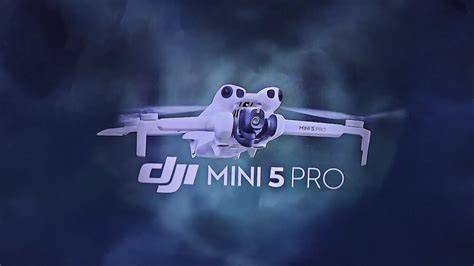
If budget is less important than image quality, the DJI Mini 5 Pro is arguably the most complete option in this group. It costs approximately $799, but its capabilities extend far beyond what we normally expect from a beginner aircraft.
The centerpiece is a 50MP 1-inch CMOS sensor capable of recording 4K video at up to 120fps. Ten-bit color and up to 14 stops of dynamic range provide a substantial amount of information for editing, while D-Log M gives advanced users room to develop professional-looking color grades.
Low-light performance is another major strength. The larger sensor allows the Mini 5 Pro to preserve detail and control noise better than smaller-sensor beginner drones. That means a new pilot does not necessarily have to replace the aircraft after developing an interest in nighttime or more demanding photography.
The three-axis gimbal rotates through 225 degrees, enabling genuine 4K vertical video. That is particularly useful for creators producing content for platforms designed around portrait-oriented footage.
DJI’s ActiveTrack system can maintain a subject even when it moves through complicated surroundings, while LiDAR-assisted obstacle detection improves the drone’s ability to identify hazards in darker conditions. These systems do not eliminate the need for responsible piloting, but they provide a substantial safety net.
DJI rates the battery at up to 36 minutes, although real-world flight time can be considerably lower depending on wind, temperature, flight mode, and how aggressively the aircraft is operated. Around 20 minutes in mild winds may be a more realistic expectation in demanding conditions.
The Mini 5 Pro is expensive for a first drone, but it offers an important advantage: there is very little reason to outgrow it quickly. A beginner can start with automated QuickShots and gradually progress toward RAW photography, manual exposure, Log video, tracking, and advanced editing.
How to Choose the Best Beginner Drone in 2026
The best beginner drone is not necessarily the one with the lowest price. We should first decide whether our primary goal is learning to fly, capturing travel footage, creating social-media content, or entering FPV flying.
For conventional flying skills, the DJI Mini 4K is particularly sensible because it provides traditional controls without demanding a premium investment. For automated content creation, the DJI Flip and Neo 2 are easier starting points because they reduce the amount of manual piloting required.
Obstacle avoidance can also be extremely valuable, but it should never be treated as a substitute for responsible flying. Sensors have limitations, particularly around thin branches, wires, reflective surfaces, poor lighting, and complicated backgrounds. A beginner should develop good situational awareness even when the drone has sophisticated safety systems.
Camera specifications deserve similar context. A higher megapixel number does not automatically mean better photographs. Sensor size, stabilization, dynamic range, lens quality, processing, and recording formats all affect the final result. This is why a 1-inch sensor on the Mini 5 Pro can provide a meaningful advantage over smaller sensors despite the specifications looking superficially similar.
Portability is another consideration that is easy to underestimate. A drone that weighs less and folds into a small package is more likely to accompany us on a hike or trip. If the aircraft remains at home because it is inconvenient to carry, even an exceptional camera becomes somewhat irrelevant.
Which Beginner Drone Is Right for Different Pilots?
For the lowest-cost conventional learning experience, the DJI Mini 4K is the obvious starting point. It offers enough capability to learn the fundamentals without making the first mistake financially painful.
For someone who wants the easiest possible aerial photography, the DJI Flip is more attractive. Its propeller protection, hand launching, autonomous modes, and compact dimensions remove many of the barriers that traditionally discouraged first-time pilots.
For hands-free travel and adventure videos, the DJI Neo 2 is especially appealing. Its gesture controls and automated tracking make it possible to capture footage while hiking, cycling, or exploring.
For aspiring FPV pilots, the BetaFPV Cetus X Kit is the specialist choice. It provides the goggles, controller, batteries, and replacement parts needed to begin learning without building a complete system from scratch.
For creators who want a premium autonomous camera, the HoverAir X1 Pro provides sophisticated tracking and several creative shooting modes. Meanwhile, the Potensic Atom 3 is a strong choice for buyers who want advanced camera features and do not need DJI’s ecosystem.
The DJI Avata 360 is particularly interesting for creators who want immersive 360-degree footage and more freedom during editing. Finally, the DJI Mini 5 Pro is the strongest premium all-rounder for beginners who want professional-level imaging and enough technology to remain useful as their skills improve.
Final Verdict
The best drones for beginners in 2026 are no longer simply scaled-down versions of professional aircraft. They represent several distinct philosophies. Some prioritize automation, some teach manual control, some protect the aircraft with cages and sensors, while others provide serious imaging hardware for users who already know they want to pursue aerial photography.
For most first-time pilots, the DJI Flip offers the most balanced introduction because it combines portability, protection, automated flying, and strong image quality. The DJI Mini 4K remains the better choice for someone who specifically wants to learn traditional drone control at a low price.
The DJI Neo 2 is the fun, spontaneous option, while the BetaFPV Cetus X Kit is the natural starting point for FPV enthusiasts. The Potensic Atom 3 gives buyers another capable camera-drone platform, and the HoverAir X1 Pro focuses heavily on autonomous adventure content.
At the high end, the DJI Avata 360 brings a completely different approach to aerial filmmaking, while the DJI Mini 5 Pro delivers the strongest overall camera capabilities in this selection.
Ultimately, choosing a first drone should be less about chasing the longest specification sheet and more about matching the aircraft to the way we actually intend to fly. The best beginner drone is the one that encourages us to get outside, practice confidently, and keep flying. Once that happens, the learning curve becomes much less intimidating—and the view from above makes the effort worthwhile.