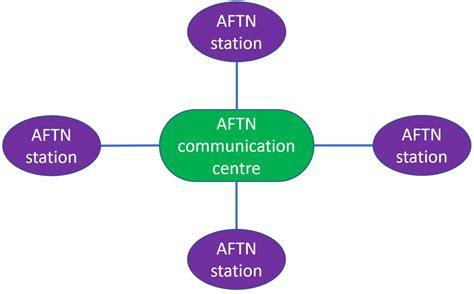
The Aeronautical Fixed Telecommunication Network, or AFTN, is a global system designed for the exchange of messages and digital data among aeronautical fixed stations. This network ensures that communication is seamless between stations with compatible characteristics. According to ICAO Annex 10 Vol II, the AFTN consists of two main types of aeronautical fixed stations: AFTN communication centers and AFTN stations.
An AFTN communication center acts as a relay point for messages sent to or from various interconnected AFTN stations. Most aerodromes providing Air Traffic Services (ATS) have an AFTN station. When several of these stations connect around an AFTN center, they form what is called an AFTN circuit. This allows for efficient communication across a network of fixed aeronautical telecommunication lines.
AFTN stations can connect to multiple centers or other stations, enhancing their reach. These connections utilize either terrestrial or radio lines, ensuring robust communication capabilities.
Each AFTN message includes three main parts: a heading, the message text, and an ending. The heading contains important details such as message identification, an address line with priority indicators, and originator information including filing time and sender address. The message text is written in plain text, using capital letters, numbers, and special characters. Finally, the ending features twelve letter shift signals that serve as a separation signal for the message.
AFTN addresses follow a specific format. They start with a four-letter location indicator, followed by a three-letter designator that identifies the organization. If no designator is available, ‘YYY’ is used, while ‘ZZZ’ is designated for aircraft in flight. An additional letter may represent a department within the organization, with ‘X’ completing the address when explicit identification is unnecessary. For example, the address EBLGZTZX can be decoded as Liège Airport (EBLG), an aerodrome control tower (ZTZ), with ‘X’ indicating that further identification is not required.
AFTN messages are categorized based on priority indicators. Distress messages, marked with ‘SS’, report imminent danger and require immediate assistance. Urgency messages, indicated by ‘DD’, concern safety issues related to vehicles or people. Flight safety messages (‘FF’) include critical movement and control communications, while meteorological messages (‘GG’) cover forecasts and observations. Other categories include flight regularity messages, aeronautical information services messages, and aeronautical administrative messages, all following specific priority indicators. Service messages are issued by aeronautical fixed stations to verify the accuracy of previously transmitted messages.
The established order of priority for message transmission is as follows: SS, DD, FF, GG, KK.