The question “Do fighter pilots always fly the same jet?” often sparks curiosity among aviation enthusiasts and military observers alike. The truth lies in the complex interplay of pilot training, aircraft maintenance, and operational requirements within modern air forces such as the U.S. Air Force (USAF), Royal Air Force (RAF), and Japan Air Self-Defense Force (JASDF). In this comprehensive analysis, we explore whether a fighter pilot’s aircraft is fixed or random, diving deep into the structure of flight assignments, training systems, and real-world practices across air combat units.
Fighter Pilot Training and Aircraft Assignment
To understand whether a fighter pilot flies a specific aircraft or rotates among several, we must first look at how a fighter pilot earns aircraft qualifications. In the United States Air Force, pilots undergo a rigorous progression:
| Training Phase | Aircraft Used | Description |
|---|---|---|
| Undergraduate Pilot Training (UPT) | T-38 Talon | Teaches fundamental flight skills and basic combat maneuvers |
| Introduction to Fighter Fundamentals (IFF) | T-38C Talon | Focuses on air combat tactics, weapons delivery, and formation flying |
| Formal Training Unit (FTU) | F-16, F-15, F-35, A-10, etc. | Trains the pilot specifically for their assigned fighter model |
Once a pilot graduates from the Formal Training Unit, they are “soft-locked” into a Mission Design Series (MDS) — for example, F-16 Fighting Falcon, F-35 Lightning II, or F-15E Strike Eagle. This means the pilot becomes qualified and certified to fly only that type of aircraft.
A pilot cannot randomly switch between an F-16 and an F-35 without undergoing additional type-specific training. Each MDS involves different avionics, flight characteristics, and mission profiles.
Thus, while a pilot’s aircraft type is fixed, their specific aircraft tail number—the actual jet they fly—usually isn’t.
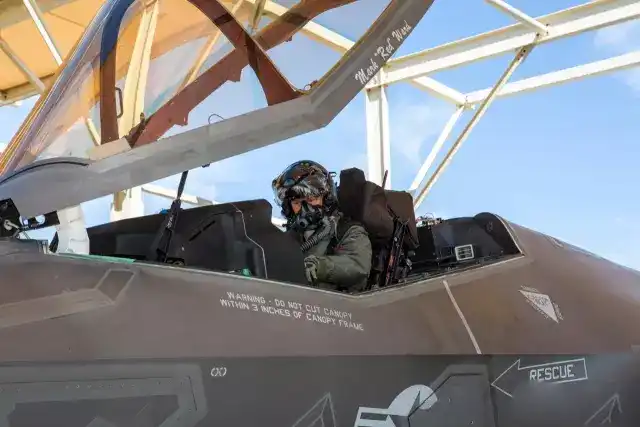
Aircraft Rotation: The Operational Reality
Inside every operational fighter squadron, aircraft availability and pilot assignments are coordinated daily by maintenance control and operations scheduling teams.
Maintenance determines which aircraft are mission capable (MC) after inspections, repairs, or servicing. Operations then assigns available aircraft to pilots based on training needs, mission objectives, and sortie rotation.
This system means that pilots typically rotate across several different tail numbers rather than being permanently assigned to one jet.
For instance, at an F-16 squadron under Air Combat Command (ACC), a pilot may fly F-16C tail number 89-2034 on Monday, then F-16C 91-0412 on Wednesday.
Even though the canopy rail might display a pilot’s name — such as “Capt. John ‘Viper’ Davis” — it’s a mark of tradition and pride, not an operational assignment. The nameplate signifies squadron heritage and the partnership between the pilot and their dedicated crew chief, who oversees that aircraft’s maintenance.
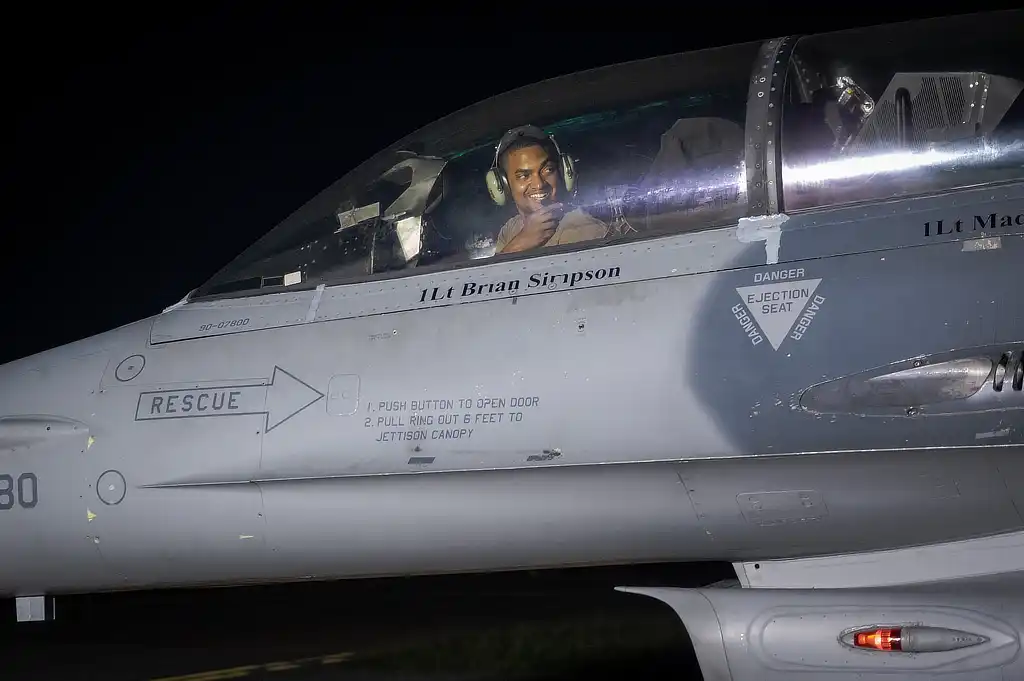
The Role of the Dedicated Crew Chief Program
In the Dedicated Crew Chief (DCC) system, each aircraft is paired with a maintenance technician responsible for its condition, readiness, and reliability. The DCC often ensures that the aircraft is in top condition for whichever pilot flies it.
While the pilot’s name may appear on the aircraft, this association primarily honors the bond between maintenance and aircrew, rather than indicating ownership or permanent assignment.
For example, a DCC may proudly stencil “Lt. Col. Sarah Bennett” on her assigned jet’s fuselage, but if that F-15E is grounded or under inspection, another pilot — even a junior officer — may fly it instead.
Exceptions: When Pilots Fly the Same Jet Repeatedly
While most fighter pilots rotate between multiple airframes, there are special cases where a pilot regularly flies the same aircraft.
1. Demonstration Teams
Elite display teams such as the U.S. Air Force Thunderbirds, Navy Blue Angels, or SoloTürk in Turkey operate under different rules.
Each Thunderbird pilot flies a specific, numbered jet for the entire airshow season. The #1 jet is always the commander, #2 to #4 are the diamond formation, and #5 and #6 are the solos. Flying the same airframe repeatedly allows the pilots to build muscle memory, maintain precision, and achieve synchronized aerobatic performance.
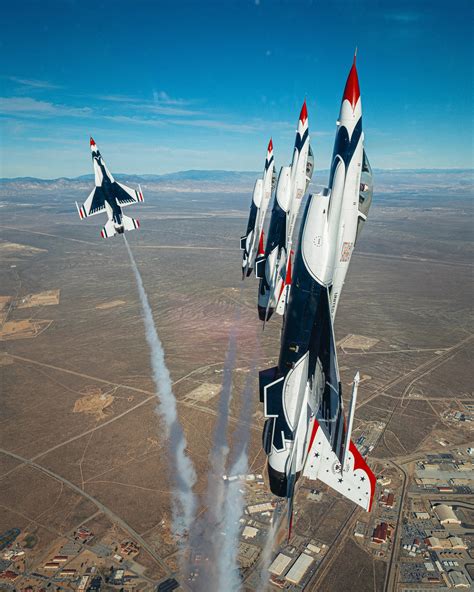
Similarly, the F-35A Demo Team and international equivalents like SoloTürk or the RSAF Black Knights designate specific aircraft for display flying, often painted with unique liveries.
However, even these pilots occasionally switch jets when maintenance requires a substitution.
2. Test and Evaluation Units
At facilities such as Edwards Air Force Base and Eglin Air Force Base, test pilots frequently fly the same instrumented aircraft over extended periods. These jets carry experimental avionics, flight sensors, telemetry pods, and data-recording systems unique to their test configuration.
Since no other aircraft may possess identical systems, test pilots become closely familiar with that jet’s behavior, performance quirks, and instrumentation layouts.
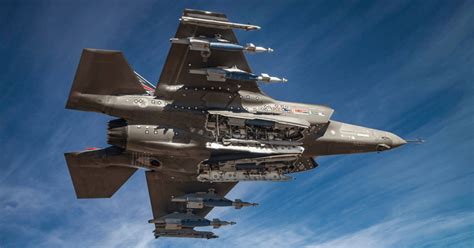
3. Specialized or Modified Aircraft
Certain aircraft possess classified mission systems or unique configuration modifications, such as electronic warfare pods or reconnaissance equipment. These require additional pilot training and security clearance. Consequently, the same few pilots may repeatedly fly those specialized airframes to maintain mission proficiency and security protocols.
For example, in units flying the RC-135 Rivet Joint or EA-18G Growler, pilots undergo specialized instruction and may consistently operate specific aircraft with advanced sensor suites.
Fighter Squadron Dynamics and Aircraft Allocation
A fighter squadron typically consists of 20 to 25 aircraft and a similar number of assigned pilots. However, aircraft availability fluctuates due to maintenance cycles, deployments, or upgrades.
At any given time, a squadron may have 60–70% mission-capable aircraft, meaning that pilots often share airframes depending on readiness.
Example: Typical Squadron Breakdown
| Category | Approximate Number | Description |
|---|---|---|
| Assigned aircraft | 24 | Total jets on paper |
| Mission capable | 16–18 | Ready to fly |
| In maintenance | 4–6 | Under inspection, repair, or phase maintenance |
| In depot or modification | 2 | Long-term maintenance or upgrades |
Thus, pilot-to-aircraft pairing is dictated by logistics, not personal preference.
The flexibility ensures that the squadron maintains high sortie generation rates and mission readiness, regardless of individual jet status.
Pilot Familiarity and Aircraft Performance
Even though pilots rotate across aircraft, each jet exhibits unique handling nuances — slight variations in control response, throttle feel, or sensor calibration. Experienced pilots quickly adapt, identifying subtle differences between tail numbers.
However, modern avionics and flight control systems — particularly in fifth-generation fighters like the F-35 Lightning II and F-22 Raptor — have minimized such variations. Digital flight computers standardize performance characteristics, making one F-35 nearly indistinguishable from another in handling.
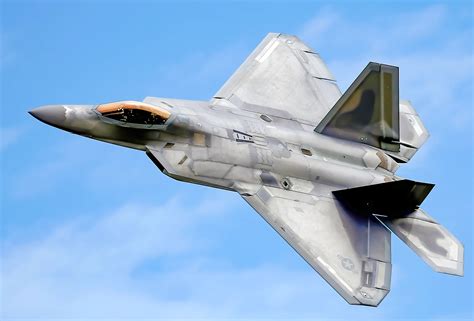
That said, older fourth-generation aircraft like the F-16 or F/A-18 still exhibit small “personality quirks” that seasoned pilots learn to recognize.
International Perspective: How Other Air Forces Operate
While the USAF system is widely followed, other nations have adapted similar or slightly modified approaches.
- Royal Air Force (RAF) pilots flying the Typhoon FGR4 rotate among available jets within their squadron, depending on maintenance readiness and mission profile.
- Japan Air Self-Defense Force (JASDF) F-15J pilots also share aircraft, with canopy stencils used mainly for ceremonial reasons.
- Israeli Air Force (IAF) squadrons, despite having advanced maintenance programs, likewise allocate aircraft per sortie rather than by personal assignment.
In nearly all cases, only demonstration, test, or experimental pilots consistently fly the same machine.
Symbolism Behind Aircraft Naming and Canopy Markings
The stenciled names on aircraft often generate misconceptions. When you see “Capt. John ‘Reaper’ Taylor” printed below an F-35 canopy, it symbolizes unit pride, morale, and recognition rather than ownership.
This practice dates back to World War II when bomber crews decorated aircraft noses with art and crew names. Today, the tradition continues as a morale-boosting custom across air forces worldwide.
Key Takeaway
To summarize, fighter pilots are assigned to a specific aircraft type (MDS), not a specific jet. They may have their names painted on certain airframes, but operationally, pilots rotate among all available aircraft in their unit. Only in demonstration, testing, or specialized mission roles do pilots consistently fly the same aircraft.
This flexible system ensures optimal mission readiness, aircraft utilization, and crew proficiency, while maintaining the pride and camaraderie that defines fighter squadrons around the world.
FAQs
1. Do fighter pilots own their aircraft?
No. Fighter pilots do not own or permanently control a specific jet. Aircraft are assets of the Air Force, and pilots are assigned to whatever airframe is available and mission-ready at the time.
2. Why do some jets have pilot names on them?
The names represent honor and tradition rather than ownership. They often include both the pilot’s and the dedicated crew chief’s names, celebrating teamwork and aircraft maintenance excellence.
3. Do test or demo pilots always fly the same plane?
Yes, in certain circumstances. Test pilots may repeatedly fly the same jet due to unique instrumentation or software, and demonstration pilots use specific, specially painted aircraft throughout their show season.
In essence, while a pilot’s aircraft type remains fixed through training and qualification, the actual jet they fly can vary from sortie to sortie. The modern fighter world thrives on flexibility, precision, and teamwork — principles that ensure every aircraft, and every pilot, remains mission-ready.