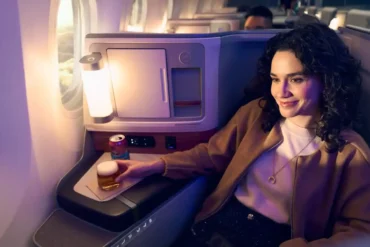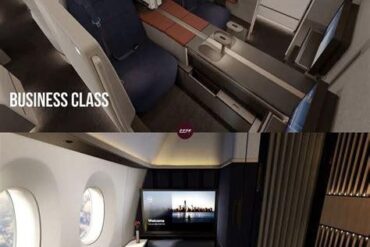
Air travel is undergoing a quiet but profound transformation, and Air Canada has just made one of the most calculated moves in the premium aviation space. Rather than loudly announcing the return of first class, the airline has done something far more strategic—it has reimagined it entirely. Hidden within the business class cabin of its incoming Boeing 787-10 Dreamliner, a new concept is emerging that challenges everything travelers thought they knew about luxury in the sky.
This is not simply a cabin upgrade. It is a deliberate restructuring of premium travel economics, where exclusivity, flexibility, and profitability converge in a way traditional first class never quite achieved. At the center of this shift sits a product that doesn’t wear the first-class label—but in many ways, surpasses it.
A Subtle Revolution Hidden in the First Row
Air Canada’s new cabin strategy is deceptively understated. At first glance, passengers boarding the Boeing 787-10 may see what appears to be an enhanced version of the airline’s Signature Class. But look closer, and a different story unfolds.
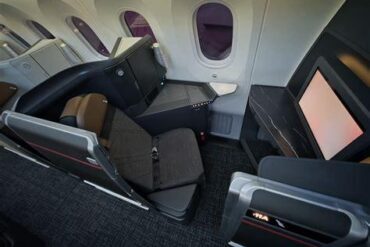
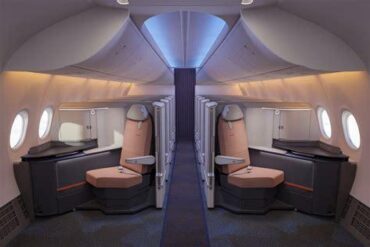
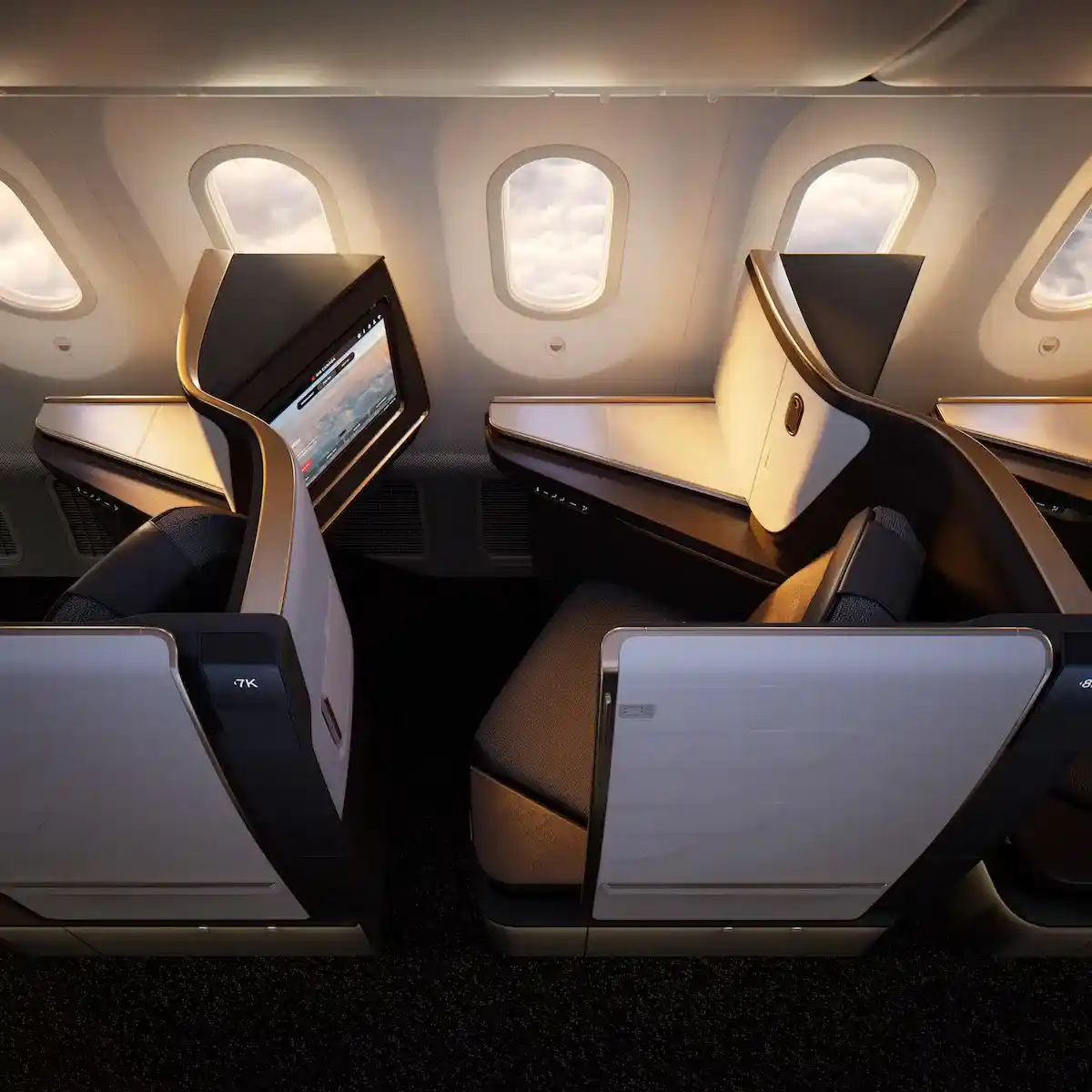
Positioned in the first row of the business class cabin, just four seats stand apart. These are the Signature Plus Suites—a micro-cabin within a cabin, designed to create separation without the operational burden of a dedicated first-class section.
This is where the brilliance lies.
Instead of committing valuable aircraft space to a full first-class cabin—often consisting of six to eight seats with inconsistent demand—Air Canada has carved out just four ultra-premium suites. This allows the airline to:
- Maximize revenue per square meter
- Maintain cabin flexibility across routes
- Offer exclusivity without overcommitting resources
The result is a product that feels rare and elevated, not because it is labeled “first class,” but because it is deliberately scarce.
Inside the Signature Plus Suite: Where Business Class Ends and First Class Begins
Step inside one of these suites, and the distinction becomes immediately clear. This is not incremental improvement—it is a redefinition of expectations.
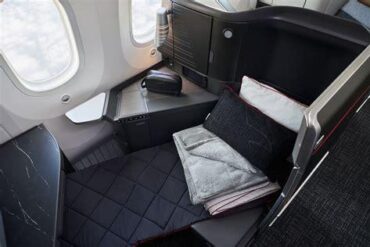
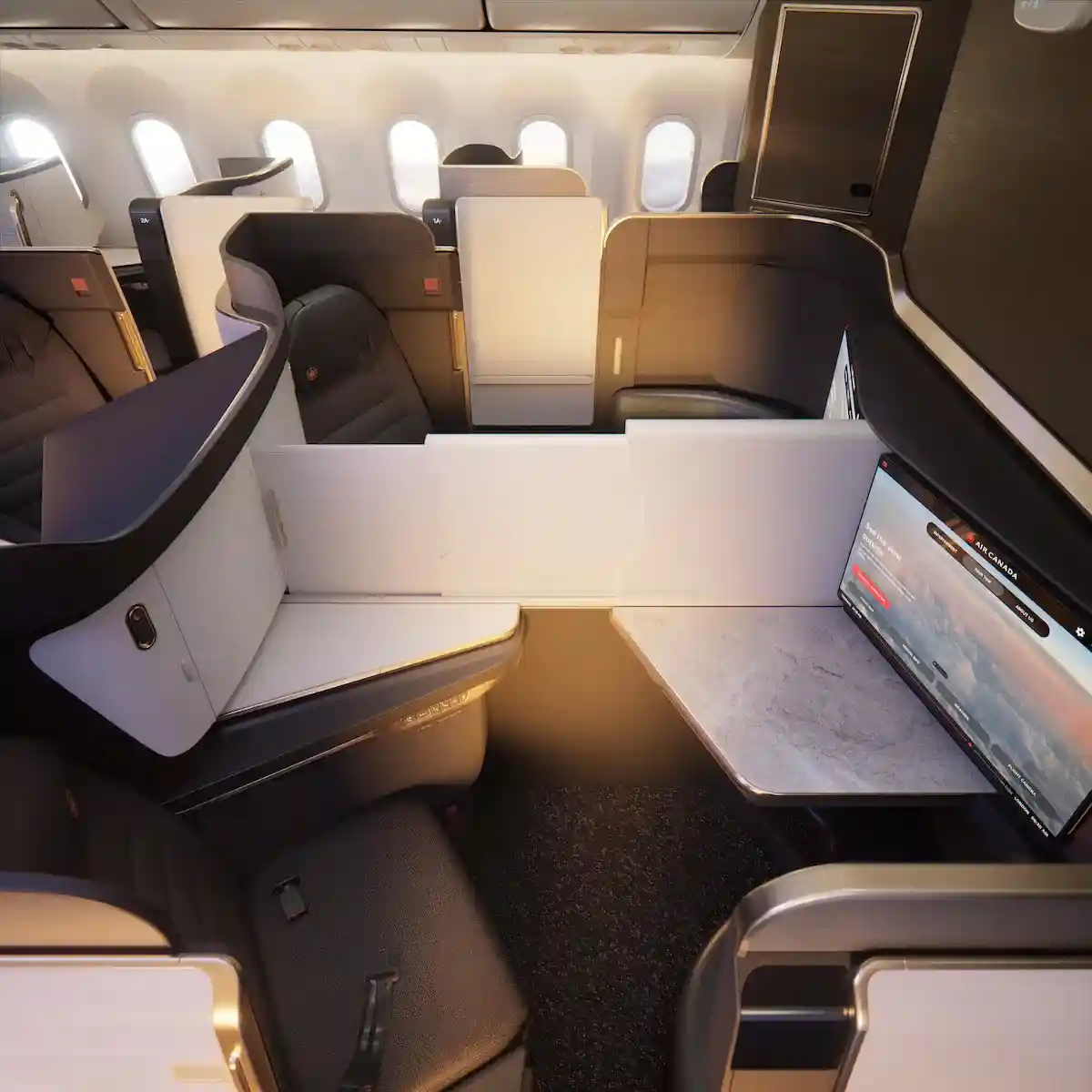
Each suite features a fully flat bed stretching approximately two meters, offering generous sleeping space even for taller passengers. While lie-flat seating is standard in modern business class, the added real estate of the front-row configuration delivers a noticeably more expansive and comfortable rest environment.
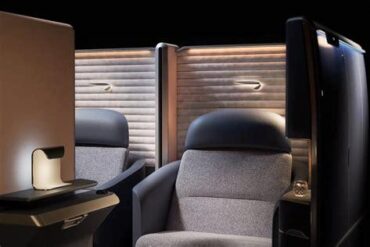
Privacy is taken seriously here. High sliding doors create a cocoon-like enclosure, minimizing visual intrusion from the aisle and neighboring passengers. The design doesn’t just suggest privacy—it enforces it.
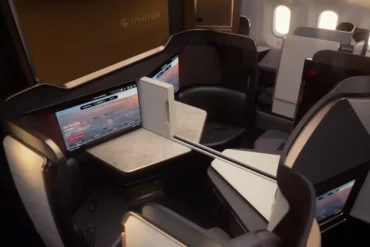
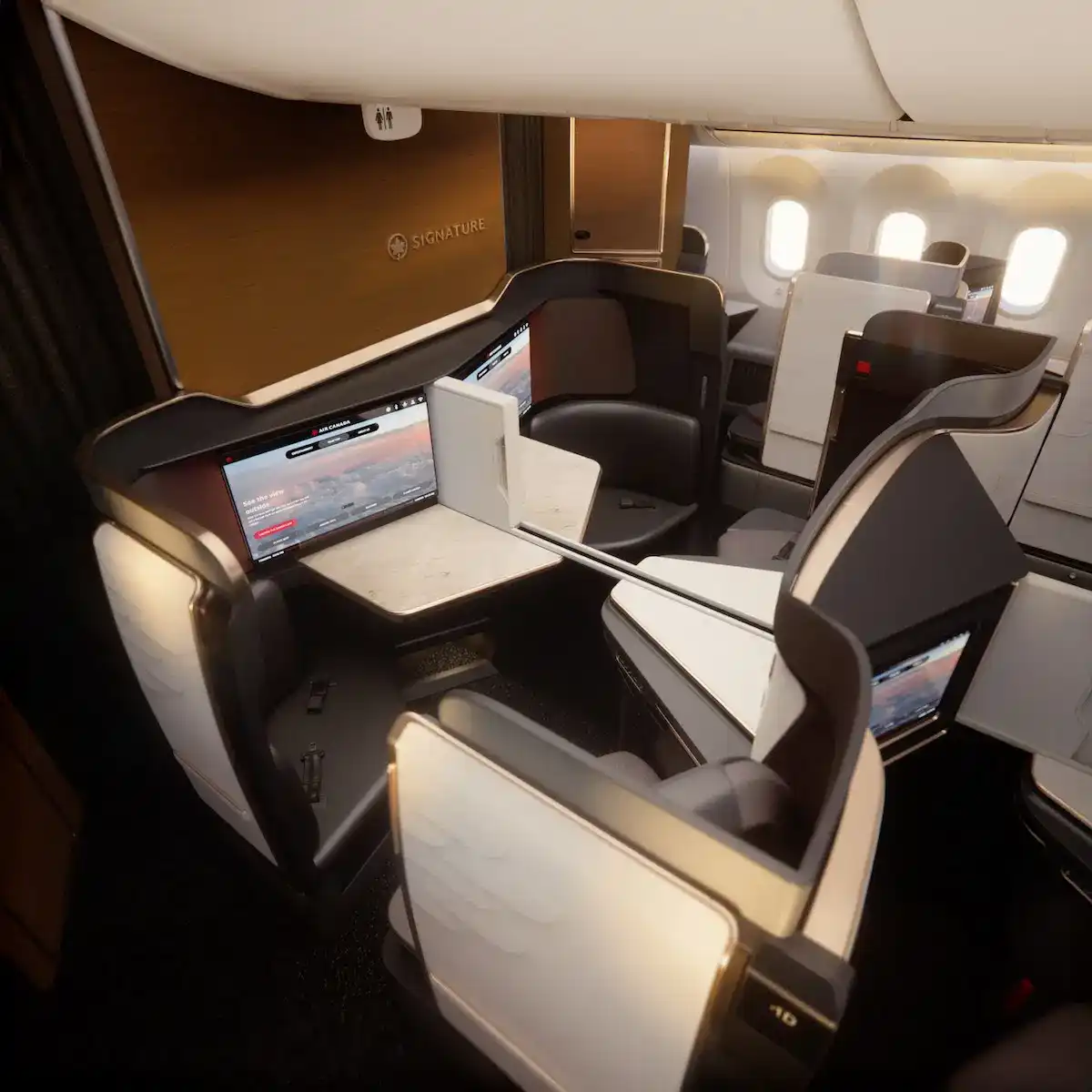
Then comes the material choice. A quartzite-topped table introduces a tactile, residential quality rarely seen outside flagship first-class cabins. It’s a subtle but powerful signal: this space is meant to feel less like an aircraft seat and more like a personal living suite at 35,000 feet.
Technology reinforces the premium positioning:
- 27-inch 4K OLED display, dramatically larger than typical business class screens
- Bluetooth audio connectivity for wireless headphones
- USB-C and multiple charging ports for modern productivity
And perhaps most telling of all, each suite includes a companion seat, allowing a second passenger to join for dining or conversation—an unmistakable hallmark of traditional first class.
From Isolation to Interaction: A Social Cabin Concept
Luxury air travel has long been defined by privacy. But Air Canada’s new suites introduce something equally valuable: controlled social interaction.
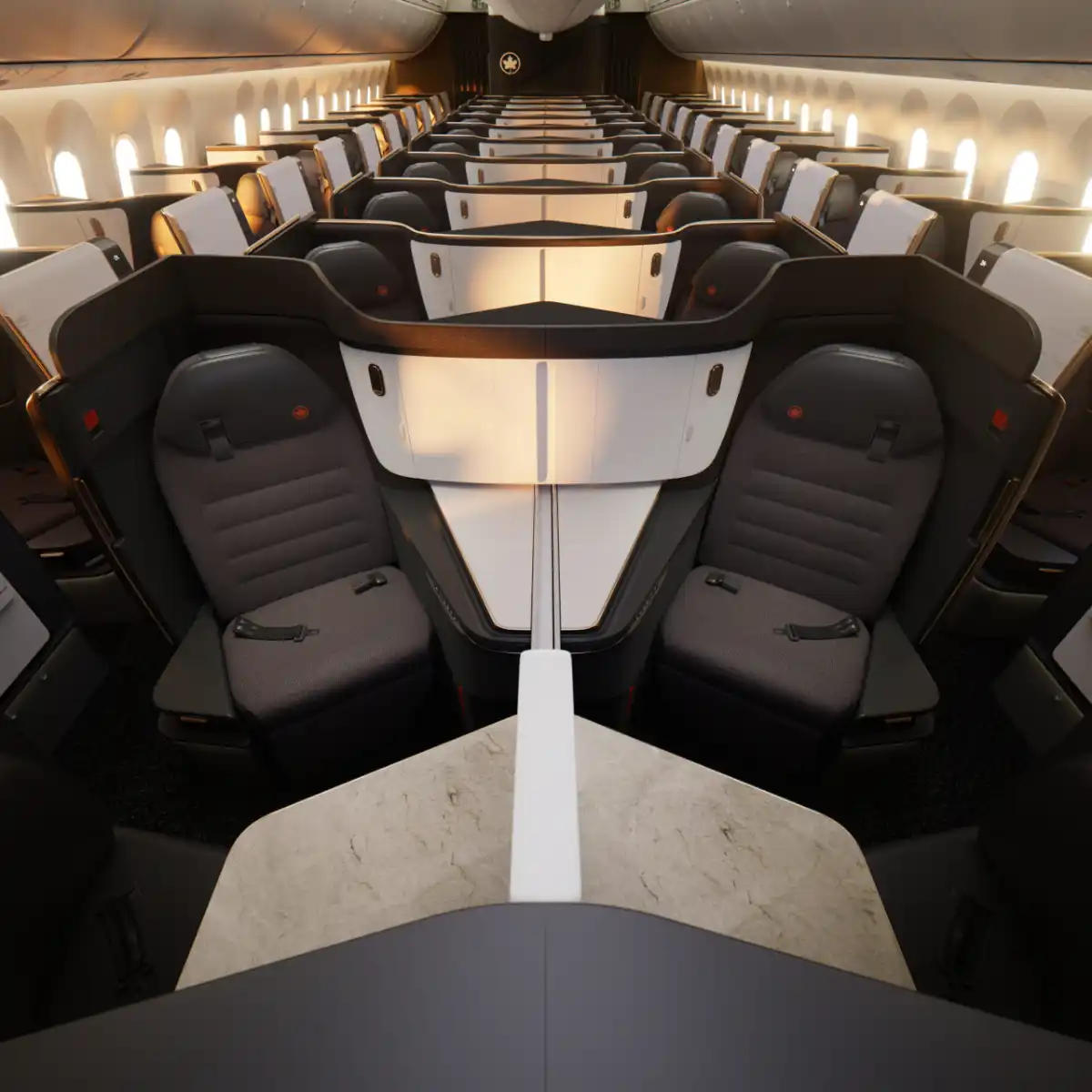
The two center suites feature fully retractable dividers, enabling them to transform into a shared space mid-flight. When opened, these suites create a semi-private lounge environment where up to four passengers can interact comfortably.
This flexibility introduces a new dimension rarely seen in premium cabins:
- Families can travel together without separation
- Business colleagues can collaborate mid-flight
- Groups can create a shared experience without sacrificing privacy when needed
Traditional first-class cabins, with their rigid layouts, often struggled to accommodate this kind of versatility. Air Canada’s approach reflects a deeper understanding of modern travelers: luxury is no longer just about isolation—it’s about choice.
The Aircraft Behind the Strategy: Boeing 787-10’s Role
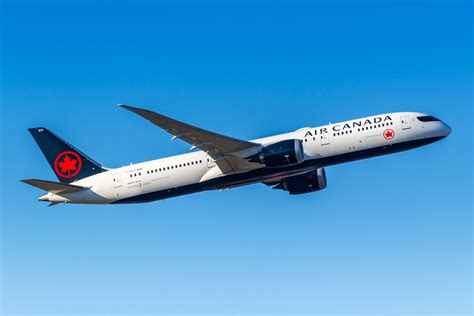
The choice of aircraft is no coincidence. The Boeing 787-10 Dreamliner is uniquely suited to this hybrid premium model.
As the largest member of the 787 family, it offers increased passenger capacity while maintaining the Dreamliner’s hallmark efficiency. Air Canada plans to configure the aircraft with 332 seats, including:
- 42 business class (including 4 Signature Plus Suites)
- 28 premium economy
- 262 economy
This relatively high-density layout reflects a broader industry reality: airlines must carefully balance passenger comfort with operational profitability.
Compared to the smaller 787-8 and 787-9 variants already in Air Canada’s fleet, the 787-10 allows for:
- Greater revenue potential per flight
- More flexibility in premium cabin design
- Improved cost efficiency on high-demand routes
With 14 aircraft on order, Air Canada is not experimenting—it is committing to this model for the long term.
The Rest of Business Class: Consistency Without Compromise
Behind the four Signature Plus Suites, the remaining business class cabin continues to deliver a strong, competitive experience.
The 38 seats are based on the Adient Ascent platform, arranged in a reverse herringbone configuration—a layout widely regarded as one of the best in long-haul business class.
Every passenger benefits from:
- Direct aisle access
- Sliding privacy doors
- Spacious seating with lie-flat capability
This consistency is crucial. While the Signature Plus Suites offer enhanced exclusivity, the rest of the cabin ensures that standard business class remains highly competitive on a global scale.
The gap between tiers is intentional but not alienating—a careful balance that preserves brand integrity while incentivizing upgrades.
Design Language: The “Glowing Hearted” Identity
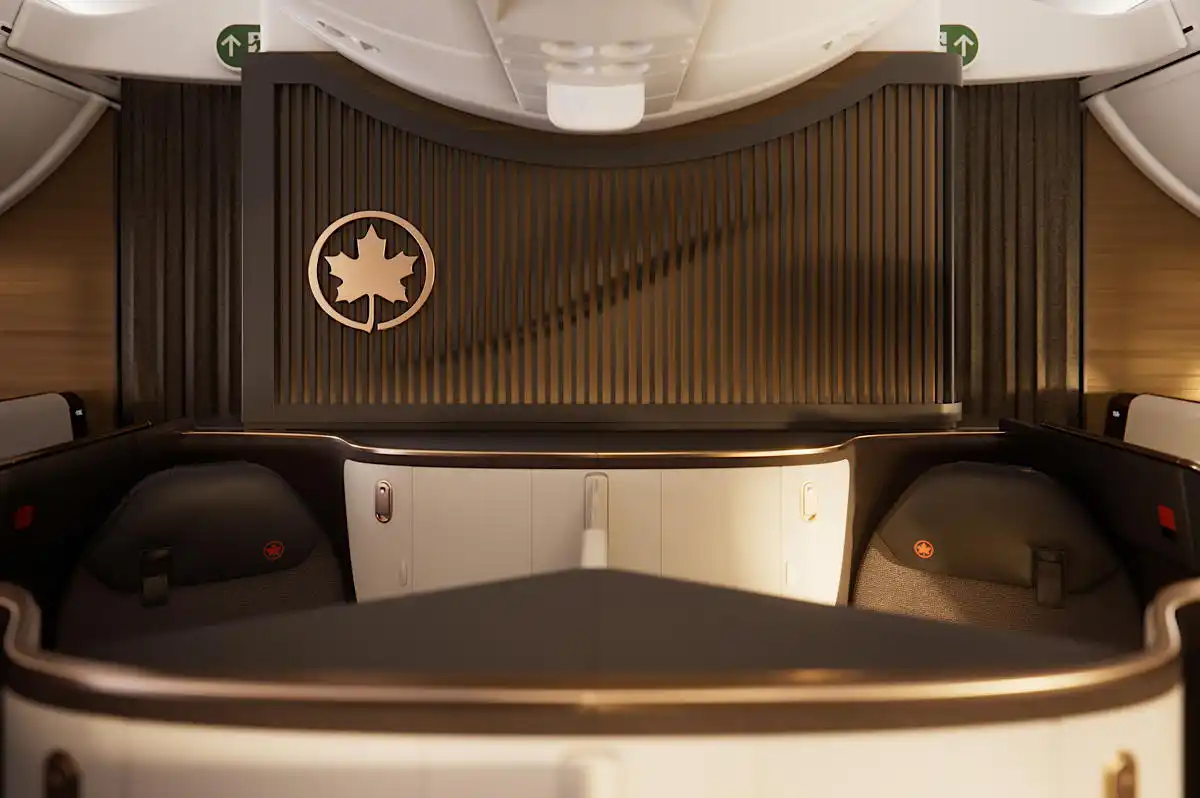
Beyond hardware, Air Canada is leveraging design to reinforce its premium positioning. The new cabins are built around the airline’s Glowing Hearted design philosophy—a distinctly Canadian aesthetic that blends warmth, elegance, and subtle national identity.
Expect to see:
- Maple leaf motifs integrated into finishes
- Warm wood textures and bronze accents
- Soft ambient lighting that adapts throughout the flight
In the Signature Plus Suites, these elements are elevated further, creating an environment that feels closer to a boutique hotel suite than a traditional aircraft cabin.
Lighting plays a particularly important role. Carefully calibrated illumination enhances both comfort and functionality, supporting everything from dining to sleep without harsh transitions.
The Industry Shift: First Class Is Disappearing—By Design
To understand the significance of Air Canada’s move, it helps to look at the broader industry context.
Traditional first-class cabins have been steadily disappearing, particularly among North American carriers. Airlines like American Airlines and United Airlines have already moved away from offering true international first class on many routes.
The reasons are straightforward:
- High operational costs
- Limited and inconsistent demand
- Inefficient use of cabin space
In contrast, embedding a premium tier within business class offers a far more sustainable model. Airlines can deliver many of the same benefits—privacy, space, premium materials—without the overhead of a separate cabin.
Air Canada’s Signature Plus Suite is a textbook example of this evolution.
It captures the essence of first class while avoiding its traditional limitations.
Why This Model Works—For Airlines and Passengers
From a business perspective, the advantages are undeniable.
Airlines gain:
- Higher yield per premium seat
- Greater flexibility in pricing and inventory
- Reduced operational complexity
Passengers, meanwhile, benefit from:
- Access to near-first-class experiences at potentially lower price points
- More availability compared to ultra-limited first-class cabins
- Greater customization of the travel experience
This is not a downgrade. It is a recalibration of value, where the focus shifts from rigid class definitions to experience-driven differentiation.
A Glimpse Into the Future of Premium Travel
Air Canada’s approach is more than a product launch—it is a preview of where premium aviation is heading.
As the lines between business and first class continue to blur, the next phase of innovation will likely center on:
- Personalization of onboard experiences
- Modular cabin designs that adapt to passenger needs
- Enhanced digital integration and connectivity
The Signature Plus Suite is an early expression of this future—a product that prioritizes flexibility, efficiency, and emotional appeal over traditional labels.
And perhaps that is the most telling detail of all.
Air Canada didn’t eliminate first class. It simply absorbed it, refined it, and reintroduced it under a smarter, more sustainable form.

Conclusion: First Class Isn’t Gone—It’s Just Evolved
The aviation industry rarely changes overnight. Instead, it evolves through subtle, strategic shifts that only become obvious in hindsight.
Air Canada’s four Signature Plus Suites represent one of those moments.
They are not marketed as first class. They don’t need to be.
Because in every meaningful way—space, privacy, materials, and experience—they deliver what modern travelers actually value. And they do so within a framework that makes sense for both airlines and passengers.
This is not the end of first class.
It is its quiet reinvention.