The Boeing 787-9 Dreamliner has quietly transformed from a mid-tier long-haul aircraft into one of the most strategically important platforms for premium travel innovation. While flagship aircraft like the Airbus A350-1000 or Boeing 777-300ER still command attention, the 787-9 is now where airlines are placing their most forward-thinking business class products. In 2026, this shift becomes undeniable, as multiple global carriers roll out all-new business class suites designed specifically for the Dreamliner’s unique cabin geometry.
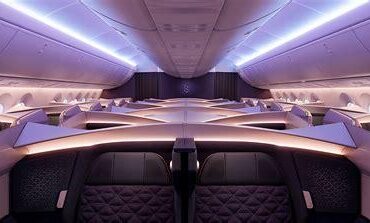
This is not about bigger seats anymore. The modern battlefield of premium cabins revolves around privacy, ergonomics, and intelligent use of space. Airlines are optimizing every square inch, introducing privacy doors, advanced inflight technology, and refined seat architectures that enhance comfort without compromising density. The result is a new generation of business class suites that feel more personal, more intuitive, and more premium—without necessarily being larger.
By 2026, the Dreamliner is no longer just a workhorse. It is becoming the stage for innovation, where airlines test and deploy their next-generation passenger experience.
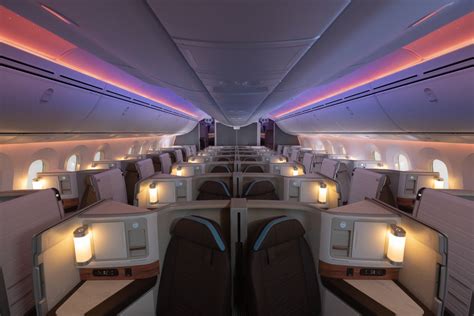
The Shift Toward Smarter, Not Bigger, Business Class Suites
For years, business class design followed a predictable trajectory: more space, wider seats, longer beds. That era is ending. The constraints of the 787’s narrower fuselage have forced manufacturers and airlines to rethink what truly matters.
Instead of chasing size, the focus has shifted toward:
- Enhanced privacy through sliding doors and high shell walls
- Improved ergonomics for sleeping, lounging, and working
- Integrated technology like wireless charging and Bluetooth connectivity
- Optimized layouts that maintain direct aisle access for every passenger
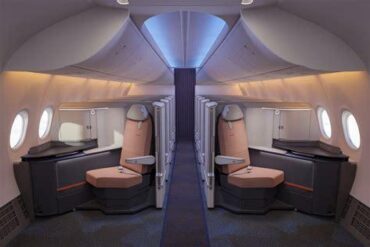
Seat platforms like the Elevate Ascent, Safran Fusio derivatives, and Recaro R7 exemplify this evolution. These designs are not radical departures but highly refined iterations of proven concepts, engineered specifically for the Dreamliner’s dimensions.
This subtle evolution is what makes 2026 particularly compelling. The improvements may seem incremental on paper, but in practice, they deliver a significantly more polished and cohesive passenger experience.
United Airlines and Air India: Early Movers Setting the Standard
Before diving into what’s coming, it’s essential to understand what is already flying. Both United Airlines and Air India have begun introducing next-generation business class suites on their Boeing 787-9 fleets, setting a clear benchmark for competitors.
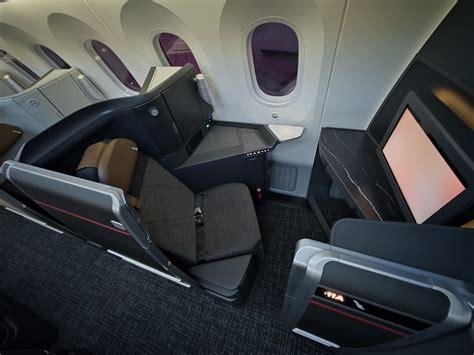
United’s new “Elevated” interiors feature the Elevate Ascent seat for Polaris, paired with an upgraded front-row Polaris Studio concept. These cabins emphasize privacy, larger entertainment screens, and refined finishes, marking a noticeable leap from previous Polaris configurations.
Air India, meanwhile, has taken delivery of newly built 787-9 aircraft featuring the same Ascent platform, but with its own distinct design language. These aircraft are being deployed on key routes such as Mumbai to Frankfurt, showcasing India’s ambition to reposition itself as a premium global carrier.
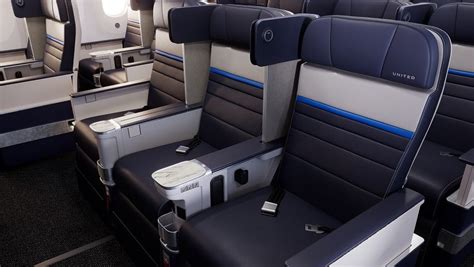
What’s important here is not just the hardware—but the consistency of direction. Across airlines, the same themes are emerging: privacy, efficiency, and technological integration.
Alaska Airlines: A New Long-Haul Identity Takes Flight in 2026
April 2026 marks a defining moment for Alaska Airlines as it launches its first true long-haul route from Seattle to Rome using the Boeing 787-9. This is more than a route launch—it is the birth of a new premium identity for the airline.
Interestingly, Alaska is not introducing a brand-new seat. Instead, it is leveraging existing 787-9 aircraft inherited from Hawaiian Airlines, equipped with the Elevate Ascent business class suites. This decision reflects a broader industry trend: deploy proven, high-quality products quickly rather than delaying for bespoke designs.
What sets Alaska apart is its soft product strategy. The airline is crafting a distinctly Pacific Northwest experience, featuring:
- Locally inspired catering
- Amenity kits with Salt & Stone products
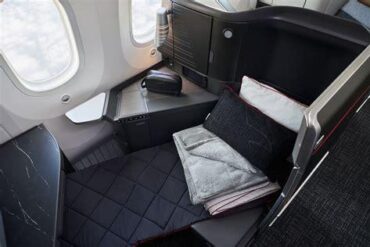
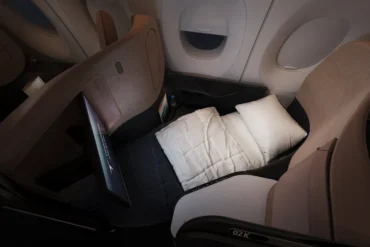
- Premium bedding designed by Filson
However, there is a notable gap: no onboard Wi-Fi at launch. Alaska plans to introduce Starlink connectivity by 2027, which will eventually position it competitively in terms of inflight connectivity.
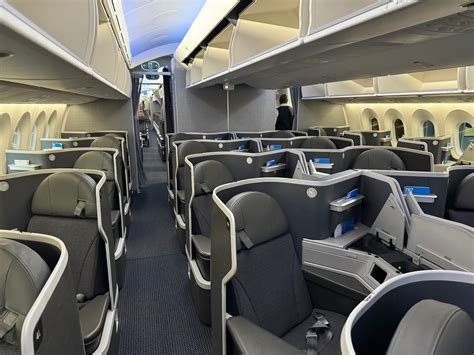
This approach highlights an important truth: in 2026, hardware alone is no longer enough. Airlines must deliver a holistic experience that blends seat design, service, and brand storytelling.
All Nippon Airways: Reinventing “The Room” for the Dreamliner
Few business class products have achieved the acclaim of All Nippon Airways’ “The Room”, originally launched on the Boeing 777-300ER. In 2026, ANA is bringing this concept to the 787-9 with a redesigned variant: “The Room FX” (Future eXperience).
This is not a simple downsizing exercise. It is a complete re-engineering tailored to the Dreamliner.
The Room FX introduces several critical upgrades:
- Extended bed length of 76.5 inches, addressing a major limitation of the original
- Pre-reclined seating architecture, eliminating heavy electric motors
- Manual leg-rest mechanism that transforms into a bed
- Advanced tech integration, including USB-C and wireless charging
The decision to adopt a non-reclining, pre-set seating position mirrors the philosophy behind Finnair’s AirLounge concept. While unconventional, it offers weight savings, mechanical simplicity, and improved reliability.
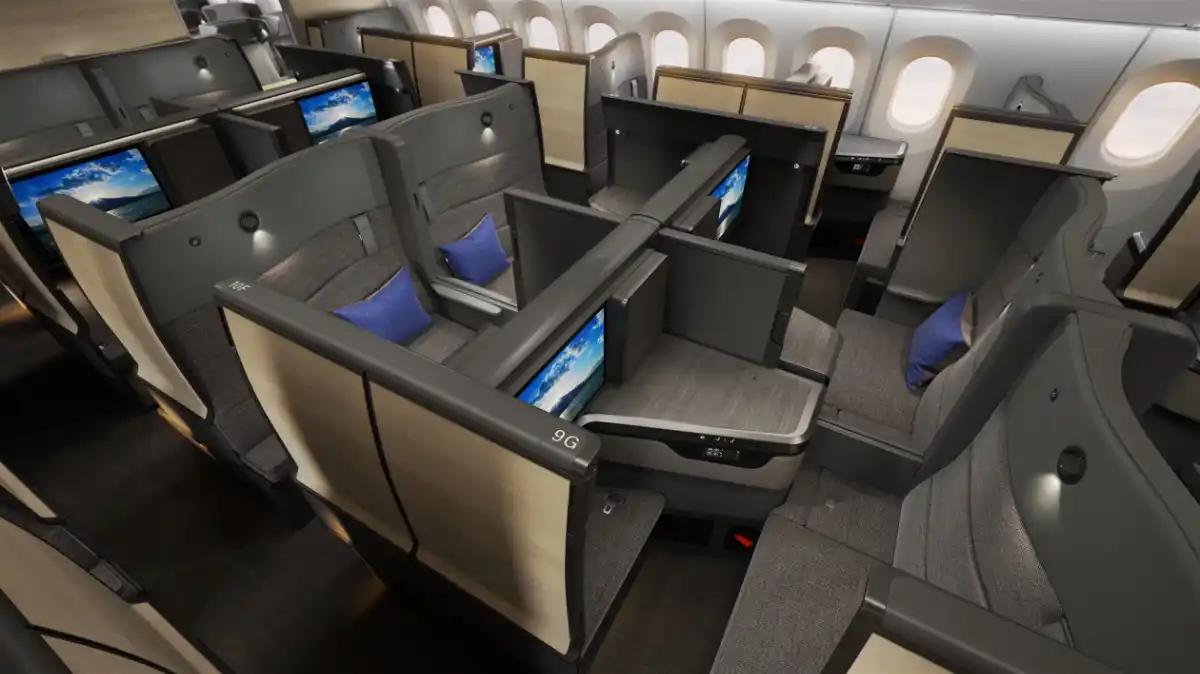
The result is a product that retains the spacious, sofa-like feel of The Room, while adapting intelligently to the 787’s constraints. ANA’s move reinforces its reputation as a design-driven airline willing to challenge conventions.
LOT Polish Airlines: A Necessary Leap Into Modern Business Class
For LOT Polish Airlines, 2026 represents a long-overdue transformation. Its current 787 cabins, equipped with Safran Aura Lite seats in a six-abreast configuration, have fallen behind industry standards.
The introduction of the Recaro R7 business class seat changes everything.
This new product brings LOT firmly into the modern era with:
- Direct aisle access for every passenger
- Sliding privacy doors
- Staggered layout with alternating “honeymoon seats”
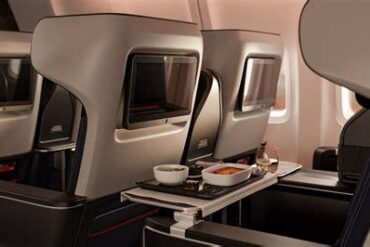
- 4K 17.3-inch displays with Bluetooth connectivity
- Wireless charging and USB-C ports
Unlike some competitors, LOT is focusing initially on retrofitting its 787-8 fleet, with potential expansion to the 787-9 later. This phased approach allows the airline to modernize without overwhelming capital expenditure.
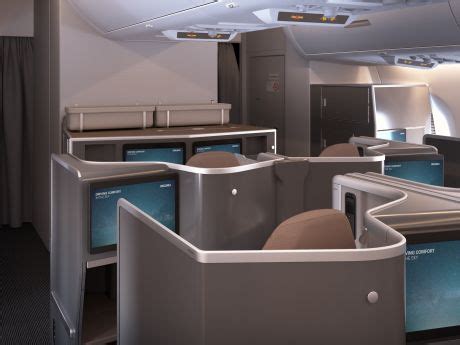
The significance of this upgrade cannot be overstated. It transforms LOT from a lagging operator into a competitive player in the transatlantic premium market.
Japan Airlines: The Quiet Giant Preparing Its Next Move
While details remain limited, Japan Airlines (JAL) is arguably the most intriguing player in this space. Following the success of its Safran Unity business class suites on the Airbus A350-1000, JAL is now preparing to bring a similar standard to its 787-9 fleet.
The challenge lies in adapting a wide, luxurious seat to the narrower Dreamliner fuselage. The Unity platform, as currently configured, may be too wide, forcing JAL to either:
- Develop a customized, narrower version of the Unity, or
- Select an entirely new seat optimized for the 787
Given JAL’s design philosophy, the most likely outcome is a highly customized solution that preserves its signature privacy, minimalism, and spatial efficiency.
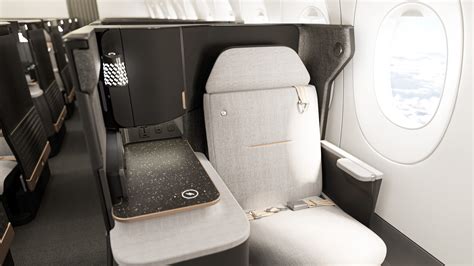
With new 787-9 deliveries expected from 2027 and retrofits potentially beginning in late 2026, JAL is positioning itself to deliver one of the most refined business class experiences in the industry—again.
Why the Elevate Ascent Platform Is Dominating the 787 Market
One of the most striking trends in 2026 is the widespread adoption of the Elevate Ascent seat platform. Originally developed as part of a Boeing-linked venture, it has quickly become the default choice for multiple airlines.
Its appeal lies in a combination of factors:
- Optimized for the 787’s cabin width
- Reverse herringbone configuration with high efficiency
- Fully enclosed suites with customizable finishes
- Scalable design suitable for different airline brands
Airlines including United, Air India, Alaska (via Hawaiian), Qatar Airways, and American Airlines have all selected variants of this platform. This level of adoption suggests a shift toward standardization at the structural level, with differentiation achieved through materials, finishes, and service elements.
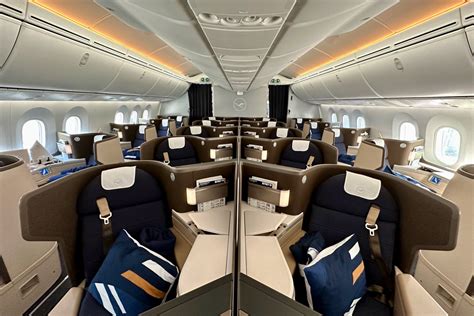
This trend mirrors what happened with earlier platforms like the Super Diamond—but with a sharper focus on modularity and customization.
The Technology Layer: Where the Real Innovation Happens
While seat architecture gets the headlines, the most meaningful advancements are happening in the technology layer.
Across 2026’s new business class suites, several features are becoming standard:
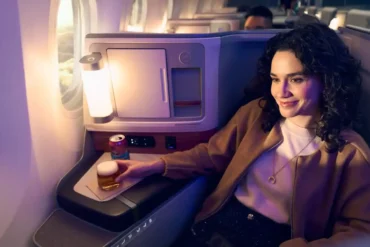
- Wireless charging pads integrated into side consoles
- USB-C fast charging ports
- Bluetooth audio connectivity for personal headphones
- Larger 4K entertainment screens
- Improved cabin lighting synchronized with circadian rhythms
These upgrades may seem incremental, but they directly impact how passengers interact with the seat environment. The goal is to create a space that feels less like a seat and more like a personalized digital cocoon.
This is where airlines can differentiate meaningfully—by delivering a seamless, intuitive experience that reduces friction during long-haul travel.
The Bigger Picture: The 787-9 as the New Premium Battleground
What emerges from these developments is a clear industry shift. The Boeing 787-9 is no longer a secondary platform—it is becoming the primary arena for premium cabin competition.
Several factors are driving this transformation:
- Fuel efficiency enabling more long-haul routes
- Right-sized capacity for thinner premium markets
- Passenger preference for newer aircraft with better cabin pressure and humidity
Airlines are responding by ensuring that their 787 cabins are not just competitive—but flagship-worthy.
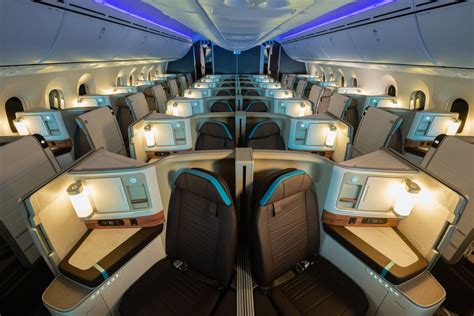
This is a profound change. It means passengers can now expect top-tier business class experiences on routes and aircraft that were previously considered secondary.
Conclusion: 2026 Marks a Turning Point for Business Class Design
The wave of new business class suites launching on the Boeing 787-9 in 2026 signals more than incremental progress. It represents a fundamental recalibration of priorities in premium travel.
Airlines are no longer chasing size for its own sake. Instead, they are focusing on precision design—balancing privacy, comfort, efficiency, and technology in ways that align with real passenger needs.
From ANA’s bold reimagining of The Room, to Alaska’s brand-driven long-haul debut, to LOT’s long-overdue modernization, each airline is approaching the challenge differently. Yet all are converging on the same goal: delivering a more refined, more personal, and more intelligent business class experience.
The Boeing 787-9, once seen as a supporting player, is now at the center of this transformation. And for passengers, that means one thing above all else: a significantly better journey—no matter where they fly.