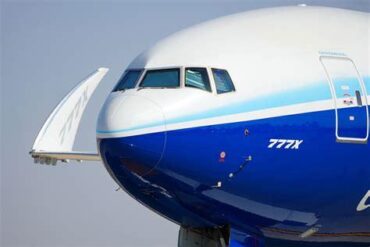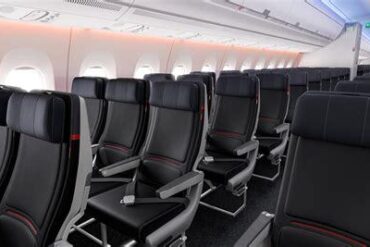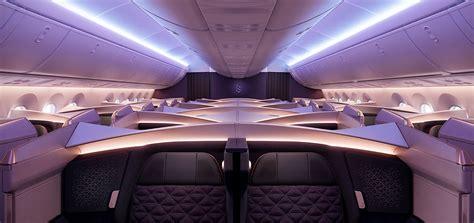
The Boeing 787 Dreamliner has long stood as a symbol of passenger-centric aviation design, but in recent years, it has evolved into something far more ambitious—a canvas for airlines to reimagine the entire long-haul travel experience. With its inherently advanced architecture—featuring lower cabin altitude, higher humidity levels, and oversized electrochromic windows—the aircraft already delivers a noticeably smoother and less fatiguing journey. Yet today’s leading carriers are pushing beyond these baseline advantages, transforming the 787 into a stage for cutting-edge cabin innovation, digital integration, and deeply personalized comfort.
What sets the newest generation of Boeing 787 cabins apart is not just incremental improvement, but a fundamental shift in philosophy. Airlines are no longer simply installing seats; they are crafting immersive environments that blur the line between transportation and lifestyle experience. From fully enclosed suites with residential-style finishes to 4K OLED entertainment ecosystems and wellness-driven lighting, these cabins reflect a broader industry push toward holistic passenger engagement.
Riyadh Air: A Digital-First Vision of the Future
Riyadh Air enters the aviation landscape not as a legacy carrier, but as a bold disruptor built from the ground up for the digital age. Its Boeing 787-9 cabin is a striking example of what happens when an airline designs its product with connectivity and user experience at the core, rather than as an afterthought.
The aircraft accommodates 290 passengers across four classes, yet it is the Business Elite cabin that truly commands attention. Configured in a 1-2-1 layout, each Safran Unity seat is enclosed within 52-inch-high privacy walls, complete with sliding doors that transform the space into a personal sanctuary in the sky. The design feels less like a traditional business class seat and more like a compact luxury suite, carefully engineered for both productivity and relaxation.
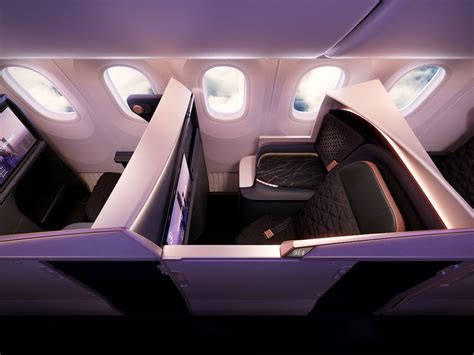
Technology defines the Riyadh Air experience. Each suite features a massive 32-inch 4K OLED display, currently the largest ever installed in a business class cabin. This is complemented by integrated headrest speakers, creating a layered, immersive audio environment that reduces reliance on headphones. The result is a cinematic inflight experience that rivals premium home entertainment systems.
Beyond hardware, the airline is pioneering a new approach to inflight software. Its adoption of Panasonic Avionics’ Modular Interactive platform allows for continuous updates and personalization, ensuring the system evolves alongside passenger expectations. Combined with free gate-to-gate high-speed WiFi, Riyadh Air effectively eliminates the traditional disconnect between ground and air, making connectivity feel seamless and uninterrupted.
Even in premium economy and economy cabins, the attention to detail is evident, reinforcing the airline’s commitment to delivering a consistently elevated experience across every price point.
United Airlines: Premium Density Meets Precision Design
United Airlines has taken a decisive leap forward with its United Elevated Boeing 787-9, signaling a clear intent to compete aggressively in the premium long-haul segment. Unlike many competitors, United’s strategy centers on maximizing premium seating density without compromising quality, resulting in a cabin that feels both efficient and indulgent.
At the forefront of this transformation is the Polaris Studio suite, positioned at the front of the business class cabin. These suites expand upon the existing Polaris concept, offering significantly more space, enhanced privacy, and added flexibility. Each suite includes a companion seat, enabling passengers to dine or interact face-to-face—an increasingly sought-after feature in premium travel.
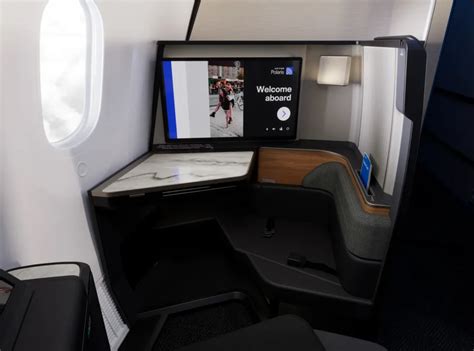
The technological suite onboard is equally compelling. Passengers are greeted with 27-inch OLED screens, wireless charging pads, and full Bluetooth connectivity, allowing seamless integration of personal devices. This reflects a broader understanding that modern travelers expect their digital ecosystem to follow them effortlessly across environments.
What truly distinguishes United’s approach is its emphasis on fleet-wide consistency. Rather than concentrating innovation solely in premium cabins, the airline has ensured that every seat onboard benefits from meaningful upgrades. Bluetooth connectivity is available throughout the aircraft, while enhanced seatback screens and refined materials create a cohesive aesthetic.
The introduction of free WiFi further strengthens the experience, particularly on ultra-long-haul routes such as San Francisco to Singapore. In this context, United’s 787 becomes more than a mode of transport—it transforms into a connected living space designed for the realities of modern travel.
American Airlines: Flagship Suites and Seamless Sophistication
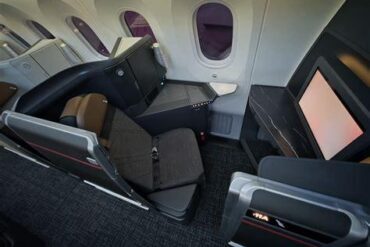
American Airlines has approached its Boeing 787-9 redesign with a clear objective: to create a premium product that balances privacy, comfort, and familiarity. The result is the Flagship Suite, a carefully considered evolution of business class that introduces fully enclosed seating without sacrificing accessibility or practicality.
Each suite features a sliding privacy door, direct aisle access, and a fully lie-flat bed, ensuring a restful experience on long-haul routes. The design places a strong emphasis on spatial efficiency, incorporating dedicated storage compartments for personal items and devices—an often-overlooked detail that significantly enhances usability.

A standout feature is the large 4K high-definition screen, which delivers crisp, vibrant visuals. Paired with updated lighting and refined finishes, the cabin achieves a modern yet calming ambiance, striking a delicate balance between innovation and comfort.
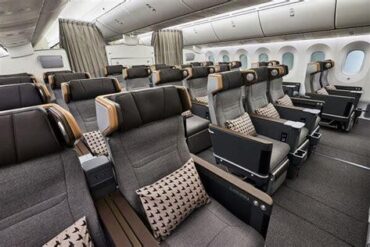
Importantly, American Airlines has extended these upgrades across all cabins. Premium economy seats now include calf and footrests, adjustable headrest wings, and wireless charging, elevating the mid-tier experience. Meanwhile, economy passengers benefit from 4K QLED screens, USB-C ports, and improved connectivity, ensuring that even the most accessible fares offer a meaningful step up in quality.
This holistic approach reflects a growing recognition that every passenger touchpoint matters, not just those at the front of the aircraft.
LATAM Airlines: Redefining South American Long-Haul Travel
LATAM Airlines has undertaken one of the most ambitious cabin retrofit programs in the industry, investing $360 million to completely transform its Boeing 787 fleet. The scale of this initiative is matched by its impact, positioning LATAM as a serious contender in the global premium travel market.
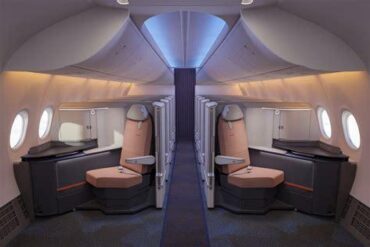
The introduction of fully enclosed business class suites marks a historic first for South America. These suites combine sleek modern design with subtle regional influences, creating a product that feels both globally competitive and uniquely local. One particularly distinctive feature is the inclusion of a real granite table, adding a tactile, almost residential quality to the space.
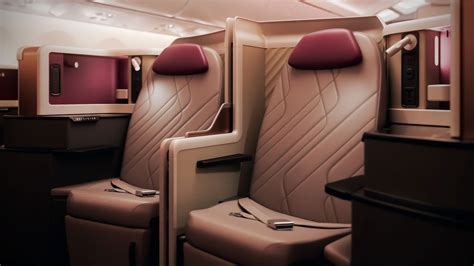
The technological upgrades are equally significant. LATAM has installed the Panasonic Avionics PAC eX3 system throughout the aircraft, delivering responsive performance and intuitive usability. Business class passengers enjoy 18-inch screens, while economy passengers benefit from 12-inch displays, both enhanced by Bluetooth connectivity for personal headphones.
The overall cabin design emphasizes balance and coherence, blending functionality with aesthetic appeal. Materials, lighting, and layout have been carefully orchestrated to create an environment that feels contemporary without being sterile, comfortable without being overly ornate.
This transformation signals a broader shift in LATAM’s strategic direction, as the airline moves to redefine expectations for long-haul travel within and beyond South America.
Air India: A Holistic Reinvention of Identity and Experience
Air India’s new Boeing 787-9 represents far more than a cabin upgrade—it is a comprehensive reinvention of the airline’s identity, driven by the Tata Group’s vision for a modern, globally competitive carrier. Every element of the cabin has been redesigned, from seats and galleys to lavatories and crew rest areas, resulting in a cohesive and thoughtfully integrated environment.
The design language is deeply rooted in the airline’s refreshed brand identity, characterized by a warm and inviting color palette that blends soft creams with rich reds, golds, and purples. Curved surfaces and tactile materials create a space that feels less mechanical and more human-centered, subtly redefining the emotional tone of the journey.
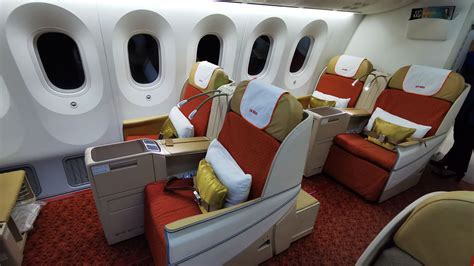
Perhaps the most innovative aspect of the cabin is its advanced mood lighting system, inspired by the concept of chakras. Featuring ten distinct lighting scenarios, the system is designed to support circadian rhythms, reduce jet lag, and promote relaxation. This focus on passenger well-being reflects a growing trend toward wellness-oriented design in aviation.
The result is a cabin that feels not only modern but also deeply intentional, where every detail contributes to a more comfortable and meaningful travel experience.
The New Standard for Boeing 787 Cabin Excellence
Across these five airlines, a clear pattern emerges: the Boeing 787 is no longer just a technologically advanced aircraft—it is a platform for storytelling, innovation, and brand differentiation. Each carrier brings its own philosophy to the table, whether it is Riyadh Air’s digital-first ecosystem, United’s precision-engineered premium density, American’s balanced sophistication, LATAM’s regional reinvention, or Air India’s holistic transformation.
What unites them is a shared commitment to elevating the passenger experience in tangible, visible ways. Privacy has become a baseline expectation, not a luxury. Connectivity is no longer optional but fundamental to modern travel. And design is evolving beyond aesthetics to encompass well-being, usability, and emotional resonance.
As competition intensifies, these innovations are likely to set new benchmarks for the industry, influencing not only future Boeing 787 configurations but also the broader trajectory of long-haul cabin design. For passengers, this means one thing above all: the journey itself is becoming just as important as the destination—and, in many cases, far more enjoyable.