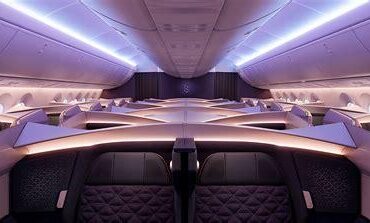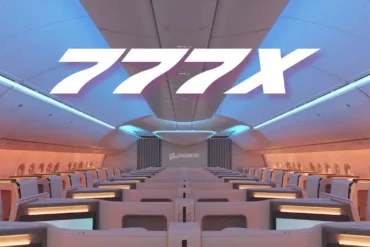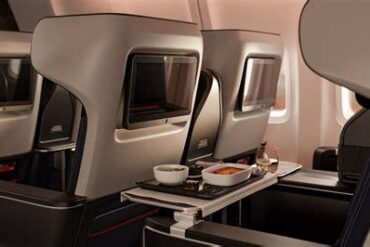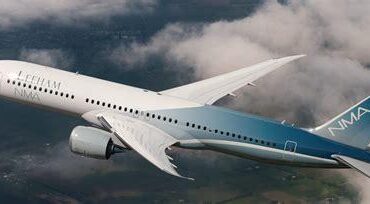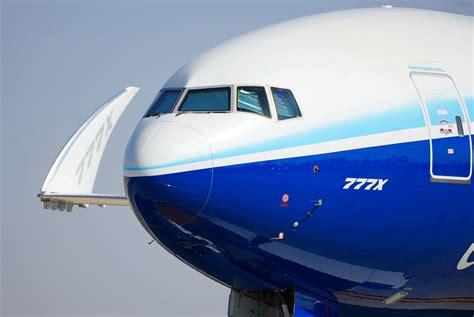
The Boeing 777X represents the most ambitious cabin redesign in the history of the iconic Triple Seven family. Positioned as the successor to the Boeing 777-300ER, this next-generation widebody integrates passenger-focused innovations from the 787 Dreamliner while competing directly against the Airbus A350-1000. With its massive fuselage, pioneering folding wingtips, and cabin enhancements tailored to long-haul comfort, the Boeing 777X’s next-generation cabin is not merely an upgrade—it is a statement of intent by Boeing to retain dominance in the premium twin-aisle market.
A Long-Awaited Upgrade in Passenger Comfort
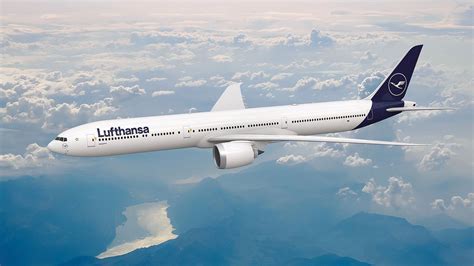
The launch of the Boeing 777X has been repeatedly delayed since its original planned entry into service in 2020. Regulatory scrutiny from the Federal Aviation Administration (FAA), particularly in the aftermath of the 737 MAX MCAS crisis, required extended testing, with special focus on the novel folding wingtips. Despite the setbacks, the 777X remains Boeing’s flagship aircraft, with Lufthansa expected to be the launch customer in 2026.
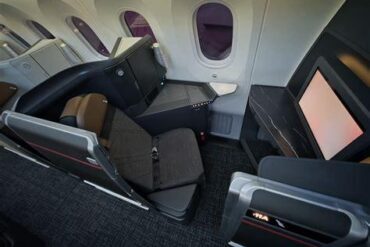
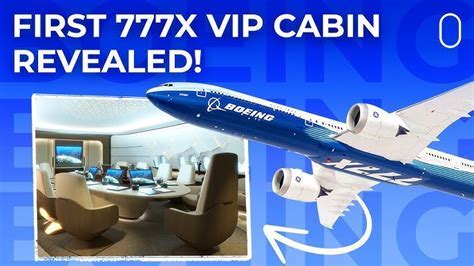
The 777X cabin is modeled closely on the Dreamliner philosophy, offering improvements in air pressure, humidity, noise insulation, lighting, and seating space. For passengers accustomed to the 777-300ER, this shift will be immediately noticeable, reducing jet lag, improving in-flight well-being, and delivering a more seamless travel experience across flights lasting 10 hours or more.
Following the Dreamliner’s Lead
Boeing has integrated its most successful cabin technologies from the 787 Dreamliner into the 777X program. These include:
- Lower Cabin Altitude Pressure: pressurized at 6,000 feet rather than 8,000 feet, which helps passengers feel less fatigued.
- Increased Cabin Humidity: reducing dry eyes, sore throats, and dehydration.
- Advanced Climate Control: ensuring even temperature distribution throughout the aircraft, eliminating hot and cold spots.
- Quieter Engines and Cabin Acoustics: thanks to laminar flow nacelles and advanced insulation.
These enhancements are not radical new inventions, but rather carefully adopted Dreamliner features scaled up for the world’s largest twin-engine airliner.

Larger Windows for a Better View
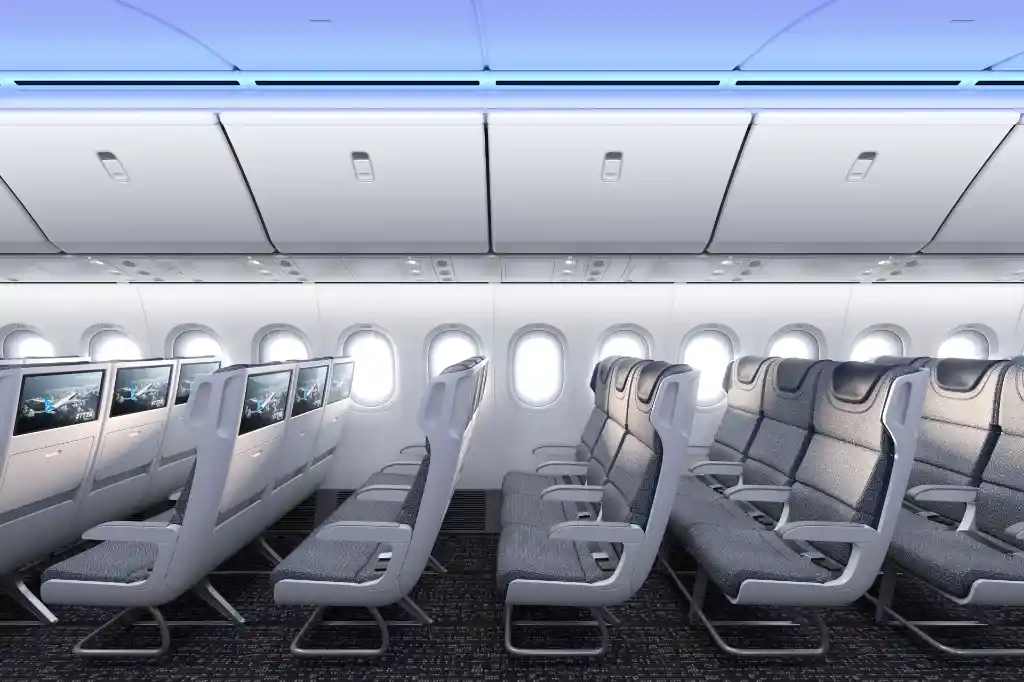
One of the signature passenger experience improvements in the 777X’s next-generation cabin is its windows.
- Size Advantage: 16% larger than the 777-300ER and positioned higher for better outside visibility.
- Dimensions: 9.7 x 16.7 inches, totaling 162 square inches—larger than the Airbus A350’s 125 square inches.
- Comparison: Although smaller than the Dreamliner’s 10.7 x 18.4 inches, the 777X still surpasses most of its rivals.
- Technology: Passenger-controlled dimmable window shades based on electrochromic technology, eliminating glare without bulky window blinds.
The result is a cabin filled with more natural light, enhancing psychological comfort on ultra-long-haul flights.
Comparative Window Dimensions
| Aircraft Type | Window Size (inches) | Total Area (sq in) |
|---|---|---|
| Boeing 787 Dreamliner | 10.7 x 18.4 | 197 |
| Boeing 777X | 9.7 x 16.7 | 162 |
| Airbus A350 | 9.5 x 13.5 | 125 |
| Boeing 777-300ER | 10 x 15 | 150 |
| Airbus A330 | 9 x 12.3 | 110 |
| Airbus A220 | 11 x 16 | 176 |
Wider Cabin, More Personal Space
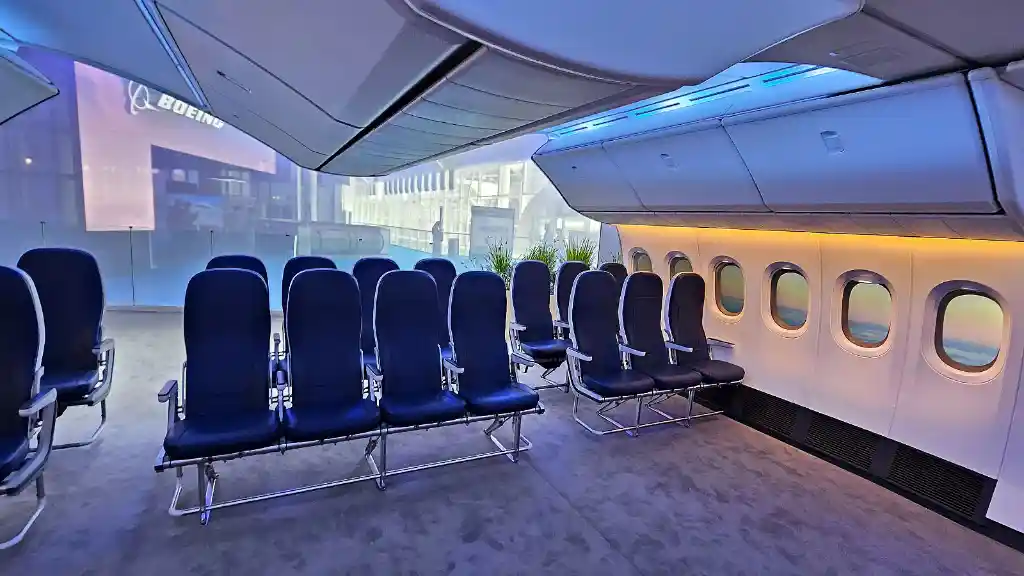
Passenger comfort in widebody aircraft is directly linked to interior cabin width. Boeing’s engineers have reduced wall thickness by two inches per side, expanding the 777X’s cabin diameter to 19 feet, 7 inches. This translates into extra seat width and aisle space in a standard 10-abreast configuration, mitigating the crowding often associated with high-density seating.
- Boeing 777X: 19 feet, 7 inches
- Boeing 777-300ER: 19 feet, 3 inches
- Airbus A350-1000 (new standard): 18 feet, 9 inches
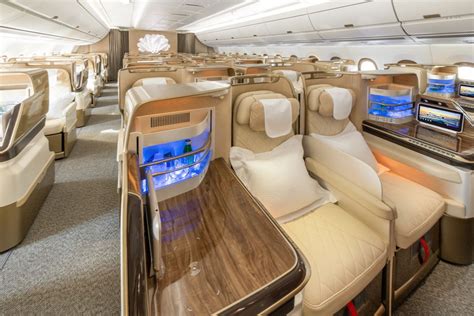
This wider configuration ensures economy passengers enjoy slightly more shoulder room compared to Airbus’s 10-abreast A350 layouts. Business and first-class cabins also benefit from more generous suite designs, an increasingly important differentiator for premium-focused airlines like Emirates, Qatar Airways, and Singapore Airlines.
Not a Clean-Sheet Design, But a Strategic Evolution
While the 777X introduces cabin features comparable to its competitors, it is not a clean-sheet aircraft. Its fuselage remains primarily aluminum, with 30% composites by weight—well below the 787 Dreamliner or A350, both of which heavily rely on composite fuselages.
This strategy has benefits:
- Lower Development Costs
- Shared Commonality with Legacy 777 Models
- Ease of Pilot Training and Maintenance
However, it also limits weight savings and fuel efficiency compared to all-composite rivals. Despite this, airlines have placed over 550 firm orders, highlighting confidence in the aircraft’s passenger appeal and operating economics.
Boeing 777X vs. Airbus A350: A Direct Rivalry
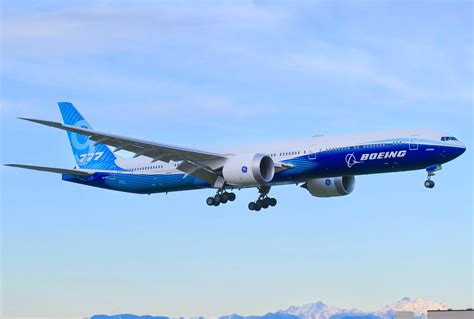
The 777X is tailored to counter the Airbus A350-1000, particularly in the premium long-haul market. While the A350 boasts superior efficiency from its composite fuselage, Boeing bets on cabin spaciousness, window design, and passenger well-being to capture traveler loyalty.
| Feature | Boeing 777X | Airbus A350-1000 |
|---|---|---|
| Entry Into Service | 2026 (expected) | 2018 |
| Max Passenger Capacity | ~426 | ~410 |
| Cabin Width (interior) | 19 ft 7 in | 18 ft 9 in |
| Window Size | 162 sq in | 125 sq in |
| Cabin Altitude | 6,000 ft | 6,000 ft |
| Humidity | High | High |
| Composite Material Share | ~30% | >50% |
The 777X’s wider cabin is its trump card. For airlines that prioritize dense seating layouts without sacrificing comfort, Boeing provides an advantage in long-haul markets like Middle East–Asia–Europe trunk routes.
Future Outlook
Despite its innovation, the Boeing 777X may primarily serve international carriers outside the United States. No North American airline has placed an order, with United Airlines deeming it too large for its hub structure. Instead, carriers like Emirates, Lufthansa, and Qatar Airways remain its primary customers, deploying the jet on ultra-long-haul routes.
Meanwhile, Boeing’s next clean-sheet concept, rumored as the Boeing 797, remains speculative. Until then, the 777X ensures Boeing maintains its footprint in the large twinjet segment, bridging the technology gap between the 787 Dreamliner and future aircraft.
Conclusion
The Boeing 777X’s next-generation cabin is not just an incremental update but a carefully engineered response to modern passenger expectations. With its larger windows, wider cabin, improved air quality, and Dreamliner-inspired comfort technologies, it enhances the flying experience for travelers embarking on journeys lasting 12–18 hours. While not a revolutionary clean-sheet design, the 777X represents Boeing’s commitment to evolving passenger-centric innovations in a competitive market dominated by the Airbus A350.
FAQ
1. When will the Boeing 777X enter service?
The Boeing 777X is expected to enter service in 2026, with Lufthansa as the launch customer.
2. How does the Boeing 777X cabin compare to the Airbus A350?
The 777X offers a wider cabin (19 ft 7 in vs. 18 ft 9 in) and larger windows (162 sq in vs. 125 sq in), enhancing passenger comfort. The A350, however, uses more composite materials, making it slightly lighter and more fuel-efficient.
3. Why does the Boeing 777X use folding wingtips?
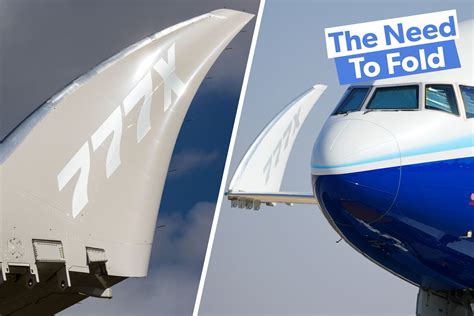
The folding wingtips allow the aircraft to achieve improved aerodynamic efficiency in flight while still complying with ICAO Code E gate restrictions on the ground.
4. Will North American airlines operate the Boeing 777X?
As of now, no North American airlines have ordered the 777X. Carriers like Emirates, Qatar Airways, and Lufthansa remain the main operators.