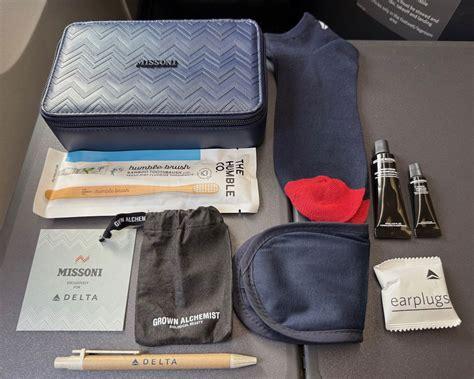
Long-haul economy travel has never been more accessible—or more demanding. As airlines compete on ticket prices and route networks, the small luxuries that once softened the edges of a 10-hour flight have quietly disappeared from many cabins. Yet a select group of full-service carriers continues to offer amenity kits to economy passengers on long-haul flights, preserving a tradition that blends practicality, branding, and a subtle promise of care.
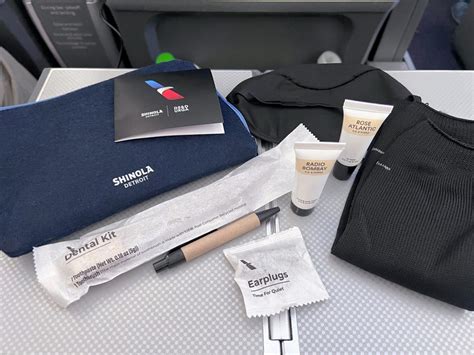
Amenity kits in economy class are no longer standard. In 2026, they are strategic. They appear on ultra-long-haul routes, overnight services, or flights exceeding five or six hours. Their contents are modest but meaningful: an eye mask to simulate darkness at 38,000 feet, earplugs to mute engine hum, a dental kit to refresh before landing, and often socks to restore circulation in a dry cabin environment. These are not indulgences. They are tools for endurance.
The airlines that still provide these kits understand a simple truth: comfort in economy is cumulative. A sleep mask plus a blanket plus a pillow plus noise reduction can transform a restless flight into a manageable one. Below are the carriers that continue to invest in this detail—and what passengers can expect inside.
Turkish Airlines: Eco-Focused Comfort on Flights Over Five Hours
Turkish Airlines remains one of the most consistent providers of economy class amenity kits on long-haul flights, particularly on services exceeding five hours. The airline’s approach balances sustainability with practicality, reflecting broader industry pressure to reduce single-use plastics while maintaining passenger comfort.
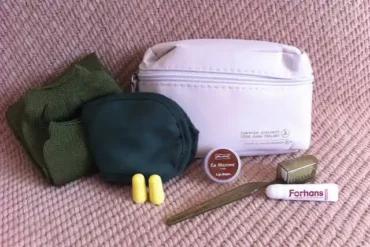
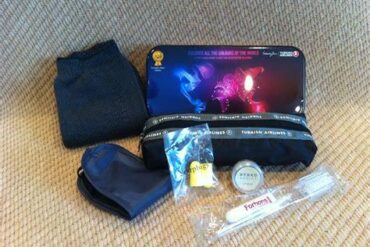
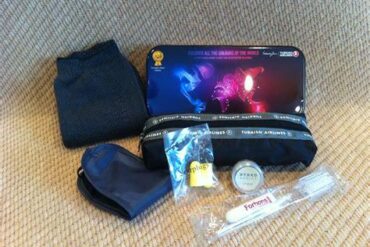
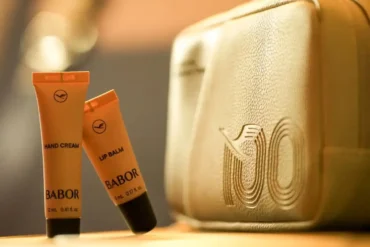
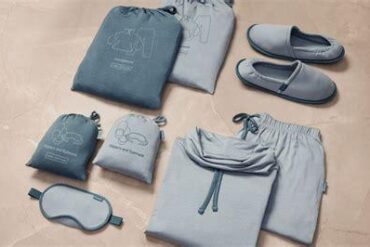
On qualifying routes, economy passengers receive a reusable pouch containing a dental kit, lip balm, earplugs, and socks. The reversible sleep mask is a thoughtful inclusion, and on certain flights slippers are available upon request. Blankets, pillows, and headphones are distributed separately, reinforcing the airline’s commitment to baseline comfort.
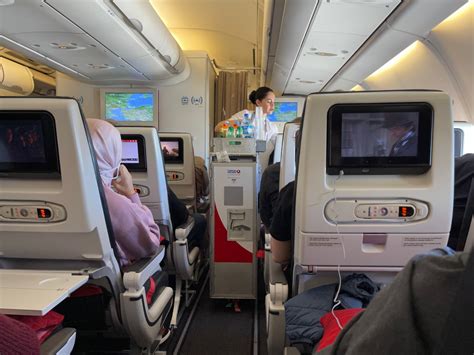
On flights exceeding eight hours, the offering becomes more distinctive. Turkish Airlines collaborates with Lacoste for branded amenity kits available in multiple colors. These pouches are made from over 80% recycled materials and designed for reuse beyond the flight itself. The sustainability angle is not cosmetic; the toothbrushes are increasingly sourced from eco-friendly materials, and packaging is minimized wherever possible.
The airline’s premium cabins elevate the concept further through partnerships with Lanvin and a UNESCO Türkiye Series inspired by heritage sites. While these higher-tier kits include enhanced skincare and refined presentation, the existence of a structured economy kit signals something important: Turkish Airlines treats long-haul economy as a product, not merely a seat.
Emirates: Wildlife-Themed Sustainable Amenity Kits
Emirates offers one of the most recognizable economy amenity kit programs on long-haul and overnight flights. The airline redesigned its kits with sustainability and storytelling in mind, introducing collectible pouches featuring endangered wildlife themes—sky, ocean, desert, and forest.
Each economy kit includes soft socks, eyeshades, earplugs, and a Colgate dental set. Materials matter here. The socks and eyeshades are made from 100% recycled polyester, while paper components come from responsibly managed forests. A story card included inside can double as a bookmark or coloring card, subtly tying passenger experience to environmental awareness.
Premium economy passengers receive additional skincare items from plant-based brand Aveda, including lip balm, hand cream, and facial lotion. The progression is deliberate: economy focuses on core comfort; premium economy adds restorative elements.
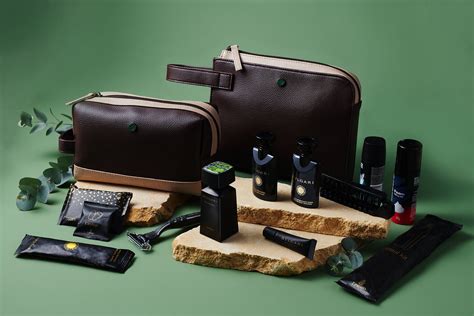
In business and first class, Emirates partners with Bulgari for fragrance-infused amenity kits in faux leather pouches. While these premium offerings attract attention, it is the airline’s decision to maintain economy kits—rather than reducing them to “on request” items—that distinguishes it in a cost-sensitive era.
Etihad Airways: Reusable Tote-Style Amenity Kits
Etihad Airways provides economy class amenity kits on long-haul flights over six hours, presenting them in sustainable, reusable tote-style bags inspired by the airline’s livery colors. The packaging itself is intended for continued use, aligning with the carrier’s broader environmental messaging.
Inside, passengers typically find a Beekman 1802 hand cream, noise-reducing earplugs, and an eye shade. The inclusion of branded skincare in economy signals a subtle premium touch, even if the product range is limited compared to business class.
Etihad’s premium cabins feature Giorgio Armani-designed kits and ESPA skincare, with loungewear inspired by traditional Emirati design. These partnerships elevate brand perception, but the airline’s willingness to offer a structured amenity kit in economy on long-haul services reinforces its positioning as a full-service carrier.
The strategy is pragmatic. Ultra-long-haul passengers—those traveling seven to fourteen hours—arrive better rested when basic comfort items are proactively provided. That improves satisfaction metrics and strengthens loyalty in competitive markets linking Abu Dhabi to Europe, Asia, and North America.
Qatar Airways: Selective Economy Amenity Kits on International Routes
Qatar Airways offers economy amenity kits on select long-haul international or overnight flights, rather than universally across its network. Availability often depends on route length and departure time, with overnight sectors more likely to include kits.
The contents are straightforward: lip balm from Institut Karitè Paris or a similar brand, a Miradent dental kit, eye mask, socks, and earplugs. Blankets and pillows are distributed separately, ensuring passengers have a full set of rest essentials.
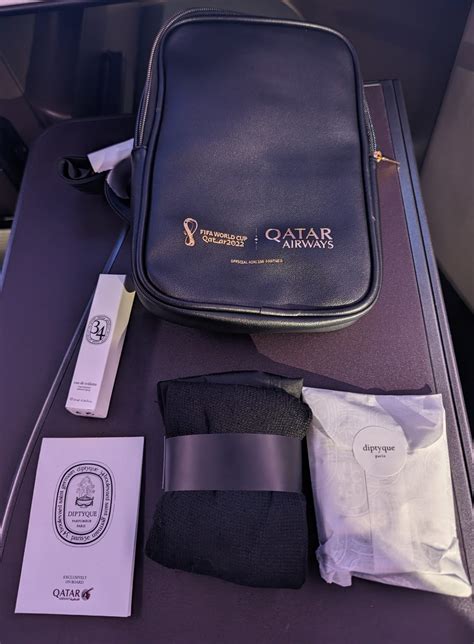
In business and first class, Qatar partners with Diptyque, offering vegan leather pouches in multiple colors and shapes. The distinction between cabins is clear, but the airline’s decision to provide economy kits—albeit selectively—reflects its premium brand positioning.
The careful rollout also reflects cost management. Amenity kits represent weight, supply chain complexity, and waste considerations. By targeting specific flights, Qatar balances service differentiation with operational efficiency.
Qantas: Recycled Materials on Selected Long-Haul Routes
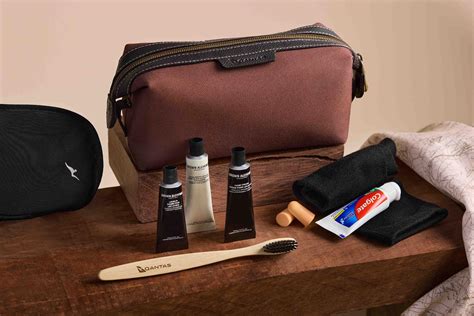
Qantas provides economy class amenity kits on selected long-haul routes, particularly on international services where flight durations justify additional comfort. The pouch, made from felt created using recycled plastic bottles, features the airline’s iconic kangaroo logo.
Inside are the essentials: dental set, eye mask, and earplugs. Additional comfort items may be available upon request. Premium economy passengers receive an expanded kit that includes socks alongside the standard items.
Qantas has leaned heavily into sustainability across cabin classes. Business class kits developed with R.M. Williams and first class collaborations with Aesop emphasize Australian heritage and premium skincare. Yet the economy offering, modest as it is, demonstrates that the airline recognizes the physical demands of long-haul travel from Australia to Europe or North America.
Given that some Qantas routes exceed 15 hours, the presence of even a simple amenity kit carries disproportionate value.
Why Economy Amenity Kits Are Becoming Rare
The rarity of amenity kits in economy class is not accidental. Rising fuel costs, pressure to reduce ticket prices, and environmental scrutiny have reshaped onboard service economics. Every additional item adds weight; every disposable product contributes to waste.
Many airlines now provide comfort items only upon request, reducing unused inventory. Others have eliminated kits entirely in economy while preserving them in premium cabins as a differentiator.
Yet the airlines that maintain them understand something subtle: long-haul travel is physically taxing. Cabin air is dry, humidity levels can drop below 20%, and circadian rhythms are disrupted. A small lip balm counters dehydration. Socks help manage swelling. An eye mask signals the brain to initiate melatonin production. These are not marketing gimmicks; they are physiological aids.
The Evolution of Airline Amenity Kits
Amenity kits have roots in the earliest days of commercial aviation. In the 1930s, flight attendants—often trained nurses—distributed cotton wool and chewing gum to help passengers cope with noise and cabin pressure in unpressurized aircraft. By the 1950s and 1960s, kits became more elaborate, sometimes including razors, mouthwash, and even miniature liquor bottles.
Over time, amenity kits evolved into branding tools. Luxury partnerships with fashion houses and fragrance brands transformed them into collectible items. Today, premium cabin kits often appear for resale online, valued as limited-edition collaborations.
Economy kits, by contrast, have returned to fundamentals. They are no longer about prestige but about resilience—helping passengers endure the realities of ultra-long-haul flight.
What Passengers Can Expect in 2026
In 2026, passengers seeking economy amenity kits on long-haul flights should expect the following patterns:
- Availability primarily on flights exceeding five to six hours.
- Greater likelihood on overnight services.
- Sustainable materials and reusable pouches.
- Core essentials: eye mask, socks, earplugs, dental kit, lip balm.
- Distribution by full-service international carriers rather than low-cost airlines.
Premium economy cabins increasingly serve as a bridge, offering upgraded skincare or additional comfort items without reaching business-class pricing.
The Strategic Value of Small Comforts
Airlines operate in a paradox. They must reduce costs while enhancing passenger experience. Amenity kits sit at that intersection. They are relatively low-cost compared to seat upgrades or in-flight entertainment systems, yet they deliver immediate tactile value.
A passenger who brushes their teeth before landing feels more refreshed. A traveler who sleeps uninterrupted for three hours arrives less fatigued. These micro-improvements influence satisfaction surveys and brand perception.
As ultra-long-haul routes expand—linking distant city pairs nonstop—the role of basic comfort in economy becomes even more important. The seat may not widen, but the experience can soften.
In a market where many carriers have scaled back, Turkish Airlines, Emirates, Etihad Airways, Qatar Airways, and Qantas stand out for maintaining economy class amenity kits on long-haul flights. Their approaches vary in design and distribution, but the message is consistent: even in the most price-sensitive cabin, thoughtful details still matter.
Long-haul economy will never be luxurious in the traditional sense. Yet when a small pouch appears at the seat containing the tools to sleep, refresh, and endure, the journey shifts subtly from survival to managed comfort. In modern aviation, that distinction is more valuable than ever.