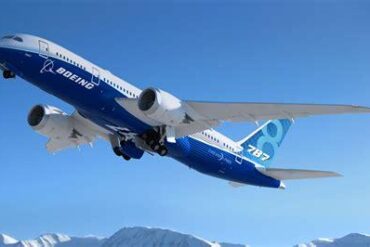
American Airlines and United Airlines are simultaneously reshaping the long-haul premium landscape in the United States through their latest Boeing 787-9 Dreamliner deliveries. These aircraft are not incremental updates or routine fleet renewals; they represent a strategic recalibration of how premium capacity, onboard comfort, and long-haul economics intersect. With both carriers introducing new cabin architectures, new seating platforms, and markedly more premium-heavy layouts, the comparison between these two approaches reveals far more than a simple seat-count battle. It exposes two distinct philosophies about where premium travel demand is headed and how each airline intends to capture it.
The Boeing 787-9 has always been a versatile aircraft, capable of efficiently flying transcontinental missions as well as ultra-long-haul routes linking secondary cities. In its newest incarnations at American and United, the aircraft is evolving into a floating premium lounge designed to maximize yield rather than density. While the two airlines are using remarkably similar hardware, their execution, cabin balance, and route deployment strategies differ in ways that meaningfully shape the passenger experience.
At first glance, American’s new 787-9s and United’s upcoming premium Dreamliners appear almost interchangeable. Both introduce suite-style business class seating with privacy doors, upgraded premium economy cabins, and refined economy products with larger screens and improved ergonomics. Yet beneath this surface-level similarity lies a clear divergence in ambition, particularly when it comes to how much space each airline is willing to dedicate to its highest-paying customers.
Overview of the New Boeing 787-9 Fleets
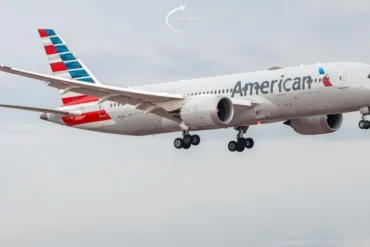
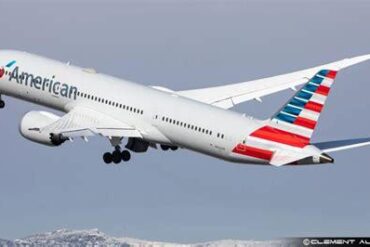
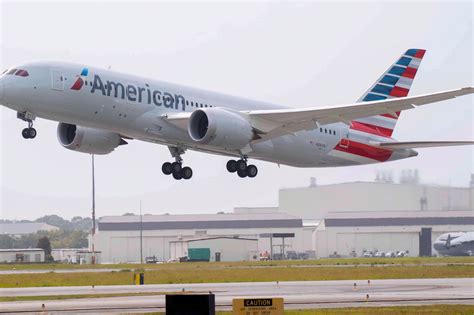
American Airlines has already begun operating its new premium-configured Boeing 787-9s, internally designated as the 78P subfleet. These aircraft entered service in spring 2025 and immediately stood apart from the carrier’s existing Dreamliners thanks to their redesigned interiors and heavier premium bias. Out of American’s 33 Boeing 787-9s, 11 now belong to this new subfleet, with additional deliveries scheduled that will make this configuration increasingly prominent across the long-haul network.
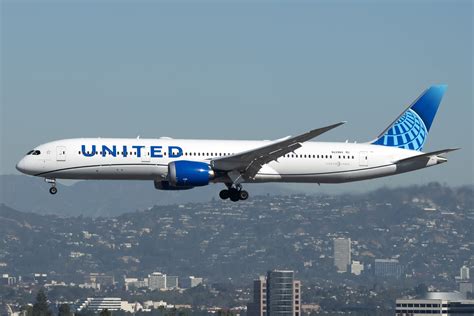
United Airlines, by contrast, is slightly behind in the calendar but notably ahead in scope. Its new 787-9s, known as the 78L subfleet, are scheduled to arrive by the end of 2025 and enter service in early 2026. United already operates 48 Boeing 787-9s in a more traditional configuration, but the upcoming aircraft will redefine the type within its fleet by featuring the largest business class cabin ever installed on a 787.
What is striking is that both airlines are positioning these aircraft as future standards rather than niche experiments. These cabins are not limited-edition showcases; they represent the design language and product philosophy that will shape each carrier’s premium long-haul offering for the next decade.
Cabin Density and the Meaning of “Premium”
The most decisive factor in determining which aircraft feels more premium is not seat upholstery or screen size but cabin density. United’s new Boeing 787-9 is configured with just 222 seats, an exceptionally low number for an aircraft of this size. Of these, 64 are Polaris business class suites, including eight front-row Polaris Studios. This means nearly half of the cabin space is devoted to premium seating when Polaris and Premium Plus are combined.
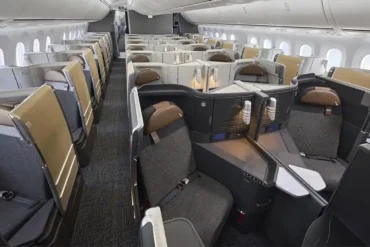
American’s new 787-9s, while significantly more premium than its older Dreamliners, remain more conservative. With 244 total seats, they feature 51 Flagship Suites, including eight Flagship Preferred Suites, alongside 32 premium economy seats. While this represents a major upgrade for American, the proportional difference is immediately apparent when compared to United’s layout.
The result is that United’s cabin feels more exclusive, quieter, and less crowded in every class. Fewer economy seats mean reduced foot traffic, shorter lines for lavatories, and a more relaxed atmosphere overall. From a passenger perception standpoint, this density reduction alone elevates the United experience into a different tier.
Why United Embraces a Heavier Premium Strategy
United’s willingness to sacrifice economy capacity is closely tied to its network strengths. The airline dominates premium-heavy hubs such as San Francisco, Newark, Washington Dulles, and Chicago O’Hare, all of which generate strong international business demand. These markets consistently support high-yield traffic, making a large Polaris cabin not only viable but strategically sound.
Moreover, the reduced seat count on United’s new 787-9s enhances the aircraft’s range. This allows United to deploy the 78L on ultra-long-haul routes such as San Francisco to Singapore, where payload restrictions can be commercially devastating on denser configurations. By combining premium density with extended range, United transforms the 787-9 into both a luxury product and a technical enabler.
American’s network tells a different story. While Dallas/Fort Worth is a powerful business hub, many of American’s other strongholds skew more toward leisure or mixed demand. In recent years, the airline has also stepped back from aggressively pursuing corporate contracts, favoring flexibility and cost control. The 78P reflects this approach, offering a meaningful premium upgrade without fully committing to a radical capacity shift.
Business Class: Elevate Ascent Takes Center Stage
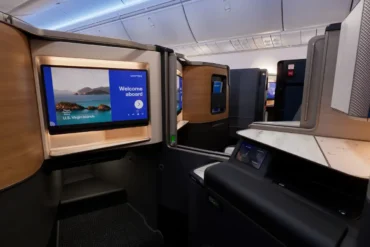
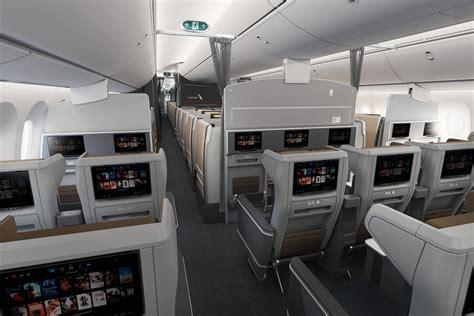
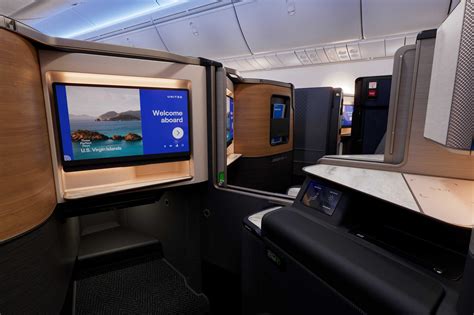
Both airlines are debuting the Elevate Ascent seat in business class, marking a significant leap forward from their previous products. These suites feature sliding privacy doors, direct aisle access for every passenger, and a refined aesthetic that emphasizes clean lines and modern materials.
American has opted for a fully reverse-herringbone layout, prioritizing consistency and individual privacy. The Flagship Preferred Suites in the first row offer additional personal space and expanded surfaces, catering to travelers who value room to work or dine privately.
United’s execution is more nuanced. While the forward rows mirror American’s reverse-herringbone design, the rear section introduces inward-facing center seats configured in a herringbone arrangement. This allows United to offer “honeymoon-style” seating for couples, a feature that has historically been popular among leisure travelers and premium award redeemers.
United further differentiates itself with the Polaris Studio concept. These front-row suites include larger screens, expanded ottomans, and the ability to dine face-to-face with a companion, an experience that remains rare among U.S. carriers.
Premium Economy: Subtle Differences, Real Impact
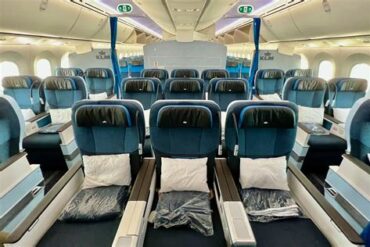
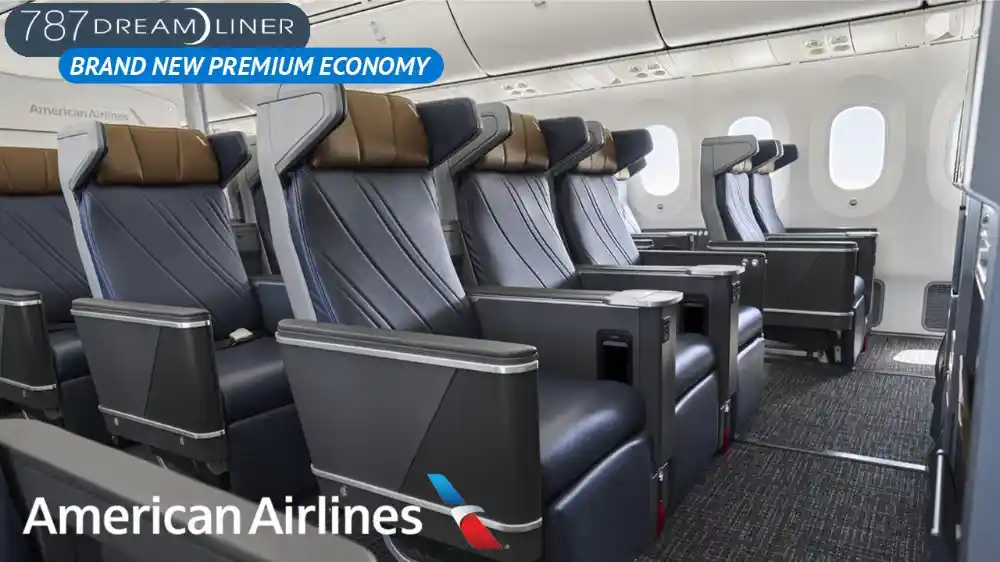
In premium economy, both airlines deliver a meaningful step above standard economy, but their choices reveal different priorities. American’s Safran Z535i seats emphasize a residential feel with sculpted shells, privacy wings, and generous recline. The cabin is intimate, with a strong emphasis on personal space and visual separation from the main cabin.
United’s updated Collins MiQ seats, meanwhile, lean toward functionality and thoughtful storage. Dedicated compartments for headsets and water bottles, adjustable reading lights, and a slightly more open layout enhance long-haul comfort, particularly on overnight flights.
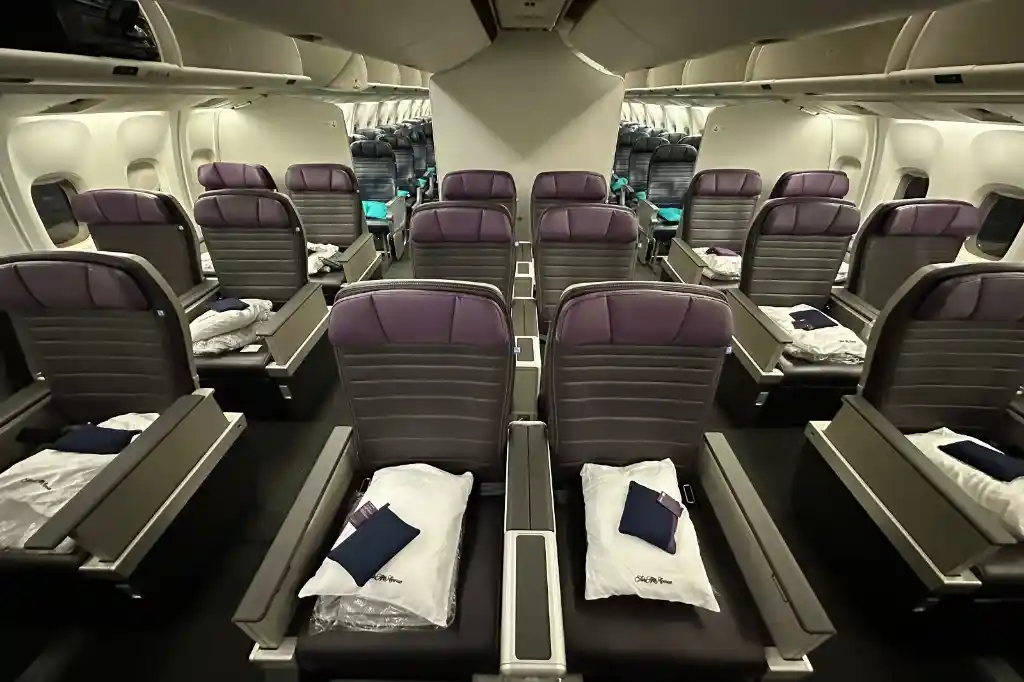
Both cabins feature larger screens, Bluetooth connectivity, and multiple charging options, ensuring technological parity. The difference lies in ambiance: American’s premium economy feels like a scaled-down business class, while United’s feels like a meticulously optimized personal space for long-haul endurance.
Economy Class and the Importance of Space
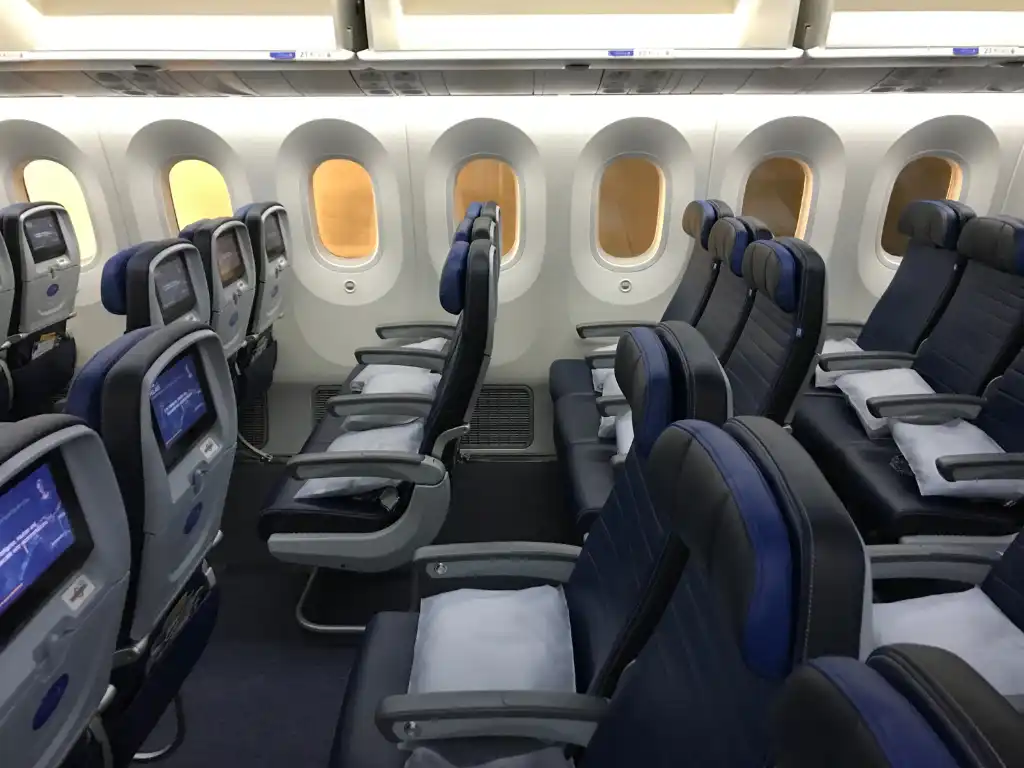
Even in economy, the premium-heavy layouts have tangible benefits. United’s decision to limit standard economy seating to just 84 passengers dramatically reduces cabin density. This creates a calmer environment, with faster boarding, less competition for overhead bins, and shorter wait times throughout the flight.
American’s economy cabin, while upgraded with new Collins Aspire seats and larger screens, remains more densely populated. The experience is still improved compared to older aircraft, but it lacks the sense of spaciousness that defines United’s new 787-9.
For travelers who do not fly in premium cabins, these differences still matter. A quieter cabin, fewer queues, and a less hectic atmosphere contribute to perceived quality, even when the seat itself is similar.
Route Deployment and Strategic Signaling
American initially assigned its 78P aircraft to competitive transatlantic routes such as Chicago and New York to London, signaling an intent to strengthen its position in markets where it has historically lagged. Subsequent deployments from Dallas/Fort Worth to destinations like Paris, Buenos Aires, Auckland, and Brisbane underscore the aircraft’s role as a global flagship.
United’s deployment strategy is more assertive. Launching the 78L on routes like San Francisco to London and Singapore positions the aircraft as both a premium showcase and a technical solution for long-range missions. Singapore, in particular, highlights United’s confidence in sustained premium demand on some of the world’s longest commercial flights.
These choices reinforce the narrative each airline is telling investors and customers alike. American is enhancing competitiveness without abandoning flexibility, while United is doubling down on premium dominance.
How Delta Fits Into the Broader Competitive Landscape
While Delta Air Lines is not directly part of this comparison, its relative conservatism provides valuable context. Delta’s Delta One Suites, introduced in 2017, remain competitive but have evolved more slowly. Even with upcoming Airbus A350-1000 deliveries expected to feature larger premium cabins, Delta continues to favor moderation in business class density.
Against this backdrop, United’s new 787-9s stand out as the most premium widebodies operated by a U.S. airline, while American’s 78P occupies a middle ground between Delta’s restraint and United’s ambition.
The Verdict: Which Boeing 787-9 Is More Premium?
When evaluating which aircraft delivers the more premium experience, the answer becomes clear through cumulative detail rather than any single feature. United’s new Boeing 787-9 offers a more exclusive cabin, a larger and more versatile business class, and a quieter, more spacious environment across all classes. Its willingness to reduce total seat count fundamentally reshapes the onboard experience in a way that American’s configuration does not fully match.
American’s new 787-9s are a substantial upgrade and a clear statement of intent, bringing its long-haul product closer than ever to the industry’s leading edge. However, United’s execution is bolder, more cohesive, and more transformative.
In the evolving world of long-haul premium travel, both airlines are raising the bar. Yet it is United that has chosen to redefine the ceiling, turning the Boeing 787-9 into not just an efficient aircraft, but a flagship symbol of premium ambition.