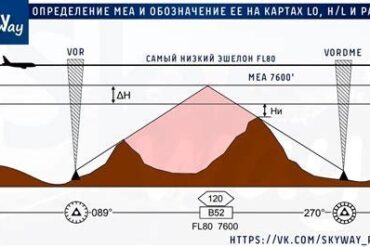
Definition
The Area Minimum Altitude (AMA) is the lowest altitude to be used during instrument meteorological conditions (IMC). It ensures that there is a safe clearance above obstacles in a specified area, which is typically defined by parallels and meridians. This information comes from ICAO Doc 8168 PANS-OPS, Vol. 1.
Description
AMA, also known as minimum off-route altitude (MORA), guarantees that aircraft are safely above all obstacles within the designated area. Generally, this means maintaining a clearance of 2000 feet over high terrain or mountainous regions, and 1000 feet in other areas. However, local authorities can set different altitudes based on specific conditions.
Although the ICAO allows for various shapes and sizes of the AMA areas, the most common format is a 1-degree quadrilateral. This represents the area between latitude X and X+1 and longitude Y and Y+1. For instance, it could cover the space from 35 to 36 degrees North and from 27 to 28 degrees East.
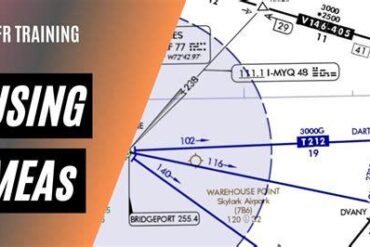
On charts, the AMA is indicated with two digits: one larger and one smaller. The larger digit shows the thousands of feet, while the smaller one indicates the hundreds. For example, if you see ’42’, this means the altitude is 4200 feet.
It’s important to note that AMA applies only under IMC. VFR flights (in VMC) can operate at lower altitudes. In some en-route charts, you might notice that no AMA information is listed for quadrilaterals consisting only of water. In these cases, a value of ’10’ (representing 1000 feet) may be used. Sometimes, higher values like ’15’ (1500 feet) are prescribed over the sea.
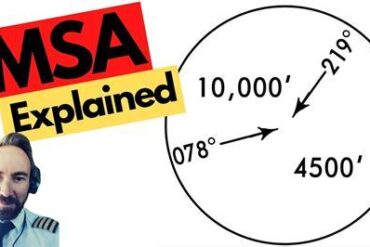
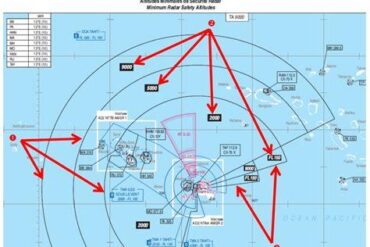
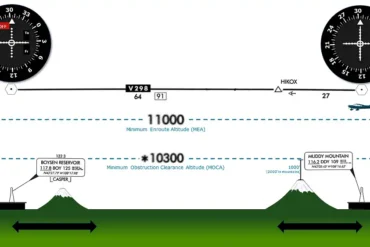
As illustrated in the examples above, flying near the edges of a quadrilateral can lead to sudden and steep changes in the applicable AMA.