Avelo Airlines is reshaping the narrative around Tweed New Haven Airport (HVN), turning a modest regional facility into a bold experiment in ultra-low-cost air travel on the U.S. East Coast. The story unfolding in New Haven, Connecticut, is not merely about a new airline operating flights — it is about a multi-million-dollar aviation infrastructure overhaul, a tactical response to underserved demand, and a calculated attempt to carve out a new geographic identity in air travel.
Strategically nestled between New York City and Boston, New Haven has long possessed geographic advantages without the corresponding aviation infrastructure to exploit them. Tweed New Haven Airport, while historically limited in scope, now stands at the cusp of a revolutionary transformation, catalyzed by Avelo’s vision and business model.
Avelo’s Entry Into Connecticut: Bold Moves in a Niche Market
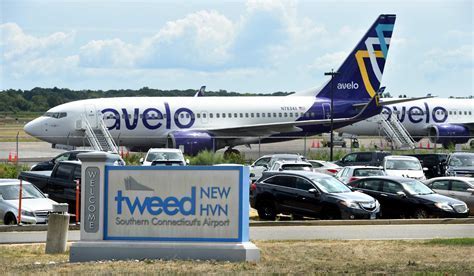
When Avelo Airlines, a fresh entrant in the U.S. aviation space, chose Tweed New Haven as its East Coast base, many in the industry took notice. At the time, Tweed New Haven’s only regular commercial service came from American Eagle, connecting to Philadelphia via Embraer E175s and CRJ variants. It was not the kind of airport where one expected to see Boeing 737s lined up.
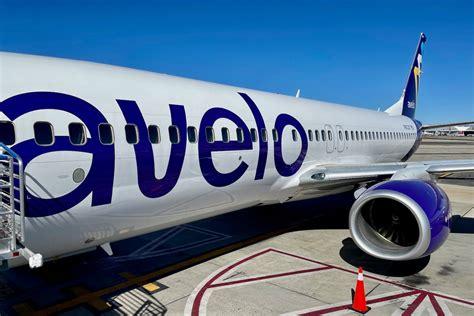
But that’s exactly what Avelo brought — not just ambition, but Boeing 737-700s, tailored for shorter runways, launching from an airport whose paved runway length of 5,600 feet barely met commercial jet requirements. Instead of viewing this constraint as a limitation, Avelo saw it as an opportunity to claim exclusive operational territory in a dense and competitive corridor.
The Low-Cost Carrier Model: European Inspiration, American Execution
Avelo is applying a European-style ultra-low-cost carrier (ULCC) strategy in the U.S., a bold move at a time when pandemic-era volatility still haunts the airline industry. The ULCC model focuses on operating out of smaller, underutilized airports to reduce costs, offering base fare transparency and à la carte pricing structures.
Tweed New Haven is a perfect match for this playbook. By sidestepping Bradley International Airport (BDL) — Connecticut’s larger, more traditional airport — Avelo avoids the crowded and expensive terminal environment in favor of a monopoly on service at a re-emerging facility.
Investment Surge: Building Infrastructure to Support Growth
Avelo’s confidence in New Haven’s long-term viability is backed by capital. The airline pledged $1.2 million for immediate improvements in terminal amenities, parking, and administrative functions. Simultaneously, Avports, the private contractor managing HVN under a new 43-year agreement, committed $2.8 million to additional short-term upgrades.
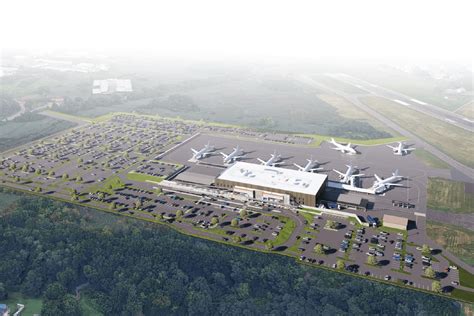
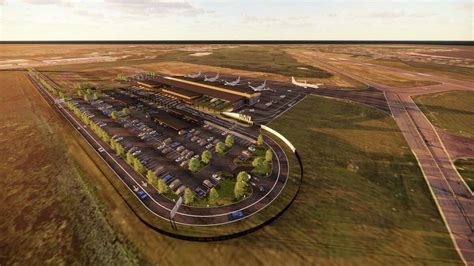
However, these investments are precursors to a far more ambitious expansion. A staggering $100 million has been earmarked for the construction of a new modern terminal and the extension of the existing runway by 1,035 feet, bringing it to 6,635 feet (2,022 meters). This will enable larger aircraft, longer-haul flights, and a vastly improved passenger experience.

New Haven’s Geo-Economic Advantage
New Haven is no stranger to influence. As home to Yale University and proximate to several of the East Coast’s most economically vibrant cities and industrial zones, the region is flush with latent travel demand. What it lacked was airport capacity and airline interest. Avelo’s arrival fills that vacuum while simultaneously stoking demand for new leisure routes, especially toward Florida and other southern vacation hotspots.
Avelo’s aircraft — three former Southwest Airlines 737-700s, each about 13 years old — are optimized for these kinds of short-to-medium-haul operations. The company anticipates employing at least 100 local staff members, creating a modest but meaningful economic footprint in the area.
Political and Jurisdictional Challenges
Tweed New Haven Airport’s expansion is not without its hurdles. The facility straddles the City of New Haven and the Town of East Haven, introducing layers of political complexity. Disparate views on taxation, airport noise, and zoning have historically slowed progress. Still, with firm private investment commitments and strong local economic incentives, momentum now seems irreversible.
The partnership with Avports and the aligned interests of the City of New Haven are overcoming friction that has stalled previous airport proposals. Avelo, for its part, is engaging in a public-facing “Pick and Pack Sweepstakes” — giving away 50 free flights — to generate goodwill and promote brand awareness in Connecticut.
Market Differentiation: The Tweed New Haven USP
In an increasingly commoditized air travel market, exclusive route control is a golden ticket. With Breeze Airways flying out of Bradley, Avelo’s dominance at HVN provides a clear unique selling proposition (USP). Passengers in the New Haven metro area no longer need to drive an hour or more to access affordable leisure destinations.
While initial routes haven’t been officially confirmed, internal communications and industry speculation suggest a Florida-centric route network, including potential flights to Orlando, Tampa, Fort Lauderdale, and Fort Myers. This regional niche could become a profit sweet spot for Avelo, given minimal direct competition and high seasonal demand.
The Bigger Picture: A Model for Regional Aviation Growth
Avelo’s move into Tweed New Haven may serve as a case study in revitalizing underused regional airports through targeted airline partnerships, infrastructure investment, and careful urban planning. The alignment of private capital with local economic development priorities offers a replicable model for similar-sized cities across the United States.
Yet, much hinges on the execution of the terminal and runway expansion, the maintenance of local political alignment, and the ability to deliver reliable, affordable service with growing frequency and reach.
Outlook: A Test of Operational Resilience and Consumer Appetite
November marks the start of Avelo’s formal operations at Tweed New Haven, and industry analysts will be watching closely. With legacy airlines cutting capacity on marginal routes and focusing more on hub-and-spoke models, Avelo’s direct-to-destination strategy provides a compelling counter-narrative.
If successful, this launch could be a blueprint for low-cost connectivity in similarly underserved metro areas. If not, it may reveal the inherent challenges of marrying high ambition with volatile regional markets.
What is clear is that Avelo’s presence has already catalyzed long-overdue modernization at Tweed New Haven. The ripple effects — in job creation, tourism, accessibility, and infrastructure — have the potential to redefine the region’s aviation future.
FAQs
What destinations will Avelo Airlines serve from Tweed New Haven?
As of now, Avelo has not officially confirmed all destinations from HVN, but industry insiders expect the initial network to include popular Florida cities such as Orlando, Tampa, Fort Lauderdale, and Fort Myers, with potential seasonal additions in the future.
How long is the runway at Tweed New Haven, and will it support larger aircraft?
The current runway is 5,600 feet long, which is sufficient for Boeing 737-700 operations. However, a planned extension of 1,035 feet will bring the total to 6,635 feet, allowing for larger aircraft and longer-range flights.
Who is funding the airport’s expansion?
Funding is coming from a combination of sources. Avelo Airlines is contributing $1.2 million, Avports LLC is investing $2.8 million, and a larger $100 million capital commitment is supporting the new terminal construction and runway extension. The expansion is a joint effort between public-private partnerships aimed at long-term operational gains.