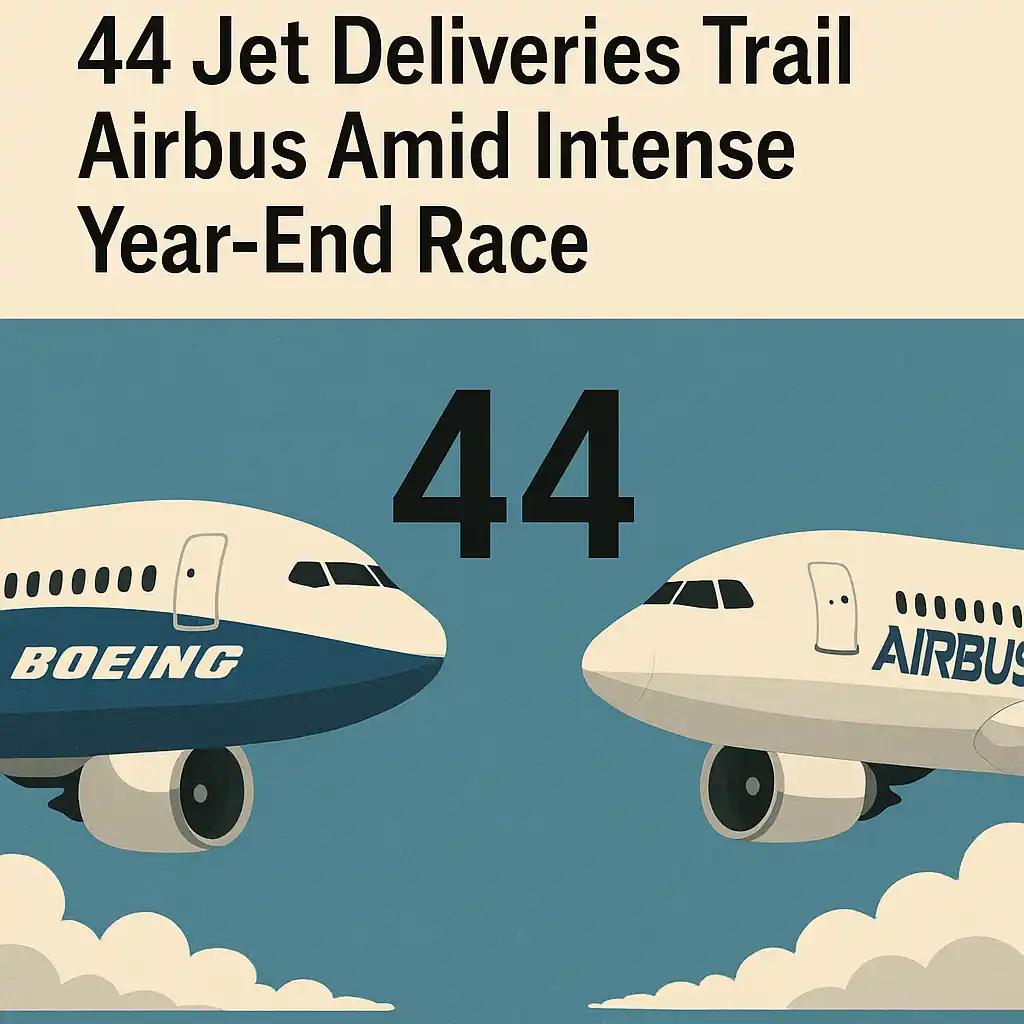
Boeing’s commercial aircraft operations encountered a notable deceleration in November 2025, delivering just 44 aircraft, a sharp decline from the 53 units delivered in October. This downturn marks a significant moment in the ongoing rivalry between Boeing and Airbus, as the U.S. aerospace giant once again fell behind its European counterpart, which reported a robust 72 deliveries for the same month. The figures underscore a mounting urgency as both manufacturers sprint toward their year-end goals in a fiercely competitive global market.
Boeing’s November 2025 Delivery Breakdown
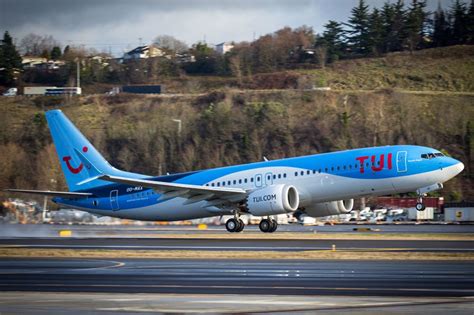
More than 70% of Boeing’s November deliveries came from its widely utilized 737 MAX family, with 32 aircraft of the type delivered to 18 customers worldwide. This included major U.S. carriers such as Southwest Airlines, which accepted five new 737 MAXs, maintaining its position as the type’s largest global operator with nearly 300 units. American Airlines, Alaska Airlines, and United Airlines also expanded their MAX fleets, receiving three, two, and two aircraft, respectively.
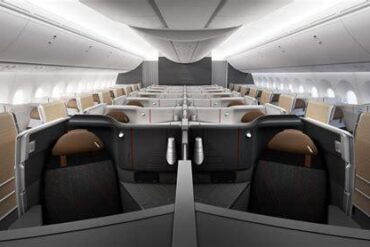
Beyond the 737s, Boeing handed over six 787 Dreamliners, with the 787-10 variant gaining prominence. Notably, TAAG Angola Airlines took delivery of two 787-10s, the first of this type in its fleet, building on its existing 787-9 holdings. The 787-9 itself was delivered to American Airlines, Oman Air, and Lufthansa, each acquiring one unit. Meanwhile, Air Lease Corporation received one of the remaining 787-10s. Additionally, freighter operations remained active, with four 767 freighters and two 777 freighters delivered, the latter to Turkish Airlines and Aerotranscargo.
This slowdown in deliveries represents a 17% month-on-month dip, a figure that raises concerns over Boeing’s production agility during a period traditionally characterized by end-of-year surges.
Airbus Maintains Delivery Momentum
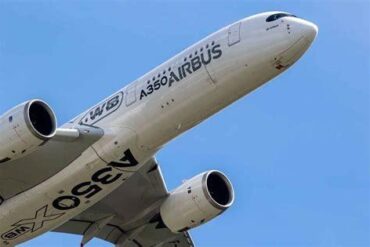
While Boeing eased off the throttle, Airbus sustained its momentum despite adjusting its annual projection downward. The European manufacturer’s 72 deliveries in November reflect not just strong output but also operational resilience amid lingering supply chain challenges. Airbus now anticipates closing the year with approximately 790 aircraft delivered, slightly shy of its previous 820 target.
In contrast, Boeing has reached 537 deliveries year-to-date, dominated by the 737 MAX program, which has delivered nearly 400 units. However, even with a potentially strong December, Boeing is projected to land well below its 2018 peak of 806 deliveries, highlighting the uphill climb still ahead.
Strategic Orders Reinforce Boeing’s Long-Term Outlook
Despite the slower delivery pace, Boeing had a stellar month in aircraft sales, buoyed heavily by the Dubai Airshow 2025. The company reported 126 net new orders, factoring in 164 new deals minus 38 cancellations. Over 50% of these orders were for the long-awaited 777X widebody, a clear signal of industry confidence in the delayed but promising program.
The most headline-grabbing deal came from Emirates, which added 65 more 777X aircraft to its extensive order book. This single commitment, valued at over $38 billion at list prices, catapulted the airline’s total 777X orders to 270, cementing its role as the program’s largest customer. China Airlines followed with nine additional 777X orders, while Etihad Airways, Gulf Air, and Uzbekistan Airways placed significant 787 Dreamliner orders.

These deals, particularly in the widebody segment, demonstrate Boeing’s strategic pivot toward long-term value creation despite immediate logistical and delivery constraints.
A Glimpse at Full-Year Delivery Projections
As December unfolds, the trajectory for both Boeing and Airbus appears clear. Boeing’s YTD delivery count suggests a likely finish between 580–620 aircraft, depending on the strength of its final push. While this would mark its best annual performance since 2018, it will still lag Airbus by a considerable margin—projected to surpass Boeing by over 150 units.
Airbus’s production has benefited from a more consistent recovery curve and fewer production interruptions, whereas Boeing’s pace has been tempered by ongoing regulatory and supply-side pressures. Furthermore, Boeing’s reliance on the 737 MAX as the cornerstone of its output adds pressure on a single program, whereas Airbus’s A320neo family has achieved more diversified delivery patterns.
Challenges and Competitive Landscape Ahead
The widening gap between Boeing and Airbus deliveries underscores a broader reality: market leadership is now determined as much by execution as by product lineup. Boeing continues to face challenges tied to supply chains, certification delays, and workforce dynamics. Airbus, though not without its own production woes—such as those affecting A320 supplier quality—has demonstrated superior output continuity.
Still, Boeing’s order book resilience and widebody momentum, particularly with the 777X and 787, offer promising signs of recovery and strategic clarity. The real test will be whether Boeing can translate this commercial confidence into streamlined production and timely delivery—especially in a market where airline demand for fuel-efficient, reliable jets remains insatiable.
Conclusion: Deliveries Down, But Vision Ahead
While Boeing’s November 2025 delivery total trails Airbus, the company’s robust order intake and strong performance in the widebody market reflect a nuanced picture. The short-term delivery gap may widen, but the long-term contest is far from settled. Boeing’s ability to resolve bottlenecks, scale its production lines, and fulfill its commitments—particularly for the 777X and 787—will define its competitive standing well beyond the current calendar year. In the fast-evolving aerospace industry, adaptability and operational discipline remain the ultimate arbiters of success.