Supersonic travel has long been a dream tempered by physics — specifically, the sonic boom. When an aircraft exceeds the speed of sound, it generates shockwaves that coalesce into a loud and disruptive noise. For decades, this has been the limiting factor for overland supersonic travel. However, a new phenomenon known as the “Boomless Cruise” may be rewriting the rules.
What is Boomless Cruise?
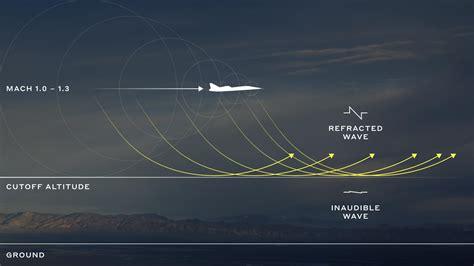
The term “Boomless Cruise” refers to a specific flight regime where an aircraft can cruise at supersonic speeds without generating an audible sonic boom at ground level. This is not due to some breakthrough that eradicates shockwaves entirely — physics still applies — but rather, it’s a result of leveraging the atmospheric profile to redirect or refract the sonic boom away from the Earth’s surface.
Boom Supersonic, the startup behind the XB-1 demonstrator and the upcoming Overture supersonic airliner, has announced successful demonstrations of this phenomenon. But to understand the significance, we must explore the aerodynamics, the physics of sound propagation, and the regulatory implications in detail.
The Science Behind the Silence
Sonic booms occur when an aircraft travels faster than the speed of sound, creating shock waves that travel to the ground. However, in a Boomless Cruise scenario, two main factors come into play:
- Altitude: Higher altitudes significantly influence how shockwaves interact with atmospheric layers. At such altitudes, the air is thinner, and temperature gradients across layers of the atmosphere play a pivotal role.
- Mach Cutoff Phenomenon: This is a known aerodynamic effect where, under specific atmospheric conditions — particularly temperature inversions — the shockwave does not reach the ground. Instead, it is refracted upward, creating an acoustic shadow zone beneath the aircraft.
In essence, Boom Supersonic is operating at a low supersonic speed, typically between Mach 1.1 and 1.3, and at a minimum altitude where the refractive index of the atmosphere curves the sonic boom upward.
Why the Concorde Couldn’t Do This
It’s a common misconception that Concorde’s limitations were solely due to regulations. The aircraft typically cruised at Mach 2.02 at 60,000 feet, a regime far outside the ideal window for boomless flight.
The drag divergence at transonic speeds, between Mach 0.9 and Mach 1.2, results in significant drag, making it inefficient for Concorde, which was optimized for higher speeds. Additionally, the engine efficiency and airframe shaping necessary for sustained flight in the Mach 1.1–1.3 window were not available in Concorde’s era.
Today’s technological advancements — from more efficient engines to superior computational fluid dynamics (CFD) tools — enable optimization for this once impractical regime.
Not Just About Flying High: The Role of Weather
Boomless Cruise is not simply a matter of flying high enough. It’s a delicate balance of altitude, speed, and real-time atmospheric conditions. Specifically:
- The speed of sound varies with temperature, which itself varies with altitude.
- Certain temperature gradients, such as inversions, cause the sonic boom to refract away from the ground.
- These conditions can vary seasonally, geographically, and even hourly.
For instance, during Boom Supersonic’s demonstration, it’s likely they selected optimal meteorological windows where the atmospheric layers would naturally support boom refraction. Thus, operational viability will depend heavily on predictive atmospheric modeling and in-flight adjustment.
Engine Technology: A Hidden Catalyst
Although Boom Supersonic has not yet revealed the full details of their propulsion system, several factors can be inferred:
- Efficiency at low supersonic speeds: These engines must be optimized not for Mach 2+ like Concorde’s Olympus engines, but for Mach 1.1–1.4, where drag divergence is significant.
- High-altitude thrust: The engines must deliver sufficient thrust in low-density air, where oxygen is sparse and traditional jet engines struggle.
- Low-noise profiles: Minimizing the engine noise footprint complements the boomless objective, especially since engine noise can still propagate downward, independent of shockwaves.
Such propulsion systems likely rely on turbofan variants with variable bypass ratios and no afterburners, which contribute disproportionately to noise.
Impact on Regulation and Commercial Aviation
The FAA and other aviation regulators have long prohibited supersonic flight over land due to the disruptive nature of sonic booms. But a viable boomless cruise regime changes the game.
- Legal Supersonic Overflight: If Boom Supersonic can demonstrate consistent, boomless performance, regulators may begin certifying specific flight corridors where atmospheric conditions are predictable.
- Revitalization of Supersonic Commercial Aviation: Flights like Los Angeles to New York in under three hours may become a reality.
- Competitive Relevance: Nations or corporations able to fly supersonic over land will gain an enormous advantage in business travel, logistics, and national prestige.
Challenges and Limitations
While the achievement is groundbreaking, it’s not without caveats:
- Weather Dependency: The boomless effect is contingent on atmospheric layering. Poor conditions could force rerouting or subsonic operation.
- Limited Speed Range: Only speeds just above Mach 1 are feasible. Higher speeds will negate the boomless effect due to reduced atmospheric refraction.
- Narrow Operational Window: Certain geographic regions or seasons may never offer suitable conditions for boomless flight.
Therefore, the Boomless Cruise is not a universal solution, but rather a carefully choreographed dance with nature.
The Broader Supersonic Landscape: X-59 and Beyond
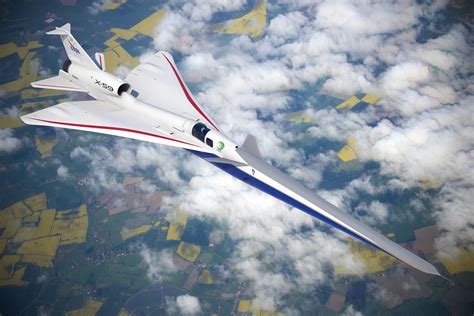
NASA and Lockheed Martin’s X-59 QUESST program aims to reduce the perceived loudness of a sonic boom through airframe shaping. Unlike Boom Supersonic’s strategy of atmospheric manipulation, X-59 uses precise geometry and aerodynamic shaping to spread out the shock waves and reduce their ground-level impact to something like a car door closing.
The convergence of these two approaches — atmospheric engineering (Boom) and structural design (NASA/Lockheed) — signals a future where quiet supersonic travel becomes mainstream.
Looking Ahead: The Future of Silent Supersonic Travel
The implications of Boomless Cruise extend far beyond marketing buzzwords. It may usher in a new golden age of air travel, one where we:
- Reclaim time lost in long-haul journeys.
- Connect cities across continents in a matter of hours.
- Redesign airspace, routes, and airport logistics to accommodate faster aircraft.
However, the journey is far from over. Regulatory approval, environmental concerns, noise certification, and economic viability remain significant hurdles. Yet, Boom Supersonic’s demonstration proves that the dream of overland supersonic travel is no longer science fiction — it’s a technical and atmospheric puzzle finally being solved.
As new aircraft like Boom’s Overture and NASA’s X-59 approach testing and certification, expect more breakthroughs in this field. The sonic boom may not vanish entirely, but it’s increasingly being tamed, shaped, or silenced, thanks to physics, engineering, and atmospheric science working in harmony.