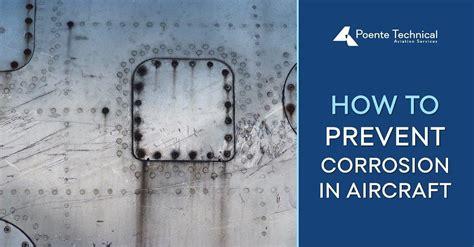
Aircraft corrosion is among the most insidious and costly threats to aviation safety and operational reliability. It manifests not only as visible damage but also as unseen deterioration that can compromise structural integrity. In both commercial and military aviation, comprehensive corrosion management is essential to extending aircraft lifespan, maintaining performance, and ensuring flight safety.
Aircraft are inherently exposed to harsh operational environments—high humidity, salt-laden air, temperature fluctuations, and chemical contaminants all accelerate corrosion. Without a robust and informed approach, the consequences of corrosion can escalate from minor surface blemishes to catastrophic material failures.
Surface Corrosion: The First Line of Visual Decay
Surface corrosion, often referred to as uniform corrosion, is the most prevalent type affecting aircraft. It typically starts as a general thinning of the metal surface, leading to paint blistering, flaking, and a roughened texture. Though commonly superficial, it signals an early stage of material degradation.
This corrosion arises from prolonged exposure to moisture, oxygen, and contaminants, especially in coastal regions or high-humidity climates. Maintenance crews must perform routine inspections to identify surface corrosion early, particularly around fasteners, hinges, and landing gear components.
Mitigation and Prevention Techniques
-
Application of corrosion-inhibiting compounds (CICs)
-
Frequent washdowns with deionized water
-
Use of sacrificial coatings such as zinc chromate primers
-
Storage in climate-controlled hangars
Pitting Corrosion: Small Appearance, Severe Damage
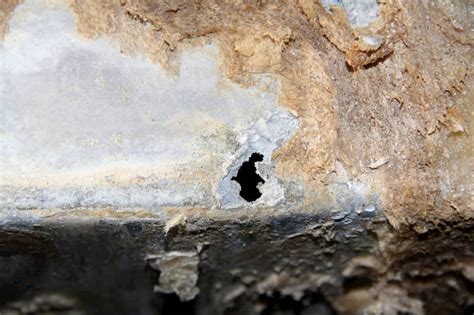
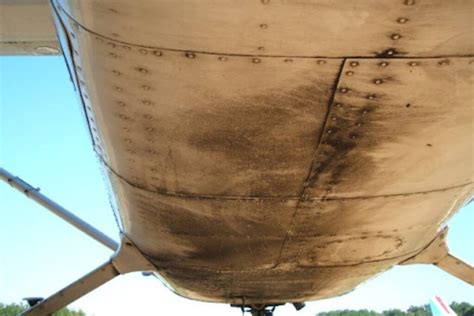
Pitting corrosion is a localized attack on metal surfaces that forms tiny holes or “pits”. It often begins beneath paint or dirt layers, making it hard to detect. The seemingly minimal damage on the surface can mask deep internal compromise.
The onset is marked by white powdery deposits, typically aluminum hydroxide, which when cleaned away reveals microscopic craters. These pits weaken structural components and act as initiation sites for fatigue cracks, significantly increasing the risk of stress corrosion cracking (SCC).
Pitting is especially aggressive on aluminum alloys, a mainstay in aircraft construction. If neglected, it may necessitate component replacement rather than repair.
Filiform Corrosion: The Worm Beneath the Paint
Common on painted aluminum and steel surfaces, filiform corrosion appears as fine thread-like lines crawling under paint. It is usually triggered by acidic contaminants, high humidity (>70%), or substandard painting processes.
Unlike surface corrosion, filiform does not uniformly spread. It attacks specific regions, undermining paint adhesion and accelerating surface degradation. The corrosion tunnels must be mechanically stripped, followed by abrasive blasting and repainting with specialized anticorrosive primers.
Dissimilar Metal Corrosion: When Metals Clash
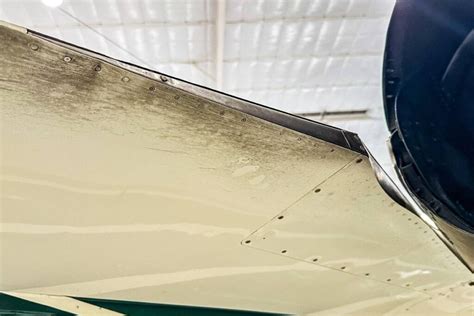
Also known as galvanic corrosion, dissimilar metal corrosion occurs when two different metals, in electrical contact, are exposed to an electrolyte. In aviation, this is frequently seen where aluminum meets steel—such as at control surface joints or rivet interfaces.
The less noble metal (typically aluminum) becomes the anode and corrodes preferentially. Such damage can occur out of sight, making it especially dangerous.
Preventative Strategies
-
Use of non-conductive barriers (gaskets, sealants)
-
Avoiding cross-contamination during cleaning and assembly
-
Application of galvanically compatible coatings
Intergranular and Exfoliation Corrosion: Deep Structural Threats
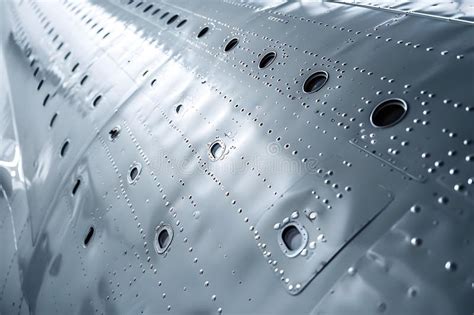
Intergranular corrosion affects the boundaries between metal grains, often resulting from improper heat treatments during manufacturing. It can lead to a brittle fracture without significant surface evidence. Exfoliation corrosion is a more aggressive variant that causes grain layers to separate—often appearing as blistered or layered metal flaking.
These forms are common in rolled aluminum extrusions and are detected only through microscopic or ultrasonic inspections. Prevention relies heavily on material selection, including low-carbon alloys and post-fabrication heat treatments.
Concentration Cell Corrosion: Electrochemical Imbalance
This corrosion type results from electrolytic differences within localized areas of the same metal due to oxygen, moisture, or chemical gradients. It can occur even on homogenous metal parts, such as wings or fuselage panels, especially where dirt or paint inconsistencies trap moisture.
Over time, these imbalances create active corrosion cells, etching into the metal and weakening structural members. Meticulous surface cleanliness and uniform coating applications are essential to reduce susceptibility.
Stress-Corrosion Cracking: Silent and Catastrophic
Stress-corrosion cracking (SCC) arises from a combination of tensile stress and corrosive environments. It often impacts high-strength alloys, such as 7075 aluminum and magnesium, used in aircraft frameworks and engine components.
Cracks usually propagate at microscopic levels, eventually leading to unexpected failures. Common SCC triggers include:
-
Residual stress from poor welding practices
-
Exposure to chlorides or alkaline cleaning agents
-
Mechanical overloads in humid atmospheres
Fretting and Fatigue Corrosion: Movement-Induced Degradation
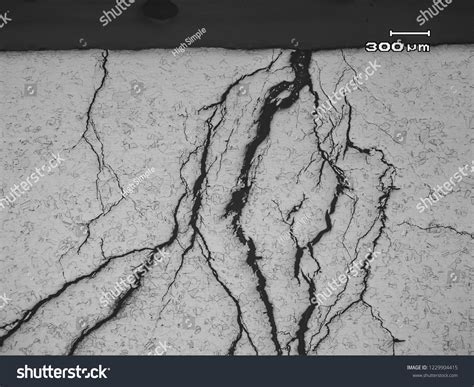
Where metal components experience micro-movements, such as in jointed or bolted assemblies, fretting corrosion occurs. It manifests as dark discoloration and pitting, weakening the assembly and paving the way for fatigue failure.
In areas of cyclical loading, corrosion fatigue becomes a serious concern. The interaction between repetitive stress and corrosive exposure accelerates crack formation, especially in engine mounts, landing gear, and wing roots.
Preventative measures include:
-
Selecting fatigue-resistant alloys
-
Applying anti-fretting coatings
-
Ensuring tight tolerances and vibration damping
Galvanic Corrosion: Electrochemical Warfare Between Alloys
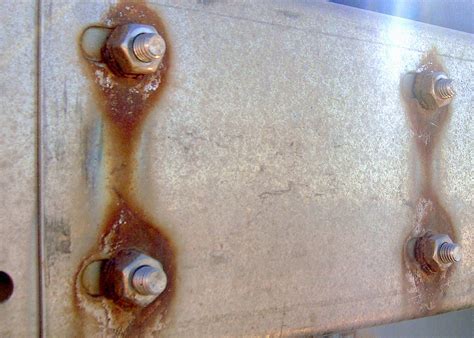
This corrosion type occurs when two dissimilar metals form an electrical couple in the presence of an electrolyte. The difference in their electrochemical potential initiates galvanic corrosion, a frequent issue in composite-metal interfaces and mixed-metal fasteners.
Early detection is difficult without disassembly, but tell-tale signs include bubbling paint, powdery deposits, and joint weakening. Aerospace engineers often rely on finite element modeling to predict galvanic hot spots during the design phase.
Modern Corrosion Repair and Prevention: The Cold Spray Advantage
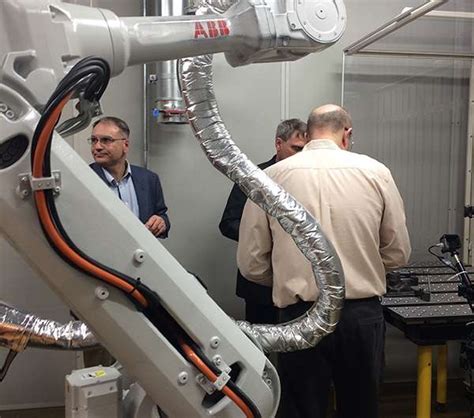
Traditional methods like chemical stripping, abrasive blasting, and component replacement remain standard, but cutting-edge technology is changing the landscape. Cold Spray technology, now adopted by companies such as Mid-America Aerotech, offers a revolutionary approach.
This process involves accelerating metallic powders at supersonic speeds to deposit a solid-state layer on corroded surfaces, restoring dimensional integrity without the need for high heat. Unlike thermal spray, Cold Spray:
-
Preserves base metal properties
-
Minimizes thermal distortion
-
Allows on-site application
The result is a cost-effective, structurally sound, and FAA-compliant repair that prolongs the aircraft’s service life.
Conclusion: A Systematic Defense Against Aircraft Corrosion
To safeguard aviation assets, we must approach corrosion control as a continuous process, not a reactive measure. From design-phase alloy selection to regular inspections, environmental control, and innovative repair technologies, each layer adds resilience to an aircraft’s lifecycle.
Through education, proactive maintenance, and adoption of advanced treatments like Cold Spray, we can significantly mitigate the risks posed by corrosion. The future of corrosion control in aviation lies in the marriage of engineering foresight, material science, and field-tested innovation.
FAQ
What is the most dangerous form of aircraft corrosion?
While many types are hazardous, stress-corrosion cracking is among the most dangerous due to its hidden nature and catastrophic potential. It can go undetected until failure occurs, often in high-load structural areas.
How often should aircraft be inspected for corrosion?
Aircraft should undergo routine visual inspections during scheduled maintenance. However, high-risk areas like wheel wells, fuel tanks, and control surfaces require more frequent checks, especially in coastal or humid environments.
Can corrosion be completely eliminated in aircraft?
While total elimination isn’t possible, corrosion can be dramatically minimized through design optimization, material selection, preventive coatings, and advanced repair technologies such as Cold Spray. Effective corrosion management programs are critical to prolonging aircraft life.