Modern aviation is a marvel of engineering precision, procedural discipline, and human skill. Yet, beneath the sophisticated instrumentation and rigorous checklists lies a persistent variable—human behavior. Among the most critical behavioral influences on aviation safety are hazardous attitudes. These deeply rooted mental patterns, often subconscious, have been directly linked to poor decision-making and avoidable incidents in both general and commercial aviation.
We explore the five recognized hazardous attitudes in aviation, explain their warning signs, and elaborate on the corrective mindsets that safeguard not just the pilot, but everyone onboard.
What Are Hazardous Attitudes?
Hazardous attitudes are behavioral tendencies that can compromise the quality of aeronautical decision-making. These attitudes interfere with a pilot’s ability to think clearly under stress, manage risk appropriately, and follow established procedures. They are deeply human, often emotional reactions, but they can be mitigated through training, awareness, and structured self-assessment.
Recognizing these attitudes is not merely academic—it is life-saving. Each attitude has a distinctive mental signature, yet all of them distort perception, suppress caution, and invite danger.
1. Anti-Authority: Defying the System
This attitude is characterized by defiance and disregard for rules. A pilot exhibiting anti-authority behavior might think or say, “Don’t tell me what to do”, dismissing the value of protocols and established regulations.
This mindset is particularly dangerous because aviation is built on systemic safety layers. From checklists to airspace coordination, the framework only works when it is respected.
Signs of Anti-Authority:
- Disregarding ATC instructions
- Skipping preflight checks
- Downplaying safety briefings
Antidote: “Follow the rules. They are usually right.” Rules in aviation were designed through decades of accident analysis and are statistically proven to reduce risk. Deviating from them based on personal judgment introduces uncontrolled variables.
2. Impulsivity: Acting Without Thinking
The impulsive pilot is pressured by time or stress and makes decisions too quickly, bypassing thoughtful analysis. This hazardous attitude often emerges in high-stress environments, such as weather deterioration, mechanical anomalies, or airspace congestion.
Indicators of Impulsivity:
- Immediate decision-making without data
- Ignoring second opinions or checklists
- Reacting instead of planning
Antidote: “Not so fast. Think first.” Pilots are trained to make timely, not hasty, decisions. Even under time constraints, a brief pause to evaluate options and confirm data significantly reduces errors.
3. Invulnerability: The Myth of Personal Immunity
This is the cognitive illusion that accidents happen to others, not to me. While a basic sense of optimism may help pilots manage risk without fear, overconfidence in personal immunity fosters complacency.
Manifestations of Invulnerability:
- Ignoring weather warnings
- Flying into known icing conditions
- Declining safety advisories due to past success
Antidote: “It could happen to me.” Acknowledging personal vulnerability is a cornerstone of risk-based decision-making. Pilots must internalize that experience does not eliminate danger—it merely helps manage it.
4. Macho: Proving One’s Superiority
The macho attitude is an urge to show off skills, take on unnecessary challenges, or perform risky maneuvers to impress. It is not limited to gender—it is about ego.
Risk Factors Associated with Macho Behavior:
- Competitive flying in non-competitive environments
- Declining assistance or collaboration
- Attempting risky landings or low passes for effect

Antidote: “Taking chances is foolish.” Confidence is essential in aviation, but it must be tempered by discipline. Taking unnecessary risks does not demonstrate skill—it endangers the mission.
5. Resignation: The Loss of Control Mindset
Pilots who succumb to resignation believe that they cannot influence the outcome. This leads to passivity during crises—a devastating lapse in the cockpit.
Symptoms of Resignation:
- Giving up when problems escalate
- Reluctance to take command during emergencies
- Over-reliance on automation or other crew members
Antidote: “I’m not helpless. I can make a difference.” Every second in aviation offers an opportunity for course correction. Pilots must remember that their intervention can reverse adverse outcomes.
The IM SAFE Checklist: A Behavioral Firewall
To supplement awareness of hazardous attitudes, pilots use the IM SAFE checklist, a quick self-evaluation tool that screens for physical or mental fitness before flight.
IM SAFE Components:
- Illness: Any physical discomfort, even minor, can impair performance.
- Medication: Some drugs compromise cognition or motor coordination.
- Stress: Emotional or mental burdens lower situational awareness.
- Alcohol: FAA regulations ban flying within 8 hours of consumption, but residual effects can linger.
- Fatigue: Sleep debt and circadian rhythm disruption affect vigilance.
- Emotion: Psychological states like grief, anger, or anxiety affect judgment.
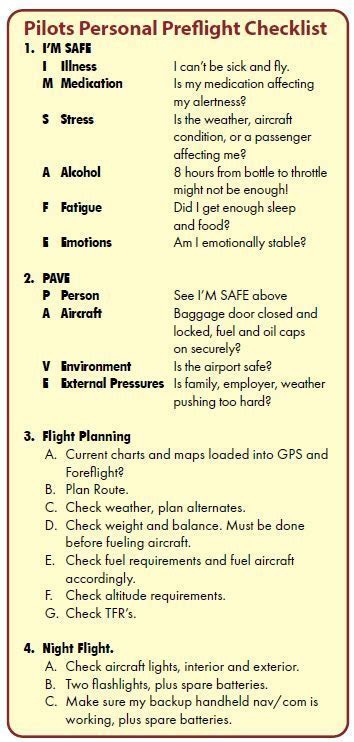
This checklist is not a bureaucratic formality—it is a preemptive strike against bad decision-making. Pilots must treat these criteria as seriously as fuel calculations or weight-and-balance.
Hazardous Attitudes in Real-Life Scenarios
Consider the 1987 crash of Northwest Airlines Flight 255. Investigators found that checklist non-compliance—an outcome of possible anti-authority or resignation behavior—led to unarmed slats and flaps during takeoff. The aircraft failed to lift properly, resulting in 154 fatalities. Another case is John F. Kennedy Jr.’s fatal flight in 1999, where spatial disorientation and overconfidence—a combination of invulnerability and impulsivity—are believed to have contributed to the crash.
These are not abstract scenarios. They are deadly reminders that mindset can be as dangerous as mechanical failure.
Combatting Hazardous Attitudes Through Culture and Training
Flight schools and commercial operators increasingly emphasize aeronautical decision-making (ADM) and crew resource management (CRM). These training frameworks integrate awareness of hazardous attitudes into simulations, case studies, and peer discussions. The objective is not merely to memorize antidotes, but to cultivate an internal compass that self-corrects hazardous patterns.
Moreover, checkride evaluations now probe for behavioral resilience. Examiners watch not just for technical skill, but for how pilots react under pressure. They analyze decision paths, not just outcomes.

Conclusion: Vigilance Is the Pilot’s Best Copilot
Aircraft systems evolve, air traffic control gets smarter, and automation increases. But no system can override poor judgment born of hazardous attitudes. Pilots must continuously reflect, self-assess, and train to recognize these tendencies before they take hold. By embedding the antidotes into their operational mindset, pilots move from reactive to proactive decision-making—an evolution that saves lives and enhances aviation safety.
FAQs
What is the most dangerous hazardous attitude?
There is no single most dangerous attitude—they are all context-dependent. However, resignation can be especially fatal because it leads to inaction in critical situations, preventing the pilot from responding when necessary.
How can a pilot overcome hazardous attitudes?
Pilots can overcome hazardous attitudes through structured training, behavioral awareness, and adherence to antidotes associated with each attitude. Using tools like the IM SAFE checklist and participating in CRM programs reinforces healthy decision-making habits.
Are hazardous attitudes only relevant to student pilots?
No. Hazardous attitudes affect pilots at all levels of experience. In fact, overconfidence and complacency often increase with time. Continuous professional development and peer feedback help experienced pilots remain vigilant.