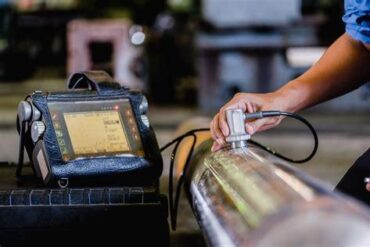
Built-in test equipment (BITE) plays a crucial role in avionics, focusing on passive fault management and diagnosis. This equipment is integrated into airborne systems to streamline maintenance processes. BITE includes tools like multimeters, oscilloscopes, discharge probes, and frequency generators. These tools allow for effective testing and diagnostics of the system.
The term BIT often refers to these functions and specifically to individual tests. Key components of BIT include:
-
Detecting faults
-
Managing how the system responds to those faults
-
Logging and announcing faults to assist in troubleshooting.
BITE functionality encompasses several important aspects:
-
Analyzing failure monitoring results
-
Reporting and memorizing failures
-
Managing tests with appropriate parameters for various components.
A built-in self test (BIST) is another essential mechanism, allowing a machine to perform self-assessments. Engineers design BISTs to ensure high reliability while reducing repair cycle times. They are particularly useful in situations where technician access is limited or testing costs are high. The primary goal of BIST is to simplify the process, cutting down on expenses and reliance on external testing equipment.
Nearly all avionics systems now incorporate BIST, especially to identify failing line-replaceable units (LRUs). These units can then be removed for repairs at depots or by manufacturers. For commercial aircraft, minimizing ground time is vital for profitability. BIST enhances safety and efficiency in these systems. Military aircraft benefit similarly from these features.
When BIST operates during flight, it allows the system to switch to alternative modes or equipment that remain functional. Critical flight equipment is typically duplicated for added safety, while less critical systems, like entertainment options, may enter a ‘limp mode’ to maintain some level of operation.