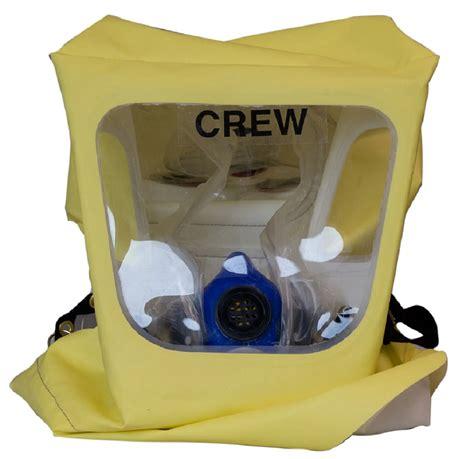
Protective Breathing Equipment (PBE) is essential emergency gear found in transport aircraft. It’s specifically designed for flight crews to use when dealing with fires. This article focuses on portable PBEs, setting them apart from fixed equipment like the quick-don oxygen masks located in the flight deck. Typically, a PBE includes a fire-resistant hood with a silicone neck seal and a clear viewing port. It also comes equipped with either a chemical oxygen generator or an oxygen cylinder. The main purpose of a PBE is to safeguard the wearer from smoke and toxic gases while they manage fire, smoke, or fumes.
Regulatory bodies establish guidelines for PBE specifications and placement within aircraft. For instance, the U.S. Federal Aviation Administration (FAA) mandates that PBEs must provide breathing gas for a minimum of 15 minutes at a pressure altitude of 8,000 feet. Generally, at least one PBE is required in the flight deck, while additional units must be available for flight attendants in the cabin. Crew members undergo hands-on training with PBEs during both initial and recurrent training sessions. These devices are designed for quick donning, allowing crew members to put them on in as little as 15 seconds.
Most PBE models come folded and vacuum-sealed in moisture-resistant pouches. They are also labeled with an expiration date and feature an internal humidity indicator. PBEs are categorized based on their function: General, Fire Smoke and Fumes, and Emergency and Contingency.