The landscape of airport access in California has undergone a remarkable transformation, marking a significant departure from the restrictive security measures implemented after September 11, 2001. For the first time in over two decades, multiple airports across the Golden State are welcoming non-passengers beyond security checkpoints, allowing visitors to accompany travelers to gates, explore dining and shopping options, and experience the full terminal atmosphere without boarding a flight.
This revolutionary shift represents more than just a return to pre-9/11 convenience—it’s a strategic business decision that enhances passenger experience while generating additional revenue streams for airports. The concept, originally pioneered by Pittsburgh International Airport before the pandemic, has found new life in California, where five major airports have successfully implemented comprehensive visitor pass programs that balance security requirements with accessibility.
The implementation of these programs addresses a fundamental change in how airports view their role in the community. Rather than serving merely as transit points, these facilities are positioning themselves as destinations in their own right, offering world-class dining, shopping, and entertainment experiences that extend beyond the traveling public. However, this evolution comes with significant operational challenges, including increased security processing times, enhanced staffing requirements, and the need for sophisticated capacity management systems.

John Wayne Airport’s Revolutionary OC AirPASS Program
John Wayne Orange County Airport in Santa Ana stands as a pioneer in California’s visitor access revolution, launching its OC AirPASS program in 2021 during the height of the COVID-19 pandemic. This timing proved particularly strategic, as the program helped revitalize terminal activity during a period of dramatically reduced passenger traffic while establishing protocols that would serve as a model for other California airports.
The OC AirPASS system operates with remarkable efficiency, requiring visitors to present valid government identification at designated information booths throughout the terminal. The airport’s sophisticated online security system processes personal information within minutes, demonstrating how modern technology can streamline security verification without compromising safety standards. This rapid processing capability has become a hallmark of successful visitor pass programs, ensuring that non-passengers don’t experience excessive delays while maintaining rigorous security protocols.
Once approved, OC AirPASS holders proceed through standard TSA security screening, following identical procedures to ticketed passengers. The program’s restrictions reflect the careful balance airports must strike between accessibility and security—each visitor may carry only one personal item, and all standard TSA regulations apply without exception. This approach ensures that security screening efficiency remains uncompromised while accommodating additional individuals in the secure area.
John Wayne Airport’s impressive passenger volume of over 11 million travelers in 2024 across three terminals provides substantial infrastructure to support visitor programs. The airport’s strategic position serving the Greater Los Angeles Area, combined with its diverse airline partnerships including Alaska Airlines, American Airlines, Allegiant Air, and Southwest Airlines, creates an environment where visitor access programs can thrive alongside robust commercial aviation operations.

Ontario International Airport’s Comprehensive ONT+ Visitor Pass Program
Ontario International Airport launched its ONT+ Visitor Pass Program in October 2022, establishing one of the most sophisticated and user-friendly visitor access systems in California. The program’s remarkable success is evidenced by nearly 100,000 program users as of December 2025, demonstrating strong community demand for airport access beyond traditional passenger services.
The ONT+ program’s online application system represents the gold standard for visitor pass administration, allowing applications up to seven days in advance or on the same day of intended visits. This flexibility accommodates both planned visits and spontaneous decisions to accompany travelers, while the pre-defined time slot system with capacity limits ensures operational efficiency and prevents overcrowding during peak travel periods.
The program’s approval process showcases seamless integration between airport systems and TSA security protocols. Visitors receive email confirmation with their digital pass either on their scheduled visit day or within 15 minutes for same-day applications, demonstrating the system’s responsiveness and reliability. This digital approach eliminates physical pass distribution logistics while providing visitors with convenient mobile access to their authorization.
Ontario International Airport’s unique operational profile enhances the visitor experience significantly. With over seven million passengers and nearly 800,000 tons of cargo processed in 2024, the airport maintains a dynamic atmosphere that extends well beyond typical passenger terminals. The facility’s role as a major hub for UPS Airlines and FedEx Express creates additional activity and interest for visitors, while its diverse international route network, including transpacific services to Taipei and connections throughout Mexico and Central America, provides a truly global airport experience.
The airport’s international carrier diversity, featuring airlines such as Starlux Airlines, China Airlines, Avianca, and Volaris, creates an cosmopolitan atmosphere that enhances the visitor experience. The recent addition of Starlux Airlines’ Airbus A350 service to Taipei represents the type of premium international service that makes airport visits particularly appealing to aviation enthusiasts and those interested in experiencing world-class airline operations.

Palm Springs International Airport’s Stay & Play Initiative
Palm Springs International Airport introduced its Stay & Play Visitor Pass program in February 2024, bringing visitor access to the heart of California’s desert resort region. The program’s name reflects the airport’s connection to the leisure-focused Coachella Valley, where tourism and hospitality represent primary economic drivers, making airport visitor access a natural extension of the region’s welcoming approach to guests and visitors.
The Stay & Play program follows the successful online application model established by other California airports, with applications accepted up to seven days in advance and same-day processing available within 15 minutes of submission. This system ensures that visitors can spontaneously decide to accompany travelers or explore the airport’s amenities without extensive advance planning, while still maintaining necessary security verification protocols.
Palm Springs International Airport’s operational characteristics create a unique visitor experience within California’s airport landscape. Serving approximately 3.2 million passengers annually, the airport maintains a more intimate scale compared to major metropolitan airports, potentially offering visitors a more relaxed and manageable experience. The facility’s single terminal design simplifies navigation for first-time airport visitors while concentrating dining, shopping, and observation opportunities in a cohesive space.
The airport’s international service profile presents an interesting operational element—all international flights operate to and from Canadian airports equipped with pre-clearance facilities, eliminating the need for U.S. customs and immigration infrastructure at Palm Springs. This arrangement creates a streamlined international travel experience that visitors can observe and appreciate, while the airport’s focus on leisure destinations aligns perfectly with the visitor pass program’s recreational objectives.
San Diego International Airport’s Newly Launched SAN Pass
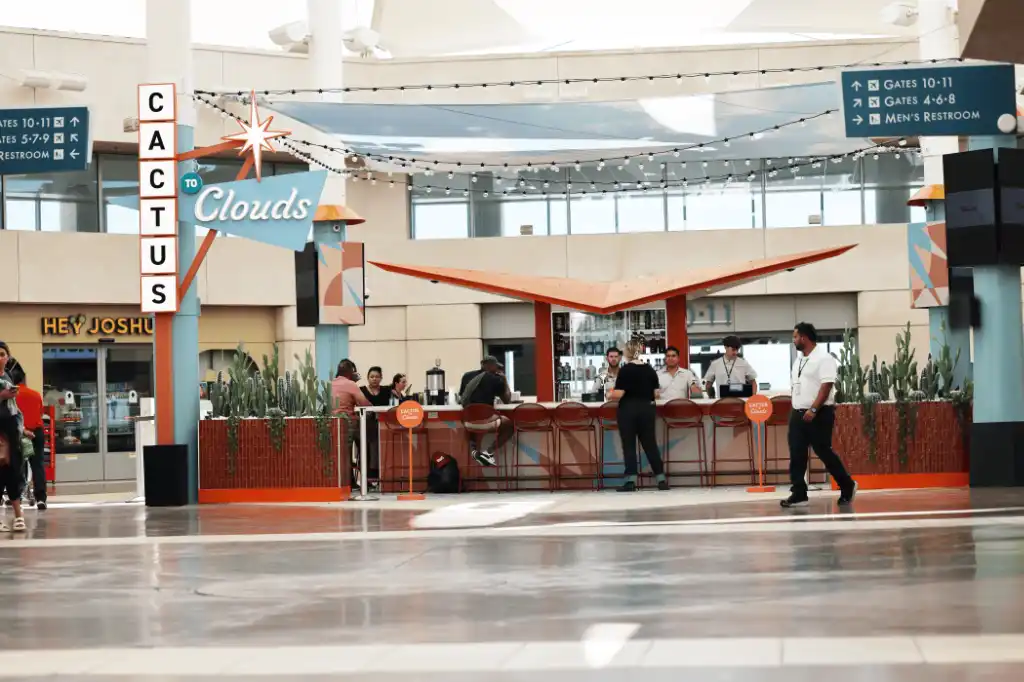
San Diego International Airport represents the largest facility among California airports offering visitor access, introducing its SAN Pass program on November 19, 2025. The program’s launch at one of California’s busiest airports demonstrates the scalability of visitor pass concepts and the potential for major aviation facilities to successfully integrate non-passenger access without compromising operational efficiency.
Airport CEO Kimberly Becker’s announcement emphasized the program’s dual purpose: facilitating traditional gate farewell and greeting experiences while showcasing the airport’s extensive dining and retail offerings to the broader San Diego community. This approach recognizes that modern airports function as significant commercial and social spaces that extend well beyond their transportation mission, creating value for local communities through accessible amenities and experiences.
The SAN Pass program operates within carefully defined parameters that reflect the complexities of managing visitor access at a high-volume facility. Daily pass limitations and restricted operating hours between 4:00 a.m. and 9:00 p.m. ensure that visitor access doesn’t interfere with peak operational periods or overnight security protocols. These restrictions demonstrate how major airports can accommodate visitor programs while maintaining operational flexibility and security standards.
San Diego International Airport’s impressive operational scale provides substantial context for the visitor pass program’s significance. With 25.2 million passengers in 2024, the airport holds the distinction of being North America’s busiest single-runway facility, creating a unique operational environment that visitors can observe and appreciate. The airport’s role as an Alaska Airlines hub, combined with its extensive domestic network and international services to destinations including Munich, London, Tokyo, and Amsterdam, creates a dynamic aviation environment that enhances the visitor experience.
The airport’s international route network, featuring premium carriers such as Lufthansa, British Airways, and Japan Airlines, provides visitors with opportunities to observe world-class airline operations and aircraft types that might not be available at smaller facilities. The temporary suspension and planned resumption of KLM’s Amsterdam service illustrates the dynamic nature of international aviation that visitors can witness firsthand.
Oakland San Francisco Bay Airport’s Latest OAK Guest Pass Program
Oakland San Francisco Bay Airport became California’s most recent addition to the visitor pass movement with its December 15, 2025 announcement of the OAK Guest Pass program. The airport’s decision to implement visitor access reflects the growing recognition among California airports that community engagement and non-aeronautical revenue generation represent important strategic priorities in the post-pandemic aviation environment.
The OAK Guest Pass follows the established California model of online applications up to seven days in advance, TSA approval processes, and standard security screening requirements for all participants. This consistency across California airports suggests the emergence of best practices that balance accessibility, security, and operational efficiency while providing visitors with familiar application and approval processes regardless of which airport they choose to visit.
Oakland Airport’s unique market position within the San Francisco Bay Area creates distinctive opportunities for visitor pass programs. With over 10.8 million passengers processed through two terminals and four runways in 2024, the airport maintains significant operational activity while serving a markedly different airline mix compared to nearby San Francisco International Airport. The facility’s focus on low-cost carriers and Mexican operators creates a diverse operational environment that visitors can explore and appreciate.
Southwest Airlines’ dominant 83.2% market share between fall 2024 and 2025 creates a unique operational dynamic that visitors can observe, while the presence of carriers such as Viva and Volaris provides insight into the growing importance of U.S.-Mexico aviation markets. The airport’s brief experience with low-cost long-haul European services through Norwegian Air Shuttle and LEVEL during the late 2010s demonstrates the dynamic nature of international aviation that continues to evolve at facilities like Oakland.
The airport’s limited service from major U.S. carriers, with only a Delta Connection route to Salt Lake City representing traditional network carrier presence, creates an operational environment distinctly different from hub airports, potentially offering visitors insight into alternative airline business models and route development strategies.
Understanding the Broader Impact of California’s Visitor Pass Revolution
The implementation of visitor pass programs across five major California airports represents more than individual facility initiatives—it signals a fundamental shift in how airports conceptualize their role within communities and their potential for revenue generation beyond traditional aeronautical activities. These programs demonstrate that modern airports can successfully balance enhanced security requirements with community accessibility, creating new opportunities for social interaction, commercial activity, and aviation education.
The success of these programs relies heavily on sophisticated technology integration, from online application systems to real-time TSA approval processes and digital pass distribution. This technological foundation enables airports to manage visitor access efficiently while maintaining detailed records and ensuring security compliance, proving that innovation can enhance both accessibility and safety simultaneously.
California’s visitor pass programs also highlight the importance of capacity management and operational flexibility in modern airport design and management. Each facility has implemented unique restrictions and limitations that reflect their specific operational characteristics, passenger volumes, and infrastructure capabilities, demonstrating that successful visitor access requires customized approaches rather than one-size-fits-all solutions.
The economic implications of these programs extend beyond direct visitor spending to include enhanced airport branding, community engagement, and potential increases in future passenger traffic as visitors become familiar with airport amenities and airline services. These secondary benefits may prove as valuable as immediate commercial revenue, particularly as airports compete for passenger loyalty and community support in an increasingly competitive aviation market.
As California continues to lead the nation in airport visitor access innovation, these five airports serve as laboratories for best practices that may influence airport design, security protocols, and community engagement strategies nationwide. Their success demonstrates that the post-9/11 era of restricted airport access is evolving toward a new model that prioritizes both security and accessibility, creating opportunities for airports to serve their communities in ways that extend far beyond traditional transportation functions.