South Africa’s decision to host Exercise WILL FOR PEACE 2026 has captured global attention, as naval forces from China, Russia, and Iran converge in the waters off Simon’s Town and False Bay. Held from January 9 to 16, 2026, the drill is not just a routine military maneuver but a striking display of multilateral naval cooperation along one of the world’s most sensitive maritime corridors — the Cape sea lane.
The Cape’s Strategic Significance: More Than Just Geography
The Cape sea route is a globally vital maritime passage, acting as a lifeline for commercial vessels rerouted from the Suez Canal or Red Sea, especially during crises. This strategic junction between the Atlantic and Indian Oceans plays a pivotal role in global shipping logistics. Conducting a multinational naval drill in this location highlights the growing geopolitical weight assigned to non-Western coalitions seeking to redefine control over global maritime trade.
While the exercise is officially presented as a maritime security and interoperability operation, its geostrategic undertones are unmistakable. The symbolism of this alliance—particularly the presence of Iran alongside two permanent UN Security Council members—suggests a coordinated message: these nations are ready to project naval power beyond their home regions in defiance of traditional Western maritime dominance.
China’s Commanding Role: Strategic Posturing in the Southern Hemisphere
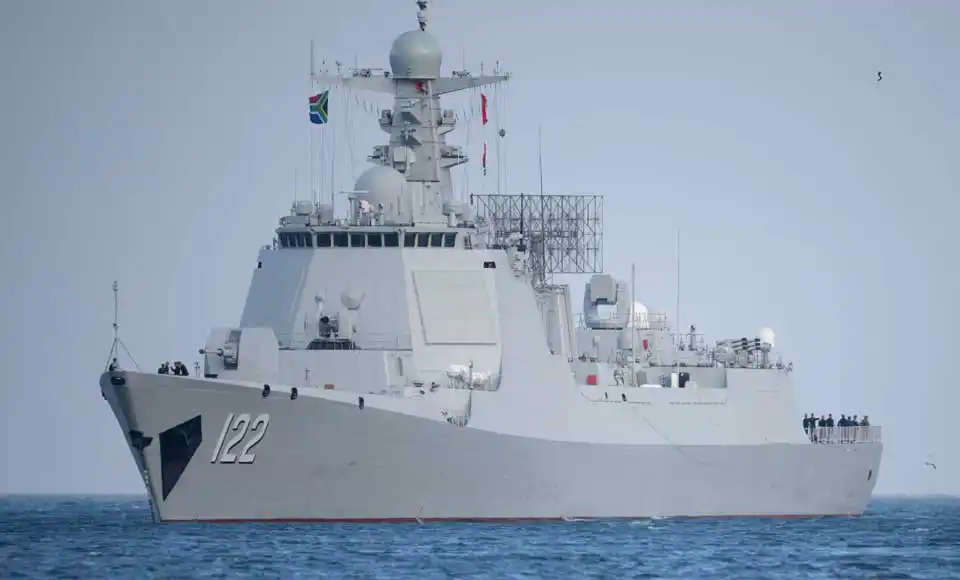
China’s leadership role in WILL FOR PEACE 2026 is embodied by the deployment of its Type 052D guided-missile destroyer Tangshan and the Type 903A replenishment ship Taihu. The Tangshan, equipped with area-air-defense systems, functions as both an operational centerpiece and command vessel. It facilitates air and surface surveillance, formation screening, and helicopter-supported maritime patrols—all crucial components in high-value escort missions.
Meanwhile, the Taihu serves as the logistical linchpin, enabling sustained operations far from home waters. Its inclusion allows China to demonstrate not only advanced maritime interoperability but also strategic endurance—a capacity long held as the preserve of Western naval powers.
Together, these assets position China not just as a technical leader but also as a symbolic flagbearer of a diversified global maritime order, under the informal umbrella of BRICS Plus cooperation.
Russia’s Deployment: Tactical Contribution and Strategic Messaging
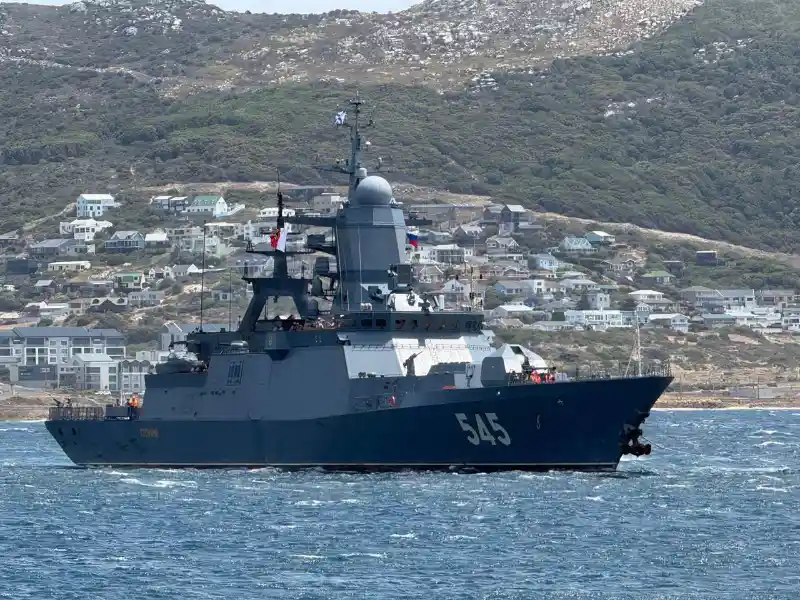
Russia contributes to the exercise with the Steregushchiy-class corvette Stoikiy and the fleet tanker Yelnya. Though more modest in scale than China’s contribution, these ships deliver tactical versatility and logistical sustainment. The Stoikiy, optimized for anti-submarine warfare, air defense, and surface surveillance, reflects a focus on maritime interdiction and port security operations.
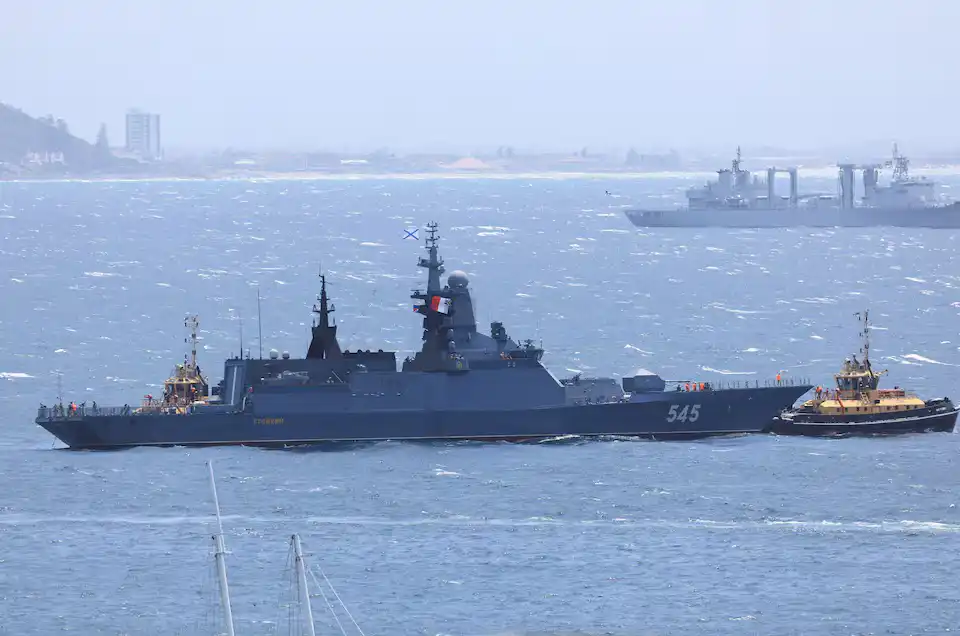
The Yelnya underlines the importance of resupply and endurance, showcasing Russia’s intent to maintain a reliable naval presence even in remote waters. This combination underscores Russia’s strategy to operate not just for show, but to test real-world interoperability with non-Western allies.
The timing of this drill—amid Western sanctions and heightened tensions over Ukraine—further suggests a deliberate effort by Moscow to demonstrate naval cooperation with partners unaffected by Western pressure.
Iran’s Forward Presence: Long-Range Deployment and Political Signaling
Iran’s participation represents the most politically charged element of the exercise. Naval images from the region show the Makran, a converted oil tanker now serving as a helicopter-capable forward base ship, operating alongside other navies. Accompanying it is the Naghdi, a small patrol combatant designed for coastal defense but now participating in extended missions.
By deploying Makran to the Cape sea lane, Tehran signals its expeditionary ambitions—a clear declaration of intent to become a blue-water navy. The ship’s capacity for rescue operations, helicopter deployment, and medical support also aligns with the humanitarian and non-combat elements officially ascribed to the drill. Yet, beneath this surface lies a deeper political message: Iran’s integration into multilateral, non-Western maritime operations is no longer aspirational but operational.
This deployment enhances Iran’s image as a regional power with global outreach, pushing back against portrayals of isolation, especially amid continuing nuclear-related sanctions and regional rivalries in the Gulf.
South Africa’s Balancing Act: Regional Anchor and Diplomatic Conduit
As host nation, South Africa offers more than just geography. Its naval forces, particularly the Valour-class frigates, bring well-rounded capabilities to the exercise, including air defense, escort operations, and port security. These assets are vital for ensuring the operational flow of multi-ship formations, especially in congested sea lanes.
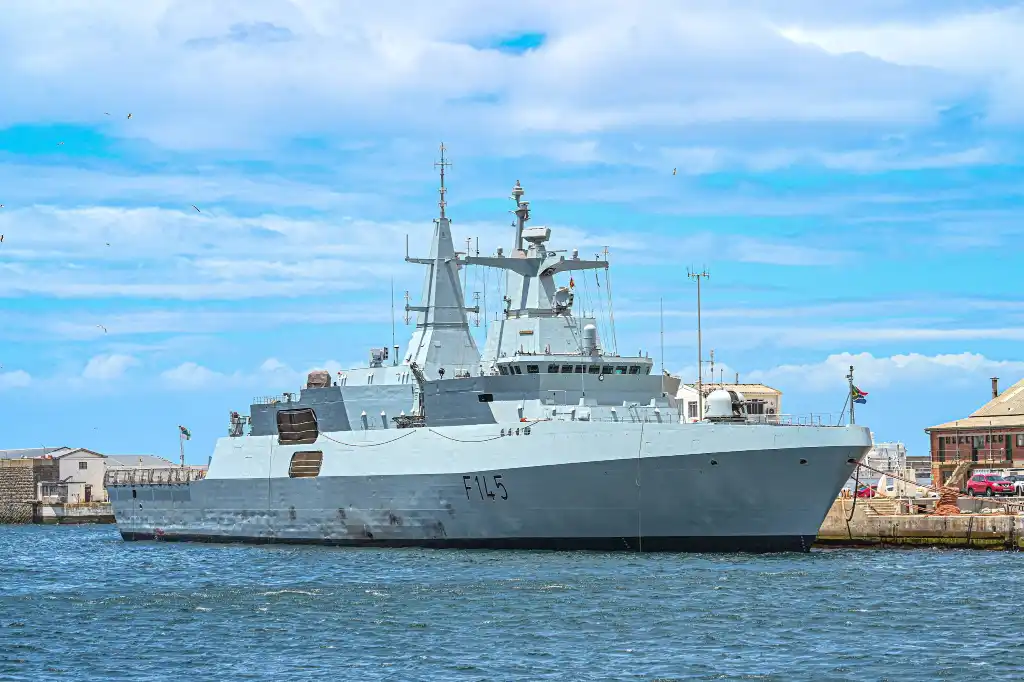
More crucially, South Africa provides the diplomatic cover needed for such a high-profile collaboration. By officially framing the exercise as non-threatening and focused on maritime security, Pretoria strikes a delicate balance: reinforcing its ties with fellow BRICS Plus nations while minimizing the risk of alienating its Western trade and security partners.
This duality is not accidental. It aligns with South Africa’s broader foreign policy goal of being a bridge between global North and South, supporting multipolarity without overt confrontation.
Multilateral Naval Mechanics: A Functional Coalition
The composition of forces and scenarios rehearsed in WILL FOR PEACE 2026 go far beyond the scope of a conventional search-and-rescue or piracy drill. This is a simulation of coalition task group operations, involving:
- Command-and-control hierarchy exercises
- Air and surface surveillance integration
- Real-time helicopter deployment drills
- Replenishment and refueling at sea
- Port-approach security coordination
These complex, multi-domain operations mimic the challenges of protecting global commerce under contested or crisis conditions. By executing them jointly, the participating nations validate their interoperability and signal operational readiness to intervene along major trade routes.
In essence, this drill mirrors what a NATO-led carrier strike group might practice—only here, the operational doctrine is written by non-Western powers, for their own interests.
Strategic Implications: Redefining Maritime Influence
This naval exercise illustrates a paradigm shift in maritime security architecture. The convergence of China, Russia, Iran, and South Africa at the Cape is not just about securing trade—it’s about reshaping global perceptions of sea power ownership.
By operating independently of Western command structures, these nations challenge the monopoly of NATO and other U.S.-led maritime coalitions in global waters. It also sets a precedent for future exercises under the BRICS Plus security umbrella, possibly involving other nations such as India, Brazil, or Türkiye in different capacities.
The broader message is unmistakable: Maritime security is no longer the exclusive domain of the West. The world is witnessing the rise of alternative naval alliances—not necessarily antagonistic, but certainly autonomous.
Conclusion: A New Wave in Naval Diplomacy
Exercise WILL FOR PEACE 2026 is not an isolated event. It is the latest and most prominent example of emerging multipolar naval diplomacy, where maritime cooperation becomes a tool of both security policy and strategic messaging.
South Africa’s hosting of this China-led drill near the Cape sea lane brings together operational training, logistical complexity, and geopolitical symbolism in equal measure. For participating nations, it affirms collective capability and political will. For the international community, it forces a reevaluation of who gets to define maritime norms in the 21st century.