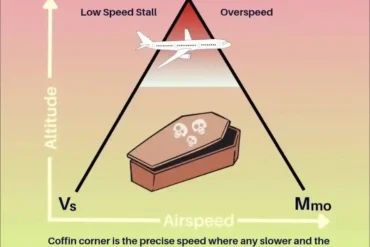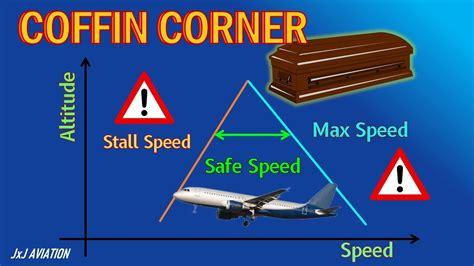
In aviation, coffin corner, also known as Q corner, is a crucial concept. It refers to the point where the boundaries of the Flight Envelope meet due to two main factors: a high incidence stall and the critical Mach number. Essentially, coffin corner occurs when an aircraft reaches an altitude where the difference in speed between low-speed stall buffet and high-speed Mach buffet becomes minimal.
As an aircraft climbs closer to this point, the gap between stall speed and critical Mach number shrinks significantly. When these boundaries intersect, any slight change in speed could lead to breaching one of the limits. In some situations, simply turning the aircraft can cause both limits to be exceeded at once. This happens because the inside wing slows down while the outside wing speeds up during a turn. Additionally, encountering turbulence can lead to sudden changes in airspeed that exceed safe limits.
In both commercial and general aviation, pilots typically avoid flying at altitudes near coffin corner. To maintain safe buffet margins, it’s important to follow the aircraft manufacturer’s maximum operating altitude guidelines provided in the Aircraft Flight Manual (AFM). These guidelines consider actual conditions versus International Standard Atmosphere (ISA) conditions. If turbulence is expected or experienced, lowering the cruising altitude can help ensure that buffet margins remain secure.