Controlled Firing Areas (CFAs) represent one of the most enigmatic yet essential classifications within the broader structure of Special Use Airspace (SUA) in the United States. Unlike Prohibited Areas, Restricted Areas, or Military Operations Areas (MOAs), CFAs operate almost invisibly—undetectable on charts, absent from NOTAMs, and wholly silent in the air traffic control environment. Yet, their importance to both civilian safety and national defense activities is immense.
Understanding Controlled Firing Areas in U.S. Airspace
According to the Aeronautical Information Manual (AIM), a Controlled Firing Area is “airspace designated to contain activities that if not conducted in a controlled environment would be hazardous to nonparticipating aircraft.” That definition, while accurate, requires unpacking. In essence, CFAs are locations where hazardous ground-based operations—such as ordnance disposal, blasting, or static rocket testing—are conducted with one critical caveat: all activity ceases immediately upon detection of nonparticipating aircraft.
This system ensures that no aircraft needs to reroute or seek prior clearance to fly through or near a CFA. These zones are designed to be self-regulating through intense visual surveillance and range safety protocols. When a pilot flies overhead, the ground team halts its operation without any interaction. In fact, pilots will likely never know they have flown over a CFA. This reactive safety mechanism makes CFAs unique in the world of special use airspace.
The Silent Role of CFAs in Airspace Infrastructure
One of the most surprising attributes of CFAs is their lack of visibility in both preflight and in-flight information systems. Unlike other SUA types:
- CFAs are not charted on sectional maps.
- They do not appear in NOTAMs (Notice to Air Missions).
- They have no published dimensions or altitudes.
- They are not controlled or coordinated through any airspace governing body, such as the FAA or military ATC.
This design exists by intent. Since no aircraft restrictions or operational requirements apply, there is no need for public notification. This invisibility helps streamline flight planning while maintaining necessary ground-based operational capabilities.

Why CFAs Exist: Balancing Risk Without Interference
The genesis of the Controlled Firing Area concept lies in the need to perform dangerous activities safely without obstructing aviation traffic. The key difference between CFAs and other special use areas like Restricted Areas or Warning Areas is that CFAs are designed around invisibility and flexibility. Here’s why this is so effective:
- Temporary hazards (like rocket motor ignition tests) don’t require permanent airspace restrictions.
- Noncontinuous operations are best managed through visual surveillance rather than constant regulatory oversight.
- The burden of safety lies on the activity organizer, not the pilot.
This principle not only reduces administrative overhead but prevents unnecessary clutter on aeronautical charts—critical for both VFR and IFR navigation.
What Happens Inside a CFA? Typical Uses and Activities
While CFAs are not involved in airborne military operations like MOAs or Warning Areas, they are essential to ground-based explosive activities. The most common use cases include:
- Ordnance disposal, where live bombs or munitions are safely detonated.
- Blasting operations for construction or demolition in remote areas.
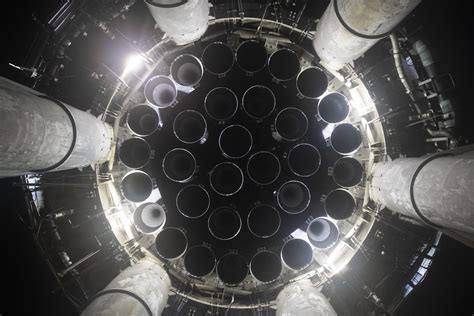
- Static rocket testing, often conducted by defense contractors or research agencies.
These operations involve tremendous force and risk, requiring isolation zones that temporarily suspend activity the moment a visual aircraft is detected. Unlike restricted airspace, CFAs impose no burden on pilots, offering a seamless coexistence of civil and military needs.
No Notification, No Charts: A Pilot’s Experience Near CFAs
One of the most fascinating aspects of CFAs is how they remain invisible yet ever-present. Pilots receive no briefings, no radio calls, and no vectoring advisories regarding CFAs. Whether flying a Cessna 172 at 4,500 feet or cruising in a Gulfstream G600 at FL410, no warning system will indicate you’re approaching a CFA.
This complete autonomy in the sky stems from the self-deactivating mechanism built into CFA operations. Visual observers on the ground halt tests or detonation activities the moment an aircraft is detected, usually with powerful binoculars and airband monitors.
How CFAs Differ from Other Special Use Airspace Types
To understand the importance of CFAs, it’s useful to contrast them with the five other SUA categories:
- Prohibited Areas (e.g., P-56 over Washington D.C.) are completely off-limits.
- Restricted Areas allow for access only with ATC clearance.
- Warning Areas exist offshore and warn of possible military activity.
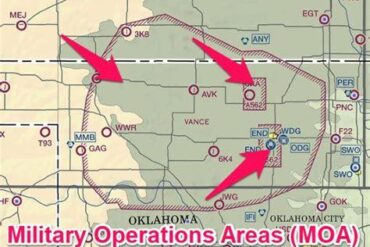
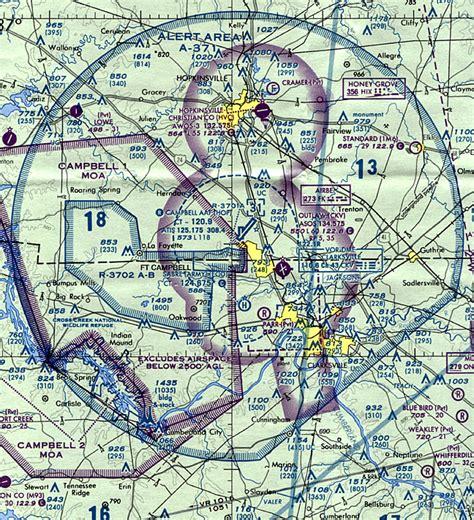
- MOAs coordinate aircraft and military exercises but are charted.
- Alert Areas advise of unusual activity but do not restrict access.
In contrast, Controlled Firing Areas do none of these. They:
- Do not warn, restrict, or coordinate with pilots.
- Remain undocumented in FAA publications.
- Are internally monitored and externally invisible.
This makes CFAs the least intrusive and most pilot-friendly of all SUA categories, even while being potentially the most dangerous to those on the ground.
Legal and Regulatory Considerations Surrounding CFAs
While CFAs are not regulatory airspace, their operations fall under strict internal safety protocols and federal oversight. Agencies such as the Department of Defense (DoD) or private contractors engaging in blasting or testing must ensure their CFA activities comply with:
- FAA Order 7400.2 guidelines for airspace procedures.
- Range safety policies, which include aircraft detection and immediate activity cessation.
- Environmental and explosive regulations, particularly when involving hazardous materials.
Though not visible on pilot charts, the oversight of CFA activity is robust, ensuring that national safety standards are upheld without placing unnecessary restrictions on the aviation community.
Implications for Future Airspace Design and UAS Integration
As drone and Unmanned Aerial Systems (UAS) technologies continue to evolve, CFAs may take on a more dynamic and responsive role in national airspace strategy. Unlike traditional SUA, CFAs could serve as model templates for low-altitude, self-regulating danger zones that automatically deactivate in response to intruding traffic—especially in an environment increasingly populated by autonomous or remotely piloted aircraft.
In addition, their invisibility to manned aviation makes them ideal for temporary UAS test ranges, especially when operating in Class G airspace. As regulatory bodies look to integrate commercial and civil drones, the operational logic of CFAs offers a scalable blueprint.
Conclusion: Controlled Firing Areas Are Invisible, but Invaluable
In the vast, structured complexity of United States airspace, Controlled Firing Areas remain a quiet linchpin of operational balance. They allow for hazardous ground testing, support military and research initiatives, and maintain complete neutrality to airspace users. For pilots, CFAs require no action, no diversion, and no concern. For operators, they demand rigorous safety and instant responsiveness. In this interplay, aviation safety and national defense find a subtle but powerful harmony.
Understanding CFAs isn’t just an academic exercise—it’s a recognition of how airspace can be intelligently designed to protect without obstructing. It is a case study in trust, protocol, and precision, operating every day unseen by thousands of flights overhead.