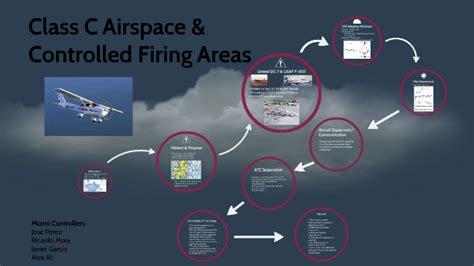
Controlled Firing Areas (CFAs) are among the lesser-known components of Special Use Airspace (SUA), often dismissed as unimportant because they are not charted and, by design, do not interfere with standard aviation operations. Yet, their instructional inclusion within pilot training, particularly under the MCPRAWN acronym (Military Operations Area, Controlled Firing Area, Prohibited, Restricted, Alert, Warning, National Security TFR), carries weight far beyond compliance with an FAA syllabus. Understanding CFAs is not simply about memorization—it’s about safety, liability, military coordination, and the preservation of aviation trust in a complex national airspace system.
Understanding What a Controlled Firing Area Is
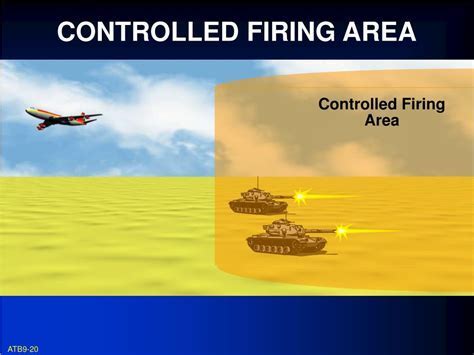
A Controlled Firing Area is a location where military or governmental agencies conduct live-fire exercises, weapons testing, or other hazardous operations. What sets CFAs apart from other types of special use airspace is this key fact: their activity is immediately suspended when a nonparticipating aircraft approaches. This singular feature—the real-time ceasefire response—makes them unique in the aviation landscape.
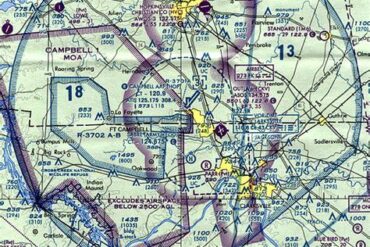
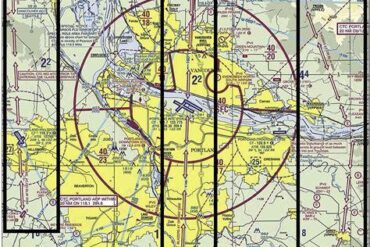
Unlike Restricted or Warning Areas, CFAs are not depicted on sectional charts. They do not require pilots to seek prior permission or avoid their boundaries because the responsibility for conflict avoidance lies entirely with the entity conducting the hazardous activity. This might suggest to some students or pilots that CFAs are irrelevant to their flight planning, but this perception underestimates the complex function they serve in the overall system.
Why Are CFAs Not Charted?
The omission of CFAs from sectional charts is not a sign of carelessness but a reflection of intentional design. The airspace over a CFA is fully accessible to civilian aircraft, and no operational restrictions are imposed. Since all hazardous activity within the area is halted as soon as a nonparticipating aircraft is detected, there is no need to assign navigational avoidance responsibilities to pilots.
Instead, ground-based spotters or surveillance systems—whether human or radar—are responsible for detecting inbound aircraft and initiating a ceasefire protocol. In many cases, these are military personnel stationed at firing ranges, constantly monitoring the sky for low-flying GA (General Aviation) aircraft or helicopters.
This design is crucial for flexibility and practicality. Many CFAs exist in proximity to urban areas, military bases, or coastal installations—where temporarily halting activity is a better alternative than permanently restricting airspace.
Teaching CFAs: More Than Just a Memorization Point
When a flight instructor teaches CFAs, the purpose isn’t merely to complete a checklist item on the knowledge test. It is to reinforce a fundamental truth about the airspace system: not everything you need to be aware of is marked on your chart. In an industry where situational awareness and risk mitigation are paramount, the concept of CFAs introduces a deeper appreciation for invisible hazards—and the procedures in place to protect aviators from them.
Many CFIs report students asking, “Why should I care about a firing zone that pauses when I fly through it?” The answer is threefold:
- Because not knowing it exists does not negate its existence.
- Because understanding the broader scope of SUA improves aeronautical decision-making.
- Because even though it doesn’t limit your access, it might still affect your safety or legal liability.
This kind of knowledge becomes especially valuable when discussing cross-country planning, route selection, and VFR navigation in unfamiliar or low-level airspace.
Real-World Incidents and the Ceasefire Reality
Multiple real-world anecdotes demonstrate that Controlled Firing Areas are not abstract concepts. For example, pilots who have flown near active ranges recall hearing ceasefire calls over internal radios as their aircraft unexpectedly approached a CFA boundary. One former U.S. Navy aviator recounted ceasing small arms fire during a training session near Joint Base Pearl Harbor-Hickam when low-flying civilian aircraft—unaware of the ground operations—passed overhead.
Another example involves an Army tanker crew conducting live-fire exercises with heavy machine guns. Their range activities were abruptly halted when an Apache helicopter broke through the tree line unexpectedly, risking catastrophic crossfire. The crew ceased operations and scrambled for identification, proving how vital and reactive CFA management needs to be.
These stories underline the reality that CFAs depend on high vigilance and quick response times, not pilot compliance. That in itself makes them a powerful example of why aviation safety is a shared responsibility between airborne and ground-based operations.
Legal Implications and the Question of Liability
Though CFAs are not regulatory barriers, they still play into the liability matrix that pilots must navigate. Suppose an aircraft incident occurs in a CFA due to pilot maneuvering that disrupts military exercises or triggers an unintended hazard. In that case, even if the airspace was “open,” the pilot could face scrutiny for negligence or operational recklessness—particularly if low altitude or erratic flying contributed to the issue.
Moreover, flight schools and instructors who fail to educate students on the operational nature of CFAs may be seen as providing incomplete or insufficient ground instruction. A pilot operating under such instruction could find themselves exposed in case of legal review after an event.
It is worth noting that Title 14 CFR 91.119 addresses minimum safe altitudes, particularly for helicopters and powered parachutes, noting that operation is allowed closer to the surface as long as no hazard is posed to persons or property. This aligns directly with the environments where CFA-related activities often occur.
Technology and the Limits of Detection
The effectiveness of CFAs depends heavily on detection technology and human vigilance. Not all CFAs are equipped with advanced radar or integrated ADS-B reception systems. In rural or mountainous areas, visual spotting remains the primary line of defense, and that comes with inherent limitations—especially in poor weather, low-light conditions, or during multiple simultaneous operations.
This reliance on manual monitoring makes pilot predictability critical. Pilots who fly erratic or below safe altitudes increase the risk of late detection, which could, in rare cases, result in a delayed ceasefire and a possible close encounter.
Thus, the teaching of CFAs also implicitly reinforces pilot behavior standards, including the importance of adhering to known VFR cruising altitudes, squawking Mode C when appropriate, and maintaining continuous visual scanning in uncontrolled or unfamiliar airspace.
Why Students Need to Understand “Non-Charted” Airspace
In aviation, the danger isn’t always visible. Teaching about CFAs serves as a gateway into a more sophisticated understanding of airspace structure—especially the realization that some operational realities are deliberately hidden from the chart to protect public access, not to restrict it.
It also provides context when pilots encounter NOTAMs (Notices to Air Missions) or unexpected radio calls from military operations. Pilots who understand what CFAs are and why they exist will be better equipped to respond confidently and correctly in these moments.
Equally important, the concept of CFAs brings into focus a broader reality: you are not always the only operator in your airspace, even if you’re the only aircraft visible on your GPS. The unseen coordination between civil and defense aviation is what makes seamless, secure airspace possible.
Conclusion: CFA Knowledge Is a Pillar of Aviation Awareness
To ask “why do we teach about Controlled Firing Areas?” is to overlook the underlying mission of aviation education: to prepare pilots for the known and the unknown, the visible and the hidden, the charted and the uncharted. CFAs are more than regulatory footnotes—they are a living example of military-civilian coordination and real-time safety engineering.
When we teach CFAs, we are not just meeting FAA requirements—we are instilling an understanding that airspace is not only drawn in ink, but also monitored in action. And while the firing might stop for a Piper Cub crossing overhead, awareness of that fact—and what it means—is what makes a true aviator.
Ultimately, in a world where GPS saturation and electronic charts dominate cockpit culture, CFAs remind us that not everything vital is visible—and not everything visible is vital. Teaching about CFAs is, above all, a commitment to comprehensive knowledge, operational awareness, and respect for the complexity of our shared skies.