Delta Air Lines has launched a historic long-haul route that marks its bold reentry into the Middle Eastern market: a nonstop service from Atlanta to Riyadh, Saudi Arabia. Clocking in at over 15 hours each way, this connection is not just a logistical feat—it represents a strategic maneuver backed by geopolitical alignment, airline partnerships, and emerging economic corridors between the United States and the Gulf region.
A New Gateway: From Atlanta to Riyadh in One Leap
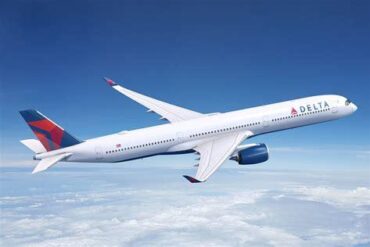
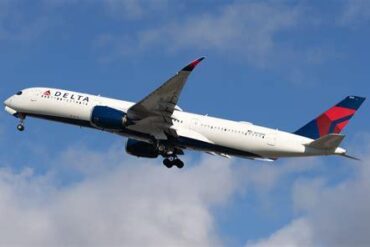
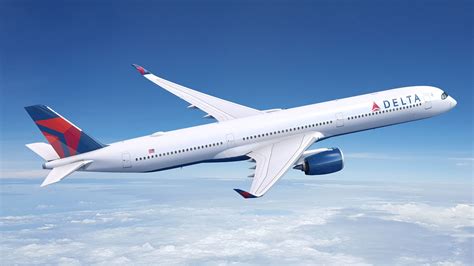
Beginning October 23, Delta’s inaugural service to King Khalid International Airport (RUH) becomes the first U.S. carrier flight to Riyadh since 2001, when TWA exited the Saudi market. This 6,329-nautical-mile journey will be operated by Delta’s flagship Airbus A350-900, a 275-seat widebody featuring 40 Delta One suites, 40 Premium Select seats, 36 Comfort+, and 159 Main Cabin seats. With a block time exceeding 15.5 hours, the route will become Delta’s fifth-longest by distance and sixth-longest by block time.
Initially operated daily, the frequency will stabilize to three weekly round trips—departing Atlanta on Wednesdays, Fridays, and Sundays at 10:30 PM and arriving in Riyadh by 7:35 PM the next day. The return leg leaves Riyadh on Mondays, Thursdays, and Saturdays at 11:30 PM and arrives in Atlanta by 7:05 AM. All times are local.
Strategic Partnerships and Saudi Investment Powering the Launch
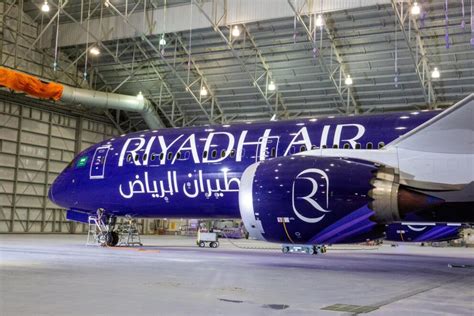
Delta’s interest in this route is deeply intertwined with Saudi Arabia’s aviation ambitions. The launch is heavily subsidized by the Saudi Air Connectivity Program, a government initiative designed to strengthen inbound international air travel. Moreover, Delta has aligned itself with Riyadh Air, the kingdom’s new flag carrier, via a strategic partnership announced earlier this year. The alignment extends to codesharing with Saudia, another SkyTeam member and incumbent operator on U.S.-Saudi routes.
This cooperation essentially gives Delta indirect access to multiple Saudi cities and regional hubs, maximizing connectivity from a single entry point. The economic logic is clear: capitalize on Saudi Arabia’s Vision 2030, which seeks to diversify the kingdom’s economy and dramatically expand its tourism and business sectors.
Why Atlanta—and Not JFK?
It might seem counterintuitive that Delta chose Atlanta (ATL)—its primary hub but not a major origin point for Riyadh-bound travelers—instead of New York JFK, where demand is far higher. Booking data shows over 41,000 round-trip passengers flew between JFK and Riyadh over the past year, dwarfing the fewer than 5,000 who did so from Atlanta.
But a deeper look reveals that JFK is already served by Saudia with thrice-weekly Boeing 777-300ER flights. Delta, being a SkyTeam ally, avoids direct competition and opts instead for complementary access through its connection-dense ATL hub. Passengers from Los Angeles, San Francisco, Chicago, Dallas, and Houston—each showing meaningful Riyadh-bound traffic—can now funnel through Atlanta, optimizing both cabin loads and operating efficiency.
High-Yield Business Traffic vs. Religious Pilgrimage
Delta’s decision to focus on Riyadh rather than Jeddah is rooted in yield calculations. While Jeddah serves as a gateway to Mecca, it attracts large volumes of lower-revenue pilgrimage traffic. Riyadh, by contrast, has a stronger profile for premium business and diplomatic travel, which commands significantly higher fares. Booking data reveals that average U.S.–Riyadh fares are three times higher than those to Jeddah, indicating robust premium demand.
Rebuilding a Middle East Network After a Decade
Delta’s Middle Eastern ambitions are not new but have been quiet since 2016, when it terminated its Dubai service from Atlanta. Previously, it also operated flights to Kuwait City and Amman, the latter from JFK until 2011. Since then, its sole route in the region has been JFK–Tel Aviv, with Atlanta–Tel Aviv service scheduled to return in April and Boston–Tel Aviv starting in October.
With Riyadh added, Delta’s Middle Eastern network expands to four routes, a scale not seen since 2011. The airline is gradually reentering a region it once ceded to Gulf competitors, with Etihad recently launching service from Abu Dhabi to Atlanta, and Emirates yet to initiate flights on the same route. In this context, Delta’s Riyadh launch signals a competitive realignment of U.S.–Gulf connectivity.
The A350-900: Engineered for Ultra-Long-Haul Excellence
Delta’s choice of the Airbus A350-900 is strategic. With a range of over 8,000 nautical miles and excellent fuel efficiency, it is engineered for ultra-long-haul performance. Cabin features like quieter engines, reduced cabin pressure, and improved humidity levels make it ideal for 15+ hour flights.
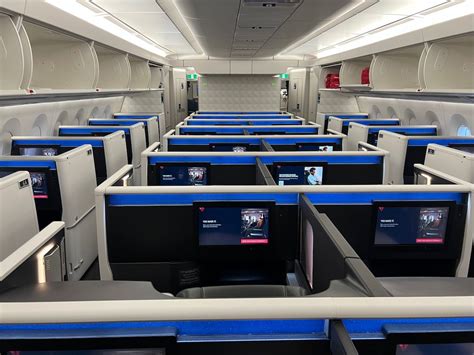
Passengers will experience the Delta One suite, featuring lie-flat beds with sliding doors, along with Premium Select, Delta’s elevated premium economy product. The aircraft’s performance allows Delta to maintain economic viability on a route with nascent origin-destination traffic but high connectivity potential.
Conclusion: A Historic and Calculated Move
Delta’s Atlanta–Riyadh route is not a mere experiment—it is a calculated venture into a market poised for explosive growth. Backed by government support, fleet capability, and alliance dynamics, this service could evolve into a cornerstone of Delta’s global network strategy.
It also reflects broader aviation trends: as Gulf carriers look westward and U.S. carriers eye untapped eastern markets, new nonstop corridors are redefining long-haul air travel. For Delta, this marks the beginning of a new Middle Eastern chapter—bold, strategic, and backed by more than just passenger demand.