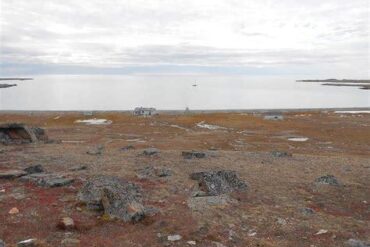
Tucked deep within the icy waters of Baffin Bay in the Canadian territory of Nunavut lies Devon Island, one of the world’s most remote and fascinating land masses. This breathtaking yet eerie Arctic marvel holds the title of the world’s largest uninhabited island, captivating scientists, explorers, and adventure-seeking tourists alike with its Mars-like terrain, haunting history, and raw natural power. Spanning over fifty-five thousand square kilometers, Devon Island is part of the Canadian Arctic Archipelago and ranks as the twenty-seventh largest island in the world—larger than nations such as Denmark or Switzerland. Yet despite its massive size, it remains devoid of any permanent human settlement.
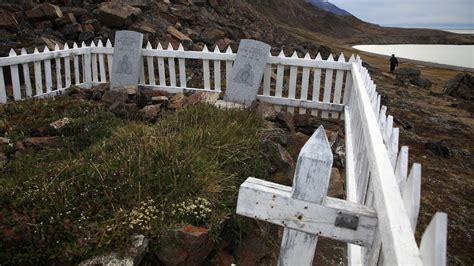
The terrain of Devon Island bears no resemblance to the gentle hills and green pastures of the English countryside from which it takes its name. Instead, visitors are met with a barren environment characterized by a harsh polar desert climate, icy winds, rocky plains, and minimal vegetation. The inhospitable conditions have thwarted previous colonization attempts, with the last significant effort ending in failure in 1951. Since then, human activity on the island has been limited to temporary scientific missions and occasional visits to tend to the handful of graves left behind by those who once tried to tame the unforgiving terrain.
Echoes of the Franklin Expedition
One of the most chilling associations with Devon Island is its connection to the ill-fated Franklin Expedition of 1845. Under the command of Sir John Franklin, two ships—HMS Erebus and HMS Terror—embarked on a mission to chart the elusive Northwest Passage, a sea route linking the Atlantic and Pacific Oceans through the icy waterways of the Arctic region. The expedition, consisting of 129 men, vanished without a trace, leading to decades of search efforts that uncovered artifacts scattered across the Arctic, including remnants found on Devon Island.
Among the discoveries were clothing, ropes, and hundreds of empty food tins, believed to belong to the lost sailors. Some of the graves of the expedition’s crew were later discovered on neighboring Beechey Island, which lies just off the coast of Devon Island. This connection between the doomed voyage and Devon Island adds a haunting layer to its already bleak atmosphere, reinforcing its reputation as a place of hardship and loss.
A Mars on Earth: Devon Island’s Scientific Significance
Despite its harsh conditions—or perhaps because of them—Devon Island has attracted the attention of space exploration agencies, particularly NASA. The island’s unique geology and climate bear a striking resemblance to what scientists believe exists on the surface of Mars. Its rocky terrain, dry environment, and lack of vegetation create an Earth-based analogue for the Martian landscape. Notably, the Haughton Impact Crater, a forty-million-year-old structure created by a meteorite, serves as a valuable site for researchers simulating life and exploration on Mars.
Scientists conduct experiments, test equipment, and study survival tactics in this extreme environment to prepare for future missions to the Red Planet. According to the BBC, the work done on Devon Island is crucial for developing strategies for remote science operations in harsh environments. These field studies pave the way for safer and more informed space travel, making the island not just a frozen wasteland, but a hub of innovation and discovery.
A Frozen Giant with Untold Stories
Though largely silent and unpopulated, Devon Island continues to hold a significant place in global scientific and historical narratives. Its size alone makes it a geological wonder, while its proximity to key events in Arctic exploration grants it cultural and historical weight. The island’s isolation and extreme climate deter habitation, yet they also preserve its raw, untouched beauty—a haunting, otherworldly wilderness that mirrors the surface of Mars more closely than any other place on Earth.
For those who dare to venture near, Devon Island offers a rare glimpse into the raw forces of nature, the ambition of human exploration, and the thin line between triumph and tragedy in some of the planet’s most unforgiving environments. As adventure-seeking tourists and nomads seek out the most extraordinary destinations, Devon Island stands as a testament to the wild beauty and stark realities of our planet, waiting to be explored and understood.