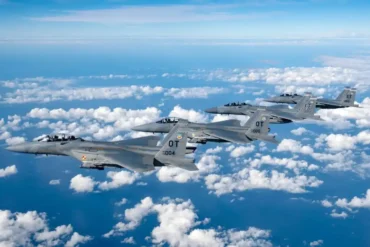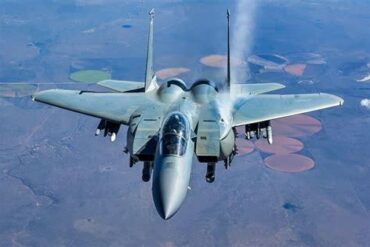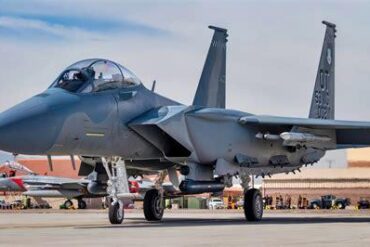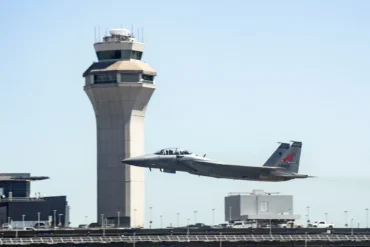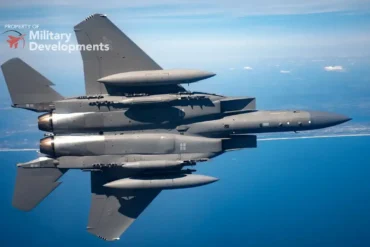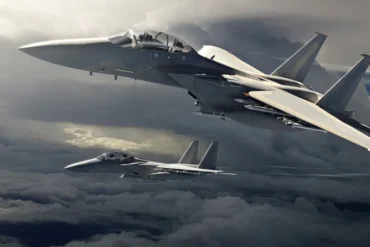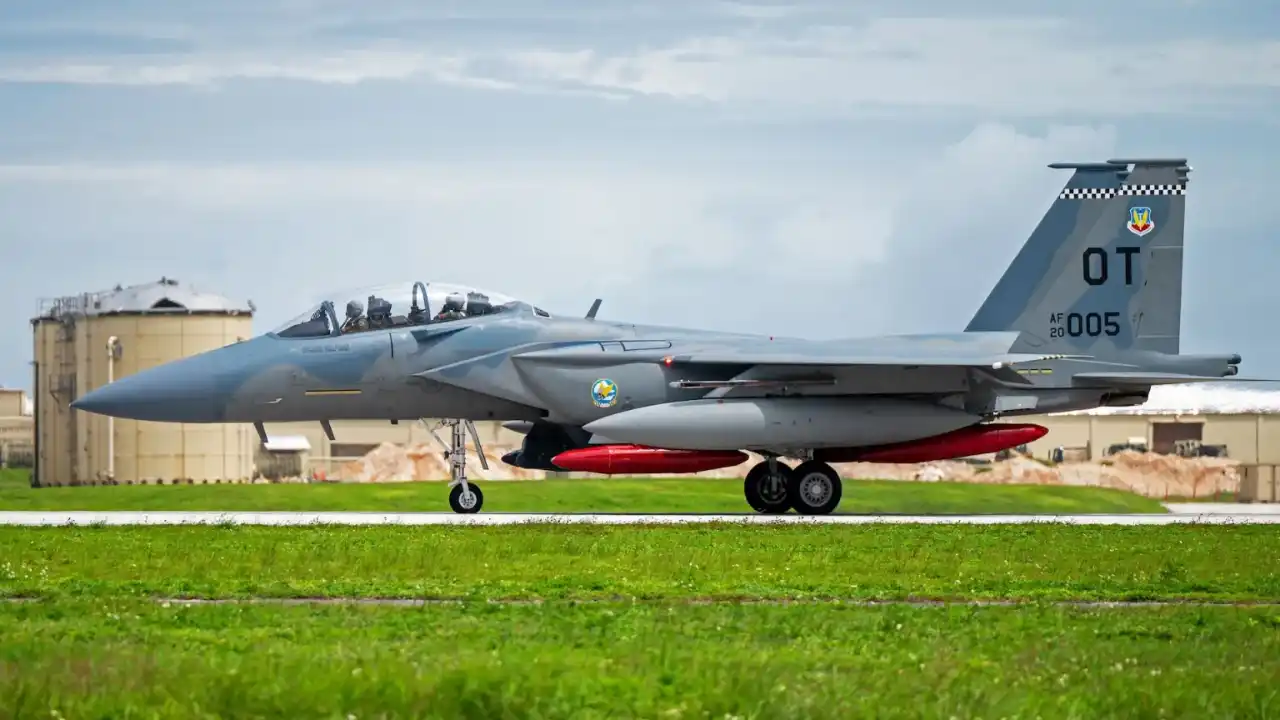
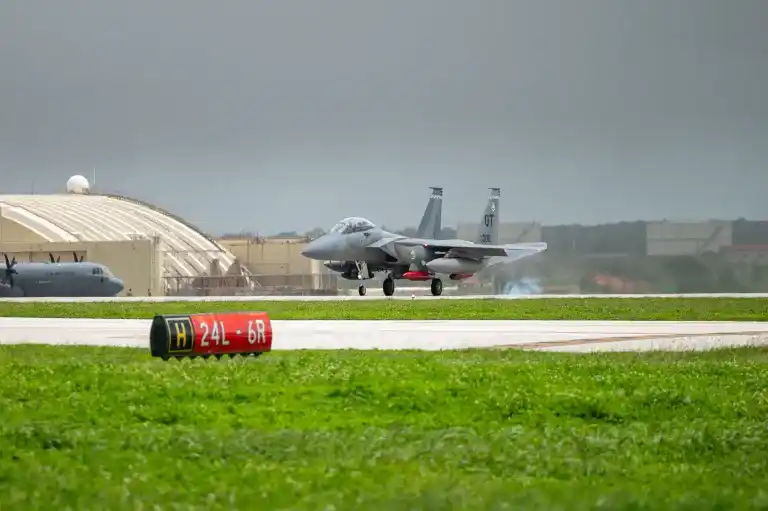
The United States Air Force’s cutting‑edge F‑15EX Eagle II fighter has made its first foreign appearance in Japan, touching down at Kadena Air Base on July 12, 2025. Assigned to the 85th Test and Evaluation Squadron at Eglin AFB, Florida, the two-ship deployment followed a high‑speed transit via Andersen AFB, Guam, and marks a pivotal moment in the aircraft’s journey from prototype to frontline deterrent. As tensions in the Indo‑Pacific intensify, this demonstration of rapid power projection underscores the USAF’s commitment to maintaining credible air superiority alongside key allies.
Historic First Deployment to Kadena Air Base
The arrival of the F‑15EX Eagle II at Kadena represents the jet’s inaugural overseas foray, a milestone achieved less than one year after the type achieved initial operational capability. For decades, Kadena has hosted rotating contingents of F‑35s, F‑22s, and earlier F‑15 variants, but never has it seen the most advanced evolution of the Eagle family. Brig. Gen. Nicholas Evans, outgoing commander of the 18th Wing, emphasized that this short-term deployment offers pilots and maintainers essential hands-on experience with the Eagle II in the very environment where it will operate daily once permanently based in spring 2026.
Participation in Resolute Force Pacific 2025
The F‑15EX jets are integrated into Resolute Force Pacific 2025 (REFORPAC), the largest contingency response exercise ever staged by the U.S. Air Force in the Indo‑Pacific. Beginning July 11, the exercise brings together more than 300 U.S. and allied aircraft to test joint operational concepts under simulated high‑intensity conflict conditions. Alongside the two Eagle IIs, the 85th TES deployed an F‑15E Strike Eagle and an F‑16C Fighting Falcon to conduct interoperability drills and familiarize Japanese and South Korean units with the latest U.S. fighter capabilities. This comprehensive airpower demonstration aims to validate command and control procedures, refine coalition tactics, and reinforce deterrence against evolving regional threats.
Embracing Agile Combat Employment Concepts
REFORPAC places a premium on Agile Combat Employment (ACE) doctrines, developed to ensure rapid, resilient operations in contested environments. Under ACE, aircrews practice hot‑pit refueling, distributed logistics support, and combat search and rescue at austere locations, often with limited ground infrastructure. Exercises span more than six time zones, demanding seamless coordination across vast distances. The Eagle II’s advanced avionics suite and automated logistics systems enable faster turnarounds, while its expanded weapon‑station architecture ensures that pilots can launch precision strikes or air‑defense packages with minimal preparation time.
Preparing for Permanent Basing and Regional Modernization
This temporary deployment serves as a rehearsal for the permanent stationing of 36 F‑15EX aircraft at Kadena in spring 2026. With Okinawa poised to host one of the USAF’s premier fighter squadrons, base infrastructure upgrades—including hardened shelters, expanded maintenance facilities, and upgraded munitions storage—are already underway. The transition will replace aging F‑15C/D units retired earlier this year and fill a critical gap in Japan’s deterrent posture. Kadena’s personnel are refining sustainment procedures, supply-chain pipelines, and joint-operational workflows in anticipation of the Eagle II’s arrival, ensuring a seamless shift from rotational deployments to a standing combat-ready force.
Unmatched Platform Capabilities
The F‑15EX Eagle II distinguishes itself through a combination of speed, payload, and advanced systems integration. Key technical specifications include:
- Weapons Capacity: Up to 12 AIM‑120 AMRAAMs on two additional underwing stations, plus conformal fuel tanks and 600‑gallon drop tanks for extended range.
- Hypersonic and Long‑Range Strike: Capability to carry and launch emerging hypersonic missiles and other outsized munitions critical to penetrating advanced air defenses.
- Cockpit and Networking: Two‑person cockpit with wide‑area displays, robust datalink arrays, and open‑architecture mission computers to control Collaborative Combat Aircraft (CCA) drones.
- Survivability Enhancements: Fly‑by‑wire flight controls, digital electronic warfare suites, and redundant systems to sustain operations under contested-jamming conditions.
These attributes combine to deliver a fighter capable of sustained high-end operations across the vast expanses of the Pacific, addressing both air‑to‑air and air‑to‑ground mission sets with equal proficiency.
Integration into Department‑Level Exercise Series
REFORPAC is one segment of a broader Department‑Level Exercise (DLE) sequence that includes Mobility Guardian, Emerald Warrior, Resolute Space, and Bamboo Eagle 25‑3. Each exercise hones specific warfighting skills—strategic airlift, agile special operations, space integration, and coalition tanker operations—converging into a unified threat-deterrence scenario. Notably, Bamboo Eagle, conducted earlier in February 2025, showcased F‑35A Lightning II fighters escorting KC‑135 Stratotankers on complex refueling tracks over the Southeast Pacific, reinforcing the vital synergy between fifth-generation stealth fighters and legacy tanker platforms.
Simultaneously, Japan’s Misawa Air Base prepares to welcome 48 F‑35As next spring, while F‑16Cs recently rotated to Osan AB, South Korea, replacing the A‑10C—another indicator of the USAF’s shift toward more survivable, precision-capable platforms in theater. This synchronized modernization effort enhances bilateral and trilateral interoperability, ensuring that U.S., Japanese, and South Korean forces can operate seamlessly under a unified command structure.
Strategic Outlook in the Indo‑Pacific Theater
As China expands its air‑to‑air and anti‑access/area‑denial (A2/AD) capabilities, the F‑15EX’s role in countering long‑range threats becomes increasingly critical. With the ability to field both AIM‑120D AMRAAMs and highly advanced hypersonic missiles, supplemented by CCA‑controlled loyal wingman drones, the Eagle II will complicate adversary targeting strategies. PACAF Commander Gen. Kenneth Wilsbach has emphasized that Kadena’s proximity to potential flashpoints is an advantage, enabling rapid dispersal under ACE protocols to evade first‑strike vulnerabilities. In high‑end conflict scenarios, distributed operations from forward‑deployed locations—supported by ACE logistics nodes—will form the backbone of U.S. airpower resilience.
Under the FY 2026 budget, the F‑15EX program will grow from 98 to 129 aircraft, with additional squadrons converting from legacy A‑10 and F‑15E units. This expansion not only replenishes the retired F‑15C/D fleet but also ensures that more units worldwide gain access to the Eagle II’s advanced capabilities. As the program matures, fielding of Collaborative Combat Aircraft and integration of next-generation weapons will further enhance the platform’s relevance in dynamic threat environments.
Conclusion: A New Chapter in Pacific Air Superiority
The F‑15EX Eagle II’s first deployment to Japan is more than a symbolic milestone—it is a tangible demonstration of the U.S. commitment to deterrence and alliance solidarity in the Indo‑Pacific. By participating in Resolute Force Pacific 2025, the Eagle II has proven its readiness to operate alongside allied forces under challenging conditions, laying the groundwork for its permanent basing at Kadena. As Japan and the United States continue to modernize their fighter fleets with F‑35s and F‑15EXs, the region moves closer to a robust, integrated air‑defense network capable of deterring aggression and preserving stability across the Pacific theater.