Flying under VFR (Visual Flight Rules) can be liberating—but the sky is no place for complacency. One of the best tools at a pilot’s disposal is Flight Following, a voluntary service provided by ATC to help with traffic advisories, weather awareness, and situational awareness. Yet, many pilots fail to utilize it effectively—or at all—due to common mistakes during radio communications. Here’s a deep dive into those pitfalls and how to avoid them when speaking with Air Traffic Control.
Waiting Too Long to Request Flight Following
A major misstep is delaying your request for Flight Following until you’re knee-deep in congested airspace. Picture it: you’re VFR, cruising into a busy Class B or C area, and suddenly feel the urge to call up ATC. But so do ten other aircraft. A controller managing arrivals and departures for a hub airport likely doesn’t have the bandwidth to process your new request.
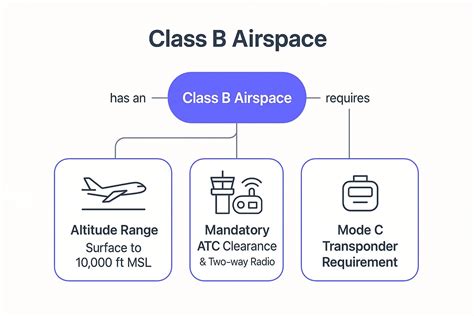
The key is situational timing. If you’re entering an area like Cleveland’s terminal airspace, where traffic flows are tightly choreographed, don’t wait until you’re already deep in the approach sector. Ideally, Flight Following should be arranged before you approach the busy zone. Use sectional charts and GPS planning tools to identify sector boundaries and coordinate your request while still in a less dense region.
In our example, flying east to west across Cleveland’s airspace, a smart move would be to contact Norwalk’s approach frequency (128.35) before reaching terminal density. Doing so reduces the chance of being ignored or told to standby indefinitely.
Failing to Provide Complete Information on Initial Contact
If you treat a Flight Following request like a casual favor, don’t be surprised when you get brushed off. Controllers are working under tight schedules and expect you to be prepared. Think of it like ordering lunch at a crowded deli: you don’t just say “pastrami,” you specify exactly what you want—bread, sides, condiments—in a single efficient sentence.
Same goes for ATC. If you key the mic and say, “Cessna 518FT requesting Flight Following to Ann Arbor,” you’re inviting a quiz. Instead, deliver your details upfront:
“Cleveland Approach, Skyhawk 518FT is a Cessna 172, six miles south of Lorain County, 6,500 feet, requesting Flight Following to Ann Arbor, Alpha Romeo Bravo.”
This provides ATC with your aircraft type, position, altitude, and destination (with ICAO code)—the essential data to initiate radar services without delay. This also eliminates multiple radio transmissions, cutting down frequency congestion.
Not Updating ATC on Routing Changes
Another rookie error is failing to keep ATC informed when deviating from an expected flight path. Suppose you’re heading from south of Cleveland to Ann Arbor. A direct path goes over Lake Erie—fine in summer, but in winter, risky. Many VFR pilots elect to follow the shoreline instead, using GPS waypoints.
If ATC expects you to go direct but sees a zigzag route, that’s a problem. It complicates handoffs between sectors and can raise false alarms. Simply announcing, “We’ll be on an initial heading of 280 to follow the shoreline,” keeps everything in sync. Major heading or altitude changes must always be reported. Controllers aren’t omniscient; your transparency helps maintain flow and safety.
Assuming Flight Following Includes Everything
There’s a widespread misconception that Flight Following means ATC is handling your flight like IFR. This is wrong—and dangerous. Flight Following is advisory only, and controllers aren’t obligated to ensure separation from terrain or controlled airspace. If you’re barreling into Class C airspace without clearance, saying “I’m on Flight Following” won’t save you from a violation.
Pilots are still responsible for:
- Avoiding controlled airspace without explicit clearance.
- Terrain clearance, especially in mountainous regions.
- Staying VFR compliant, including cloud clearances and visibility minima.
This misunderstanding often stems from pilot training environments where instructors handle all radio work, leading students to believe ATC is watching everything. In reality, especially in busy sectors, your radar tag might get dropped altogether during workload saturation.
Using Vague or Incomplete Position Reports
When initiating contact, precision matters. “Cessna 172 south of Cleveland” isn’t useful. ATC needs something more actionable. Good examples include:
- “10 miles south of Lorain County Airport.”
- “Over Sandusky VOR, heading 280.”
- “Crossing I-90 at 6,500 feet.”
These references help ATC triangulate your location quickly, especially in radar-limited zones or during high workload periods. Modern ADS-B tools make this easier, but don’t assume ATC always sees your exact position. Your voice report must stand on its own.
Speaking Too Quickly or Mumbling
This seems basic, yet many pilots—especially newer ones—make the mistake of rushing their words or mumbling under pressure. Radio communication should be calm, clear, and paced. This isn’t a test of speed, it’s about clarity and efficiency. Use standard ICAO phraseology where possible, such as:
“Cleveland Approach, Cessna 518FT, 6,500 feet, VFR to Ann Arbor, request Flight Following.”
Controllers may be managing multiple frequencies and dozens of aircraft. A slurred or panicked transmission not only increases the chance of miscommunication—it may get ignored entirely.
Expecting Immediate Service During High Workload
Even if you execute everything perfectly, Flight Following is never guaranteed. During peak times, ATC may be swamped and unable to accommodate new VFR traffic. If you hear “unable Flight Following at this time,” don’t take it personally. Move on and try again with the next sector frequency.
Monitor the situation. Use tools like ForeFlight or sectional charts to identify upcoming sectors, and make a mental note of when to reattempt contact. Flexibility is part of good airmanship.
Not Being Ready for Hand-offs
Once you’re on Flight Following, expect to be handed off as you cross sector boundaries. When a controller says, “Contact Toledo Approach on 127.15,” you should:
- Read back the frequency.
- Dial it in and check in promptly.
- Use similar brevity and completeness: “Toledo Approach, Cessna 518FT, level 6,500, with you.”
Failure to check in quickly can cause gaps in radar coverage or a dropped service tag. Worse, it could disrupt traffic coordination.
Forgetting Basic Radio Etiquette
Being courteous on frequency goes a long way. This includes:
- Waiting for a break before transmitting.
- Not stepping on other transmissions.
- Monitoring your radio volume and mic position.
Good etiquette keeps the frequency efficient and professional, reducing misunderstandings and errors.
Conclusion: Mastering Flight Following Requires Precision, Timing, and Courtesy
Flight Following is a phenomenal tool—but only when used strategically and respectfully. The airspace system is complex, and every communication counts. By avoiding these common mistakes—like requesting at the wrong time, failing to provide full details, or assuming too much from ATC—you set yourself up for a smoother, safer VFR journey.
Respect the controller’s workload, know your frequencies ahead of time, keep your communications sharp, and always stay proactive. The skies may be busy, but a well-prepared pilot is never a burden to ATC.