The Global Orbiting Navigation System, or GLONASS, is a radio-based satellite navigation system created by the former Soviet Union. Today, it is managed by the Russian Space Forces on behalf of the Russian government. Think of GLONASS as Russia’s answer to the US Global Positioning System (GPS) and the European GALILEO system.
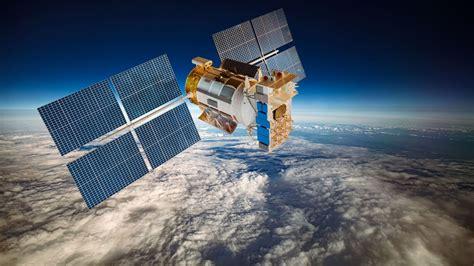
GLONASS consists of a network of 21 satellites, along with three spare ones. These satellites orbit the Earth at an altitude of 19,100 kilometers, completing a full orbit every 11 hours and 15 minutes. Each satellite broadcasts on a unique frequency, but they all use the same pseudo noise code, ensuring reliable navigation signals. The accuracy of GLONASS is comparable to that of GPS when it operates in the C/A mode.
The journey of GLONASS began in 1976, with the ambitious goal of achieving global coverage by 1991. In 1982, the first satellites were launched, marking significant progress until the constellation was fully completed in 1995. Unfortunately, after its completion, the system deteriorated due to the collapse of the Russian economy.
In 2001, Russia made a commitment to restore GLONASS, aiming for full functionality by 2011. By 2010, the system had achieved complete coverage of Russia’s territory, and in October 2011, the constellation was fully restored with 24 operational satellites, allowing for global navigation capabilities once again.
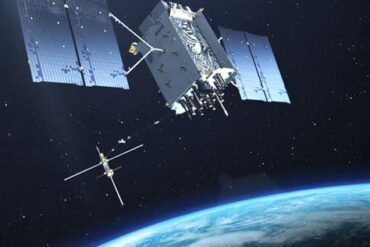
The design of GLONASS satellites has evolved over time, with the latest iteration being GLONASS-K, reflecting continuous improvements in technology.