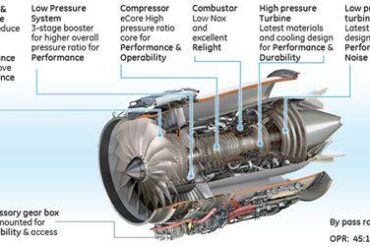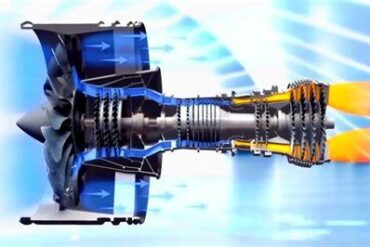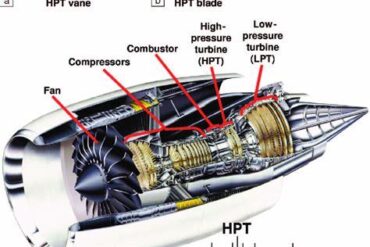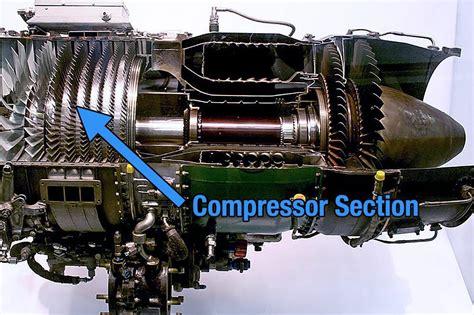
The high-pressure compressor (HPC) plays a crucial role in a twin-spool jet engine. It represents the final stage of air compression before it enters the combustion chamber. A typical jet engine has four main sections: intake, compressor, combustion, and exhaust. As air flows through these sections, it gets compressed by blades attached to the engine shaft. This compression is essential for achieving the right conditions for combustion.
In the combustion section, the compressed air mixes with fuel and ignites. The result is a powerful flow of exhaust gases that exits the engine, creating thrust. This process is based on Newton’s principle that every action has an equal and opposite reaction. Twin-spool engines enhance efficiency by incorporating two sets of compressors and turbines.
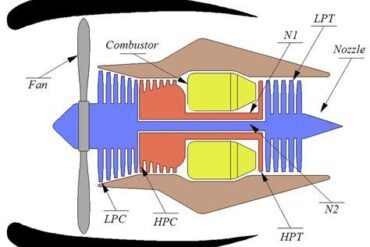
In this design, a low-pressure compressor first compresses the incoming air. This air then moves into the high-pressure compressor, where it undergoes further compression. After mixing with fuel and igniting, the hot gases flow over the high-pressure turbine, which extracts energy to keep the high-pressure compressor spinning. At the same time, exhaust gases drive the low-pressure turbine, maintaining the operation of the low-pressure compressor. This self-sustaining cycle continues until fuel or air runs out.