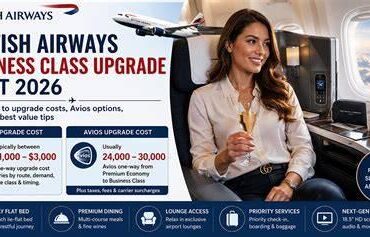
Upgrading to British Airways’ Club World—the airline’s long-haul business class—sits somewhere between art, science, and timing. The price is not fixed, not predictable, and certainly not uniform. It’s shaped by fare class, cabin inventory, loyalty status, route demand, and the mysterious algorithmic machinery humming behind airline revenue systems. Yet patterns exist. Once understood, they transform what looks like a luxury splurge into a calculated travel strategy.
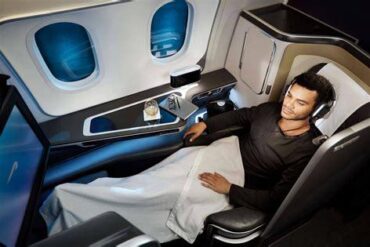
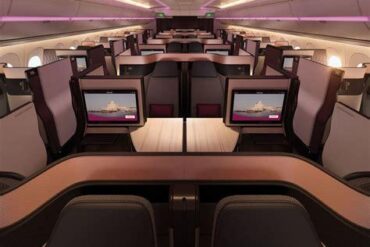
British Airways positions Club World as a full-service premium product designed for intercontinental comfort. Lie-flat seats, direct aisle access on newer configurations, lounge entry, premium dining, and priority ground services elevate the experience far beyond economy or even premium economy. That elevation, however, comes at a steep retail cost—often exceeding $5,000 round-trip on transatlantic routes.
This price gap is precisely why upgrades have become a fixation among frequent flyers. Buying a lower cabin first—typically World Traveller Plus (premium economy)—and then moving into Club World through Avios points, cash offers, or a mix of both can dramatically reduce the effective cost of flying business class.
Understanding the Club World Cabin Experience
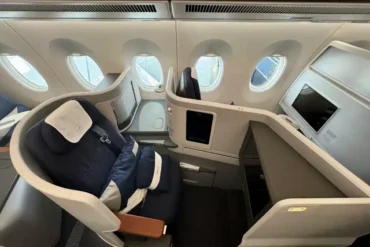
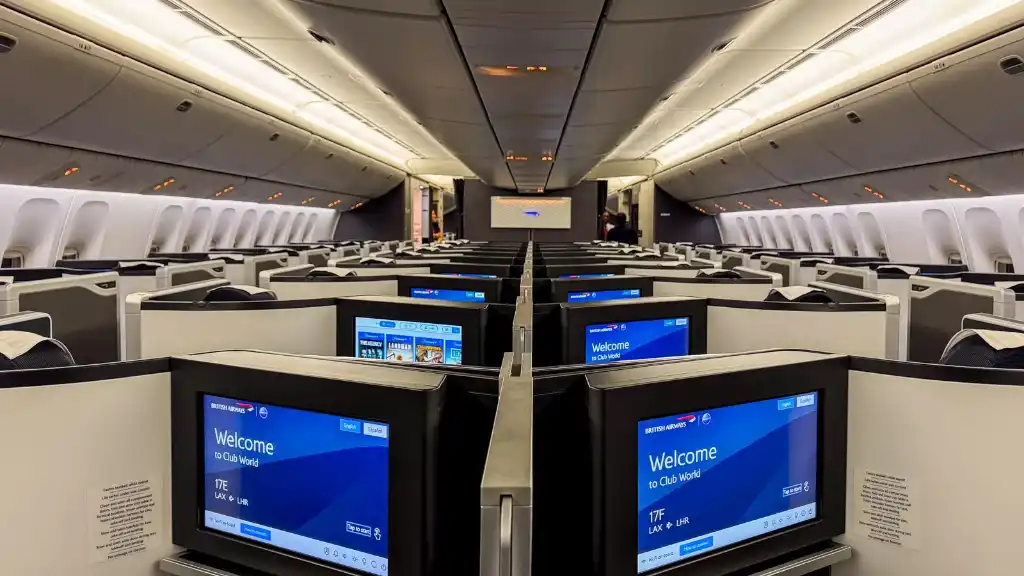
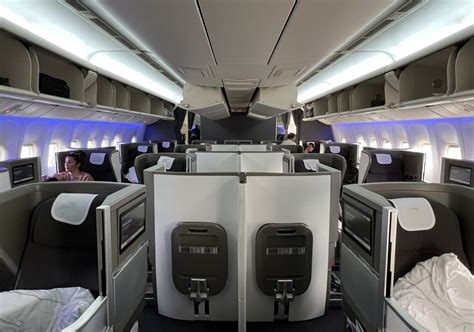
Before dissecting upgrade costs, it helps to understand what travelers are upgrading into. Club World is engineered as a productivity and recovery space in the sky. The cabin is configured for sleep, privacy, and long-haul endurance rather than simple transportation.
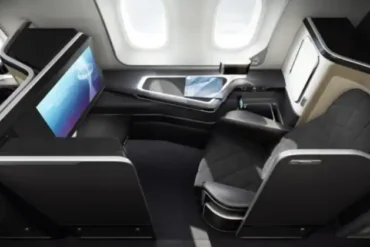
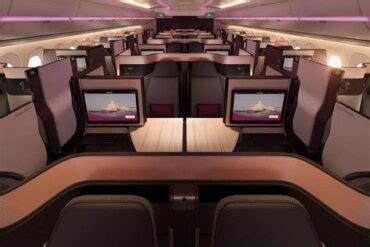
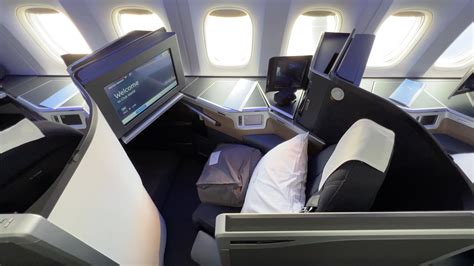
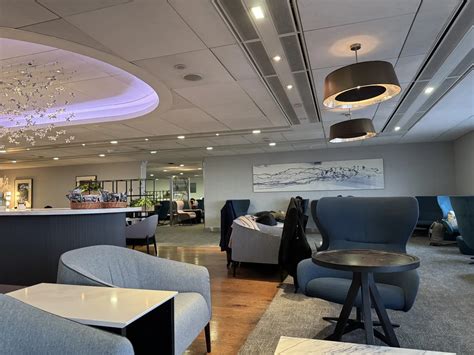
Seats convert into fully flat beds stretching over six feet. Newer aircraft feature suite doors, expanded storage, and improved bedding. Lounge access includes flagship spaces such as Galleries Club Lounges and Arrivals Lounges in London Heathrow, where passengers can shower before stepping into the city.
Dining moves beyond reheated trays into multi-course service with plated mains, wine pairings, and pre-arrival meals. Add priority boarding, fast-track security, and increased baggage allowance, and the product becomes a holistic travel environment rather than just a seat upgrade.
The experiential leap explains the pricing delta—and why upgrade strategies exist at all.
Why Premium Economy Is the True Upgrade Gateway
A common misconception is that travelers upgrade directly from economy to business. On British Airways long-haul flights, that path doesn’t exist through Avios.
The airline operates four cabins on widebody aircraft:
- World Traveller (Economy)
- World Traveller Plus (Premium Economy)
- Club World (Business)
- First Class (on select aircraft)
Avios upgrades only move passengers one cabin higher. That means Club World upgrades originate almost exclusively from premium economy tickets.
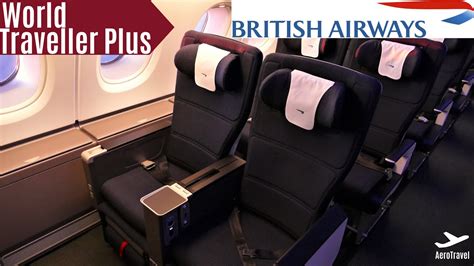
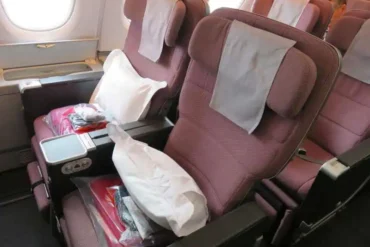
Premium economy itself is a meaningful step up: wider seats, greater recline, increased legroom, upgraded meals, and a quieter cabin. Pricing typically ranges between 150% and 300% of economy fares, placing it squarely between affordability and indulgence.
This cabin acts as the financial bridge—expensive enough to reduce the Avios gap, but far cheaper than buying Club World outright.
How Much Avios Do You Need to Upgrade?
British Airways uses a straightforward formula:
Avios required for the higher cabin – Avios for the booked cabin = Upgrade cost
This calculation applies one-way, so round-trip upgrades double the requirement.
For example, if a premium economy redemption requires 40,000 Avios and business requires 60,000, the upgrade cost is 20,000 Avios each way—plus additional taxes and surcharges.
Several constraints shape eligibility:
- Reward seat availability must exist in Club World.
- The original ticket must be upgrade-eligible.
- Lowest economy fare buckets (Q, O, G) cannot be upgraded with Avios.
- Upgrades must be processed before airport check-in.
Elite status within the British Airways Executive Club can improve upgrade priority, though it does not guarantee success.
Cash + Avios: Hybrid Upgrade Pricing
Not every traveler sits on a mountain of Avios. British Airways accommodates this reality by offering part-payment upgrades—a blend of points and cash.
This hybrid model reduces the Avios requirement while adding a co-pay. The exact split fluctuates based on:
- Route distance
- Fare class
- Demand forecasts
- Remaining seat inventory
Even with Avios, passengers must pay incremental taxes and carrier surcharges. These fees are typically lower than booking business class outright but remain significant on UK-origin itineraries due to Air Passenger Duty.
The strategic upside: booking premium economy first often bypasses a portion of the business-class surcharge structure.
Real Route Pricing: Seattle to London Heathrow
Concrete fare data reveals the true scale of cabin price gaps.
On a representative March departure:
- Economy: from $515 one-way
- Premium Economy: from $2,137
- Business (Club World): from $8,544
Round-trip pricing compresses slightly:
- Premium: from $2,987
- Business: from $10,075
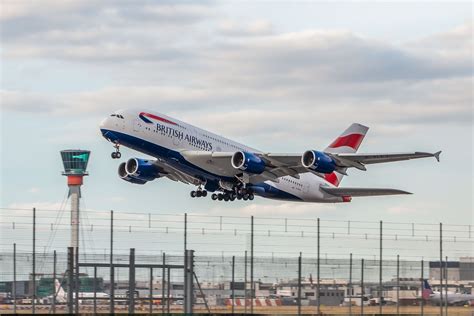
Flight duration hovers around 9.5 to 10 hours, placing it firmly in the category where lie-flat comfort becomes physically transformative rather than merely luxurious.
Upgrading from a $2,987 premium fare to business via Avios can yield thousands in effective savings compared with paying $10,000 outright.
Fully flexible fares narrow the gap further. A fully flexible premium ticket priced above $5,000 begins approaching discounted business fares—blurring the upgrade value proposition.
New York (JFK) to London: The Flagship Corridor
Few airline routes are as commercially dense as New York–London. Corporate contracts, financial traffic, and diplomatic travel push business-class demand to extreme levels.
Sample one-way fares show dramatic spreads:
- Economy: from $285
- Premium: up to $3,827
- Business: from $8,294 (often exceeding $11,000)
Return pricing moderates slightly:
- Premium round-trip: from $1,872
- Business round-trip: from $5,845
Partner airlines occasionally undercut these prices, but British Airways-operated flights maintain a premium due to schedule frequency and Heathrow slot value.
The takeaway is stark: even expensive premium economy fares can represent strong upgrade launchpads when business demand surges.
Houston to London: A Transatlantic Value Case
Houston’s George Bush Intercontinental Airport offers another revealing pricing spectrum.
One-way fares illustrate the divide:
- Premium Economy: from $2,251
- Business: from $9,346
Round-trip:
- Premium: about $2,913
- Business: about $8,845
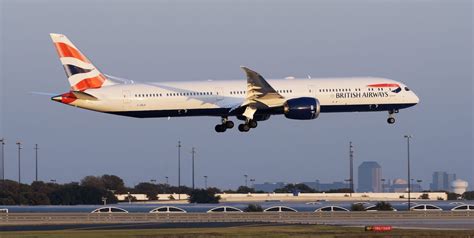
Interestingly, return business fares often price lower than two one-ways. Airline pricing algorithms interpret one-way premium-cabin searches as signals of urgency—allowing higher yield extraction.
Booking round-trip first, then upgrading, frequently unlocks the most favorable economics.
The Algorithm Behind Upgrade Offers
Airline pricing isn’t cost-based. It’s behavioral economics wrapped in machine learning.
Revenue management systems analyze:
- Booking pace
- Seasonal demand
- Corporate contract volume
- Historical load factors
- Competitor pricing
If the system predicts business class will sell out, upgrade discounts disappear. If seats risk flying empty, offers appear—sometimes dramatically discounted.
This explains why two passengers on the same flight receive different upgrade quotes. The algorithm evaluates willingness to pay, not fairness.
Understanding this transforms upgrades from luck into timing strategy: monitor inventory, check “Manage My Booking” frequently, and remain flexible.
Elite Status and Upgrade Priority
Frequent flyers holding Silver, Gold, or higher Executive Club status gain soft advantages in upgrade queues.
Benefits may include:
- Earlier access to reward seats
- Higher priority when inventory is released
- Milestone bonus Avios at tier thresholds
For example:
- 5,500 tier points → 2,500 bonus Avios
- 11,000 → 4,000 bonus Avios
- 16,000 → 5,000 bonus Avios
These bonuses rarely fund full upgrades alone but accelerate accumulation toward long-haul redemptions.
Credit cards linked to Avios programs earn points but do not unlock special upgrade inventory—unlike some U.S. airline co-branded cards.
Taxes, Fees, and the Hidden Cost Layer
Even “points upgrades” involve cash.
British Airways levies carrier-imposed surcharges plus government taxes. When upgrading, passengers pay the difference between cabins.
Typical additional costs can range from:
- $200–$600 one-way on transatlantic routes
Departures from London are pricier due to UK Air Passenger Duty, making upgrades cheaper when originating outside the UK.
This geographic asymmetry quietly shapes optimal booking strategy.
When Upgrading Makes Financial Sense
Upgrading delivers strongest value under specific conditions:
- Discounted premium economy fare secured
- Reward seat inventory open
- Long overnight sector (sleep value high)
- Cash business fares inflated by demand
Conversely, upgrades lose appeal when:
- Premium fares surge near business pricing
- Avios redemption rates spike
- Upgrade taxes erase savings
The calculus is always comparative, never absolute.
The Experiential ROI of Club World
Numbers tell only half the story. Long-haul business class alters the biological reality of travel.
Flat beds improve sleep cycles. Lounge dining reduces airport stress. Priority services compress transit friction. Travelers often arrive functional rather than depleted.
For business travelers, that translates into productivity. For leisure passengers, it converts jet lag into usable vacation time.
The value equation therefore blends economics with physiology.
Strategic Upgrade Playbook
Seasoned flyers treat upgrades as layered probability rather than entitlement.
They book premium economy early, monitor Avios inventory, watch for cash offers, and remain route-flexible. They avoid lowest economy fare buckets and prioritize round-trip structures.
Most importantly, they recognize that airline algorithms are predictive, not omniscient. Empty seats near departure can unlock last-minute upgrade windows—sometimes at fractions of original pricing.
This probabilistic dance between passenger and pricing engine defines the modern upgrade game.
Final Cost Reality: What You’ll Actually Pay
Pulling the variables together, a realistic upgrade pathway might look like this:
- Premium economy ticket: $1,500–$3,000 round-trip
- Avios upgrade: 20,000–50,000 points each way
- Additional taxes/fees: $400–$1,000 total
Effective all-in business-class cost: often $2,500–$4,500 equivalent value—well below retail fares exceeding $6,000–$10,000.
That delta is the upgrade sweet spot.
It isn’t guaranteed. It isn’t uniform. But when timing, inventory, and points align, Club World becomes less a splurge and more a cleverly engineered outcome—luxury accessed through systems literacy rather than brute spending power.