Understanding Density Altitude: The Hidden Factor in Aircraft Performance
Density altitude is a concept that often escapes the attention it deserves, yet it plays a critical role in flight safety and aircraft performance. It is not a physical measurement like true altitude or pressure altitude, but rather a calculated performance metric that represents the altitude the aircraft thinks it is flying at based on air density.
When pilots refer to density altitude, they are speaking of the pressure altitude corrected for non-standard temperature. This metric directly influences how the aircraft behaves — from engine output to lift generation and propeller efficiency. High density altitude means thin air, which in turn results in degraded performance.
The Five Types of Altitude: Laying the Foundation
Before diving into how to calculate density altitude, it’s essential to understand the five types of altitude:
-
Indicated Altitude: What the altimeter displays with the current altimeter setting.
-
Pressure Altitude: Altitude indicated when the altimeter is set to 29.92 inHg.
-
True Altitude: Height above mean sea level (MSL).
-
Absolute Altitude: Height above ground level (AGL).
-
Density Altitude: Pressure altitude corrected for temperature — a performance metric rather than a physical height.
Why Density Altitude Isn’t Real — But Still Crucial
Unlike other altitudes that describe actual physical distances, density altitude is abstract. It’s not measured but inferred from environmental conditions. This makes it invaluable in pre-flight planning, especially for determining whether runway lengths, climb gradients, and fuel loads are adequate for safe operation.
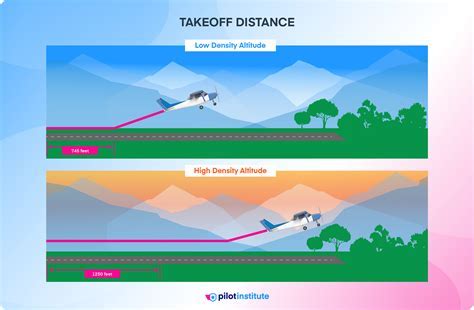
As temperature increases, air molecules spread apart, making the air less dense. This reduction in air density reduces the lift generated by wings, the thrust produced by propellers, and the power output of engines.
Put simply:
High density altitude = Poor aircraft performance.
Factors Affecting Density Altitude
There are three main environmental variables that influence density altitude:
-
Altitude: Higher altitudes naturally have thinner air.
-
Temperature: Hotter air is less dense than colder air.
-
Humidity: Water vapor is less dense than dry air; thus, increased humidity can slightly decrease air density, though its effect is often overstated.
Standard Temperature and ISA: Establishing a Baseline
The International Standard Atmosphere (ISA) is a reference model used to standardize measurements across varying flight conditions. ISA defines the temperature at sea level as 15°C (59°F) and assumes a 2°C (3.5°F) decrease per 1,000 feet of altitude.
For example, the ISA temperature at 2,000 feet would be:
15°C − (2°C × 2) = 11°C
If the actual temperature at 2,000 feet is 21°C, we have a 10°C deviation from standard, which increases the calculated density altitude significantly.
Bringing It All Together: A Practical Example
Imagine you’re flying at a pressure altitude of 2,000 feet with an outside air temperature of 21°C. Since the standard (ISA) temperature at that altitude is 11°C, the deviation is +10°C.
Using the rule of thumb:
Density Altitude = Pressure Altitude + (120 × Temperature Deviation)
= 2,000 + (120 × 10) = 3,200 feet
This means the aircraft will perform as if it were at 3,200 feet, not 2,000 — a significant difference when calculating takeoff performance and fuel consumption.
Methods to Calculate Density Altitude
1. Using an Electronic Flight Computer (e.g., Sporty’s E6B or ASA CX-3)
These are the most accurate and efficient tools. Input pressure altitude and temperature, and the device instantly returns the density altitude. Sporty’s E6B and ASA CX-3 are FAA-approved for use in examinations and offer built-in conversion tools, intuitive interfaces, and auto-calculating features.
2. Mechanical E6B (Whiz Wheel)
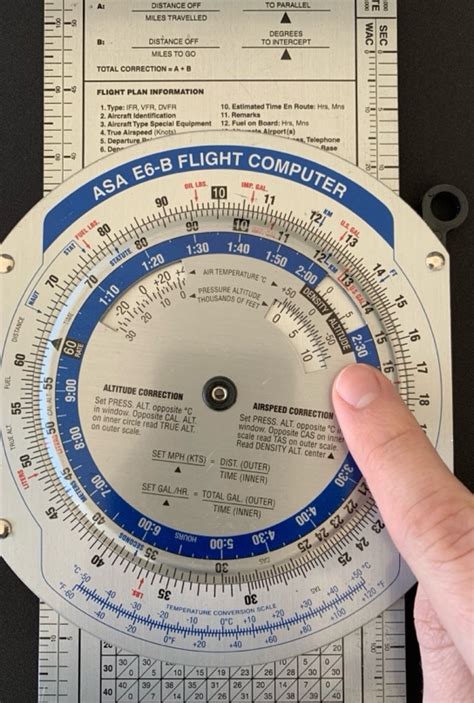
Although more manual, the mechanical E6B remains reliable. Align the pressure altitude with the temperature scale, and read the density altitude from the inner arc. It’s slower than digital methods, but doesn’t rely on batteries or software.
3. Density Altitude Chart
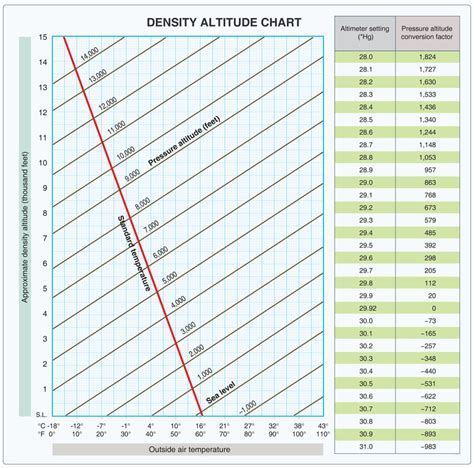
Found in Pilot Operating Handbooks (POH), these charts allow visual plotting of temperature and pressure altitude. Draw a vertical line from the temperature up to the pressure altitude diagonal, then go horizontally left to find the density altitude.
4. Using the Density Altitude Formula
The formula:
DA = PA + [120 × (OAT – ISA)]
Where:
-
DA = Density Altitude
-
PA = Pressure Altitude
-
OAT = Outside Air Temperature (°C)
-
ISA = Standard Temp for that altitude (°C)
Example:
-
PA = 3,000 ft
-
OAT = 12°C
-
ISA for 3,000 ft = 9°C
DA = 3,000 + [120 × (12 − 9)] = 3,360 ft
5. Aviation Apps
Modern aviation apps like ForeFlight, Garmin Pilot, and FlyQ offer real-time density altitude calculations, integrating GPS altitude, METAR data, and temperature sensors.
Operational Implications of High Density Altitude
High density altitude conditions can:
-
Extend takeoff rolls
-
Reduce rate of climb
-
Limit payload capacity
-
Increase landing distance
These risks become more severe at high-elevation airports and in hot, humid weather. Pilots operating in such conditions must adjust flight planning and consider reducing fuel loads or passenger count.
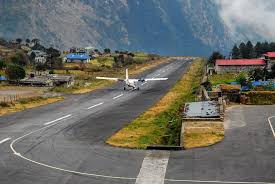
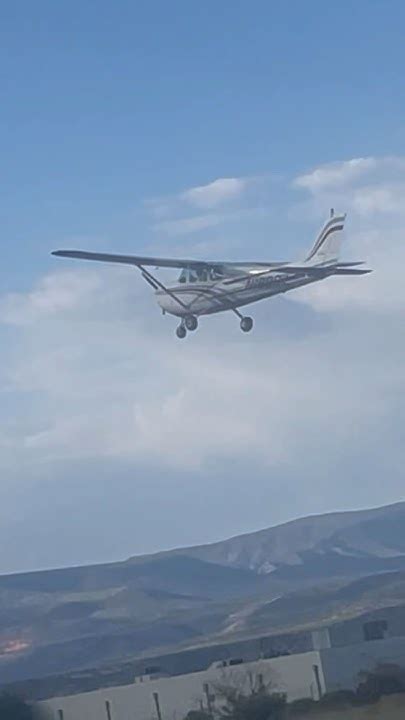
Example Scenario: A Cessna 172 attempting a takeoff at 5,000 ft elevation on a 35°C day may face a density altitude exceeding 8,000 ft. Under such conditions, climb performance may be inadequate to clear nearby terrain or obstacles.
Misconceptions About Humidity
While humidity does contribute to reduced air density, it has less impact than temperature or altitude. However, high humidity can still negatively influence engine performance, especially in carbureted engines, by affecting fuel-air mixtures.
Thus, during humid conditions, consider adding 10% to calculated takeoff and landing distances, especially when operating near maximum gross weight.
Final Thoughts: Mastering Density Altitude Is Essential
While density altitude may appear to be a back-of-the-envelope calculation, its real-world consequences are profound. Numerous accidents and incidents have been linked directly to its miscalculation or outright neglect.
By internalizing the concept and mastering the calculation methods — whether through a digital flight computer, mechanical E6B, or ISA-based formula — pilots equip themselves with the tools necessary for safe, efficient operations in any flight environment.
Let us treat density altitude not as a theoretical curiosity, but as a daily operational reality.
What two factors are required to calculate density altitude?
To calculate density altitude, you need the pressure altitude and the outside air temperature (OAT). With these, you can use a formula, chart, or flight computer to derive the result.
Why is density altitude important for pilots?
Density altitude directly impacts aircraft performance. High density altitude reduces lift, thrust, and engine efficiency. Failing to consider it can lead to runway overruns, inability to climb, or terrain collisions.
How can I reduce the effects of high density altitude?
To mitigate high density altitude risks, fly during cooler parts of the day, reduce aircraft weight, and avoid unnecessary fuel or cargo loads. Choose runways with greater length and consider early morning or late evening departures.