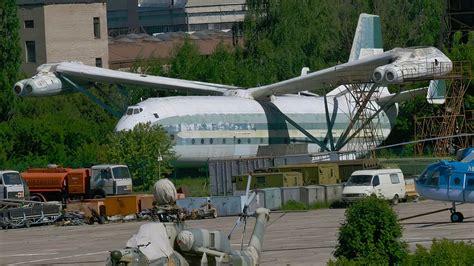
The Mil Helicopter brand holds an iconic place in both military aviation and aerospace history. Known globally for engineering robust, high-capacity rotorcraft, the brand’s legacy begins with the Soviet Union’s post-war industrial expansion and continues into the 21st century under Russian Helicopters, part of State Corporation Rostec. With over 17,000 units of the Mil Mi-8 alone having been produced since 1961, Mil has reshaped what it means to build reliable, multi-functional helicopters for both military and civilian applications.
Origins of the Mil Helicopter Legacy
The roots of Mil Helicopters trace back to 1947, when Mikhail Mil, an aeronautical engineer and visionary, was granted the opportunity to establish his own design bureau within the Soviet aviation sector. This marked the birth of the Mil Moscow Helicopter Plant, a venture that would redefine rotary-wing aviation. Within a year, the team launched their first prototype, the Mi-1, which entered production by 1951 and was publicly showcased at the Tushino Air Display in the same year.
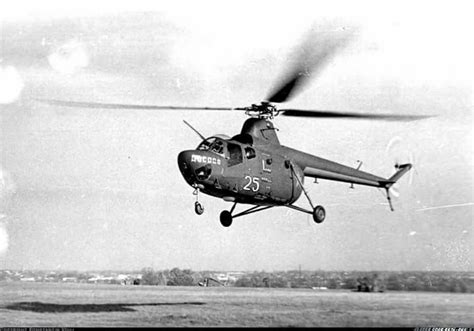
The Soviet aviation structure soon added another player, the Kamov Design Bureau, in 1948. Though rivals for decades, these two pillars of helicopter engineering eventually merged in 2017 to form a unified entity under the name Russian Helicopters. This restructuring retained the individual identities of Mil and Kamov while centralizing design under the National Helicopter Center “Mil & Kamov”. It ensured that future innovation would be collaborative, combining the strengths of both design legacies.
Production Facilities: Where Mil Helicopters Come to Life
Mil Helicopters are constructed across several high-capacity industrial sites across Russia. These facilities specialize in different models and modernization programs, collectively contributing to Russia’s near-monopoly on domestic helicopter production.
Kazan Helicopters
One of the world’s largest rotary-wing production centers, Kazan Helicopters has built over 11,000 Mil Mi-8 units. In addition to the classic Mi-8, Kazan is also responsible for the Mi-17, a highly modified and export-oriented variant, and the Mi-38, a medium-lift helicopter intended to modernize the fleet.
Rostvertol Plant
Based in Rostov-on-Don, Rostvertol is the birthplace of some of Mil’s most powerful helicopters. It produces:
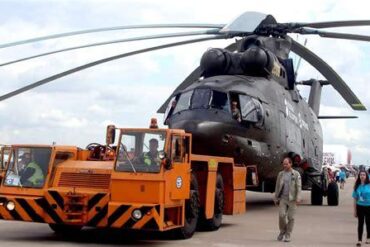
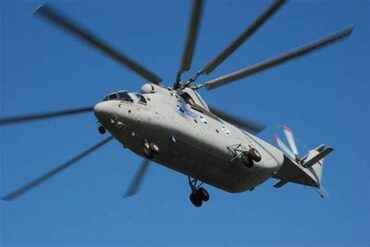
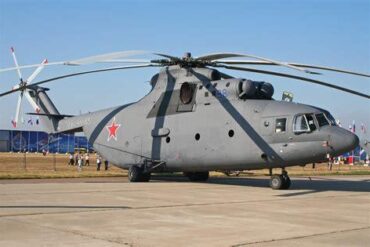
- Mi-26 Series — The largest and most powerful helicopter in the world, capable of lifting over 20 metric tons.
- Mi-35M — A modernized version of the Mi-24 “Hind” with improved avionics and night-combat capabilities.
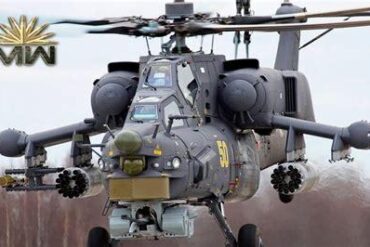
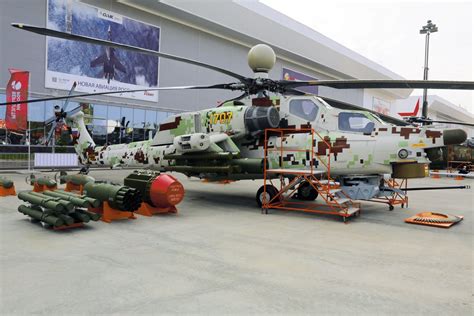
- Mi-28NE “Night Hunter” — A cutting-edge attack helicopter designed for full-spectrum battlefield engagements.
Ulan-Ude Aviation Plant (UUAZ)
The Ulan-Ude Aviation Plant, located in eastern Siberia, is another critical hub. It primarily builds the Mi-8 and Mi-17 variants and handles the modernization of older models for extended service life. The plant plays a pivotal role in fulfilling export contracts and maintenance for international clients.
Collectively, these facilities anchor Russia’s 90% dominance in its domestic helicopter market, while Russian Helicopters claims to have exported aircraft to over 100 countries worldwide. However, ongoing engine shortages and geopolitical sanctions have introduced bottlenecks in production and exports.
Flagship Models That Define Mil’s Engineering
The Mil name is synonymous with endurance, lifting capacity, and battlefield versatility. Let’s take a closer look at the models that have cemented this reputation.
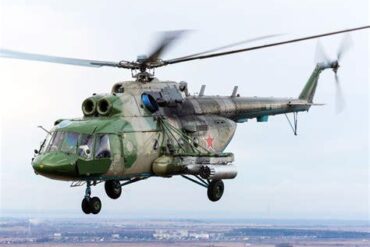
Mil Mi-8 / Mi-17
The Mi-8 is not just Mil’s crown jewel; it’s the most produced helicopter in the world. Initially designed for transport and utility roles, the Mi-8’s adaptability has allowed it to serve in VIP transport, electronic warfare, reconnaissance, and even aerial firefighting. Its successor, the Mi-17, shares its core airframe but features updated engines, avionics, and rotor technology tailored for high-altitude performance.
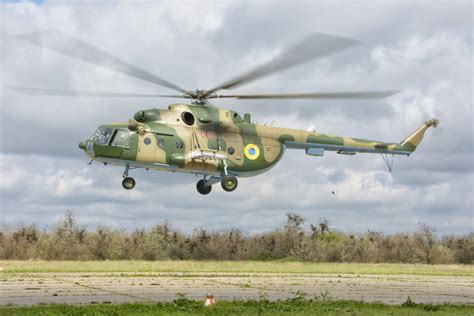
Despite entering service in the early 1960s, these helicopters continue to be modernized and widely used, a testament to their modular design and rugged reliability.
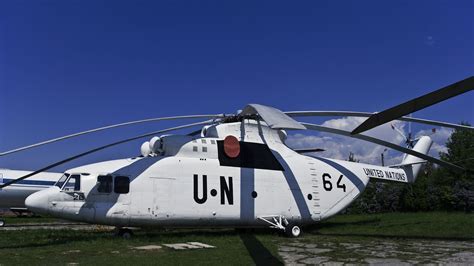
Mil Mi-26
When it comes to lifting power, the Mi-26 has no rival. Introduced in the 1980s, this colossus of the skies can carry up to 44,000 pounds (20,000 kg) of cargo or troops. It is powered by two D-136 turboshaft engines and uses an eight-bladed main rotor to maintain lift under enormous payloads. Its civilian uses range from transporting power station equipment to disaster relief missions in remote locations.
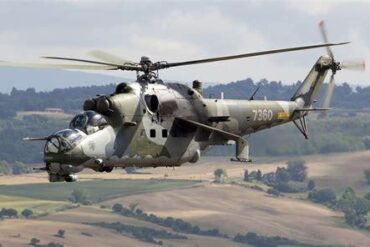
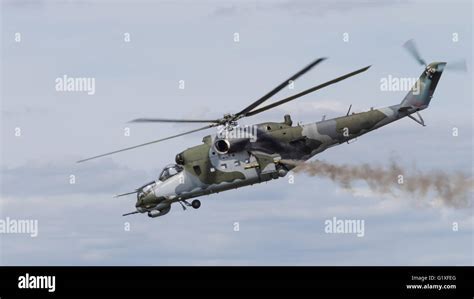
Mil Mi-24 “Hind”
The Mi-24 was a revolutionary design when it debuted. It uniquely combined troop transport capacity for up to eight soldiers with heavy weaponry and armor protection. The helicopter was widely used during the Cold War, especially in Afghanistan, and gained a fearsome reputation among NATO forces.
Mil Mi-28NE “Night Hunter”
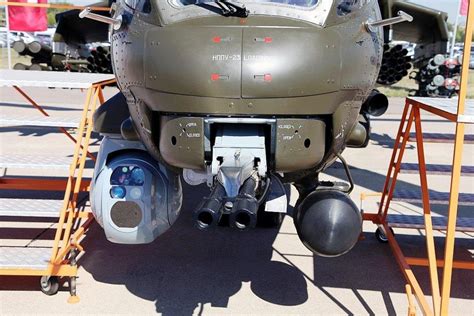
Developed as a modern replacement for the Mi-24, the Mi-28NE is a dedicated attack helicopter equipped for day and night operations. It features:
- Advanced all-weather targeting systems
- A heavily armored cockpit
- A 30 mm Shipunov 2A42 autocannon
- Capability to launch anti-tank guided missiles, rockets, and air-to-air weaponry
This helicopter has seen active duty in conflicts across the Middle East and continues to evolve with the addition of improved radar, ECM systems, and navigation suites.
Engineering Culture and Export Challenges
Mil helicopters are known not only for their technical excellence but also for the engineering philosophy embedded in their design: simplicity, maintainability, and function over luxury. This has made them ideal for export to developing countries, where ease of repair and durability in harsh climates are more important than advanced cockpit aesthetics.
However, the export landscape has become increasingly complex in recent years. The combination of:
- Western sanctions on Russia
- Supply chain disruptions
- Engine component shortages (especially from foreign suppliers)
has constrained Mil’s ability to fulfill international contracts. Countries in Africa, Asia, and Latin America that once depended on Russian helicopters are now looking toward indigenous platforms or Western alternatives, although Mil remains a vital supplier in many parts of the world.
A Legacy Forged in Steel and Rotor Blades
Despite global challenges, the Mil helicopter line remains a cornerstone of Russia’s aerospace industry. With ongoing modernization efforts and a robust design legacy, models like the Mi-8 and Mi-28NE will likely remain in production for years to come. Their continued relevance underscores the genius of Mikhail Mil, whose innovations in rotorcraft design still influence helicopter engineering worldwide.
As Russia continues to modernize and expand its aviation manufacturing base, the brand Mil — now embedded within the larger fabric of Russian Helicopters — will likely remain synonymous with rugged utility and battlefield resilience, a trusted name in the skies for over seven decades.