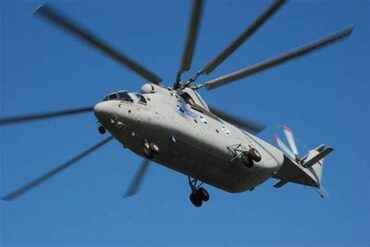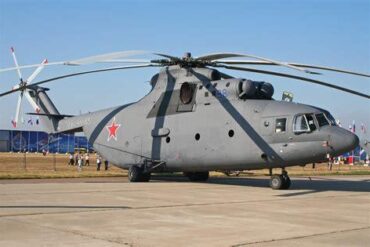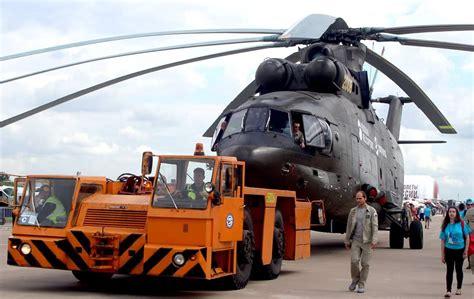
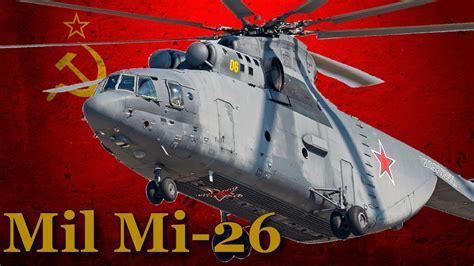
The development of military helicopters has dramatically reshaped the way wars are fought and logistics are managed in hostile environments. Since their first notable applications in the Korean War, helicopters have grown from nimble medical evac tools to massive aerial giants capable of transporting entire platoons, armored vehicles, and heavy equipment. Among the pantheon of rotary-winged aircraft, one machine rises above the rest — the Mil Mi-26, a Soviet-engineered behemoth that remains, to this day, the largest and most powerful military helicopter ever produced.
The evolution of military helicopters began in earnest during World War II, but their tactical significance was solidified in the mid-20th century. The Vietnam War particularly showcased the versatility of helicopters, where aircraft like the UH-1 Huey dominated the battlefield. However, as conflicts grew in scale and complexity, so did the demand for heavy-lift helicopters that could exceed the limits of conventional troop transport. While the CH-53K King Stallion, the United States’ largest helicopter, can carry up to 32 fully-equipped troops, it is dwarfed by its Russian counterpart — the Mil Mi-26.
Introducing the Mil Mi-26: A Soviet Giant Born for Heavy Duty
The Mil Mi-26 was introduced in 1983 by the Soviet Union, born out of a pressing need to transport large payloads across the vast and often unforgiving Russian terrain. Designed by the Mil Moscow Helicopter Plant, the Mi-26 quickly became a symbol of Soviet aerospace ambition, with capabilities that exceeded not just expectations but also every other helicopter in existence.
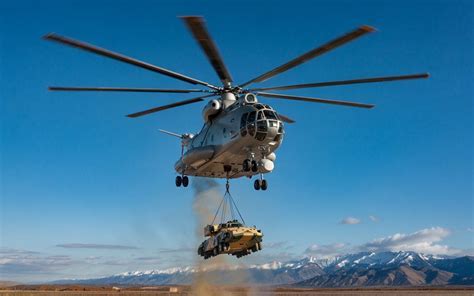
Weighing an unloaded 62,170 pounds and capable of lifting to a maximum takeoff weight of 123,459 pounds, the Mi-26 is not just big — it is unrivaled in scale and performance. For reference, it can lift twice as much as the CH-47 Chinook and more than the CH-53K King Stallion.
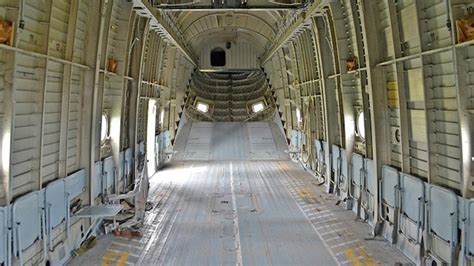
Its cargo hold dimensions — 39.37 feet long, 10.82 feet wide, and 10.5 feet high — allow it to transport up to 90 troops, 60 medical evacuees, or two armored vehicles. This turns a single flight into a strategic force multiplier, enabling rapid deployment of units or equipment with unmatched efficiency.
Engineering Marvel: Design, Rotor System, and Powerplant
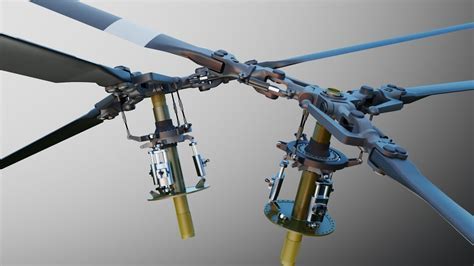
What makes the Mi-26 even more impressive is its rotor configuration and propulsion system. The helicopter employs an eight-bladed main rotor and a five-bladed tail rotor, both of which are critical to maintaining stability and lift for such a massive aircraft. This design ensures that the rotor blades can generate enough thrust to counteract the enormous weight of the payload and fuselage.
The Mi-26 originally used the Lotarev D-136 turboshaft engines, but recent upgrades, including the Mi-26T2V variant, introduced the newer PD-8V engines. While specific performance data on the PD-8V remains classified, the D-136 engines powered the Mi-26 to a top speed of 183.3 mph, a range of 1,196 miles, and an operational ceiling of 15,092 feet. These figures are extraordinary for a helicopter of its class, allowing for deep operational reach and high-altitude missions.
Combat Proven and Logistically Unrivaled
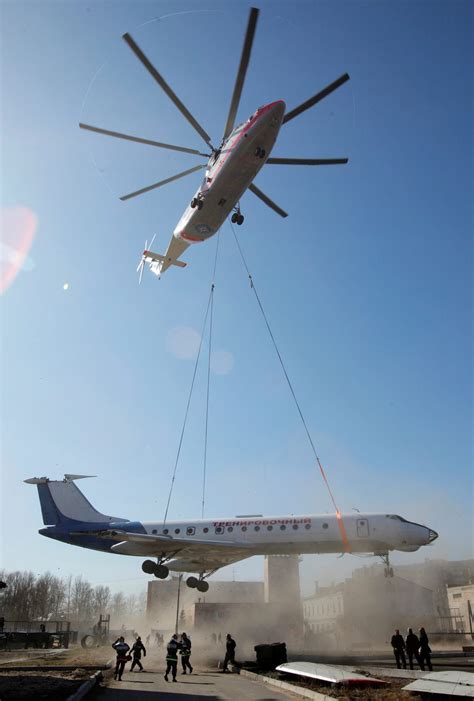
Although it may not carry the same iconic status as the Apache or the Black Hawk, the Mi-26 has proven itself in a range of operational theaters, including Afghanistan, Chechnya, and Syria. Its enormous carrying capacity has made it invaluable not just for combat operations but also for disaster relief, infrastructure support, and civilian applications. Whether transporting earth-moving equipment during natural disasters or relocating downed aircraft, the Mi-26 is often the only available platform capable of such feats.
However, its operational history is not without tragedy. In August 2002, an Mi-26 was hit by a Chechen rebel-fired missile, resulting in a catastrophic crash that killed 74 Russian soldiers. It remains the deadliest helicopter accident in history, a sobering reminder of the dangers faced by even the most advanced aircraft in conflict zones.
Variants and Modernization: The Mi-26T2V and Beyond
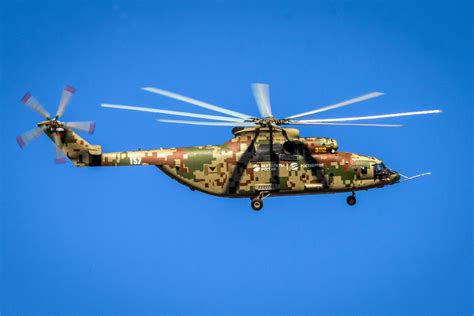
The continued relevance of the Mi-26 has been ensured through systematic upgrades. The Mi-26T2V, a modernized version introduced in the 2010s, includes advanced avionics, night vision systems, digital cockpit displays, and improved electronic warfare defenses. These updates were crucial in extending the aircraft’s service life and adapting it for 21st-century combat scenarios, especially in electronic warfare-intensive environments.
In addition, the Mi-26T2V features enhanced automated navigation systems, enabling operations in adverse weather conditions and contested airspace. Its autopilot capabilities reduce crew workload, allowing for more precise and safe flight control during long missions.
Comparing Giants: Mi-26 vs CH-53K King Stallion
While the CH-53K King Stallion represents the pinnacle of American heavy-lift rotary aviation, its capabilities, though formidable, are still eclipsed by the Mi-26. Here’s a direct comparison of their capabilities:
- Maximum Troop Capacity: Mi-26: 90 troops | CH-53K: 32 troops
- Max Payload: Mi-26: 44,000 lbs | CH-53K: 36,000 lbs
- Top Speed: Mi-26: 183.3 mph | CH-53K: ~196 mph
- Range: Mi-26: 1,196 miles | CH-53K: ~530 miles
While the King Stallion is faster and features cutting-edge Western avionics, it lacks the brute lifting power and endurance that makes the Mi-26 a strategic asset for large-scale mobilization.
A Versatile Tool for Peace and War
Beyond combat, the Mil Mi-26 has played vital roles in civilian missions. Its ability to transport fire trucks, bulldozers, and water tanks has made it a preferred platform for forest fire suppression, post-earthquake recovery, and search and rescue operations in remote or devastated regions. Countries such as India, China, Venezuela, and Greece have all employed the Mi-26 in various roles, attesting to its global utility.
From lifting a stranded aircraft from a frozen Arctic lake to delivering turbine components to mountaintop hydro plants, the Mi-26 continues to operate in extreme terrains and conditions, showcasing the remarkable durability and adaptability of its Soviet-era design.
Conclusion: The Colossus of the Skies
In an era where multi-role platforms and unmanned aerial systems dominate discussions on future warfare, the Mil Mi-26 stands as a titan of engineering brilliance and practical utility. Its unmatched size, astonishing payload capabilities, and proven track record in both military and civilian arenas have cemented its legacy as the largest military helicopter ever built and flown in active service.
While no longer the most technologically advanced rotorcraft on the battlefield, the Mi-26 continues to occupy a singular role: when the mission demands extreme airlift, no other helicopter in the world can match its might. It remains a testament to the bold engineering and strategic foresight of its creators, and its presence in the skies commands respect, awe, and perhaps a little fear.