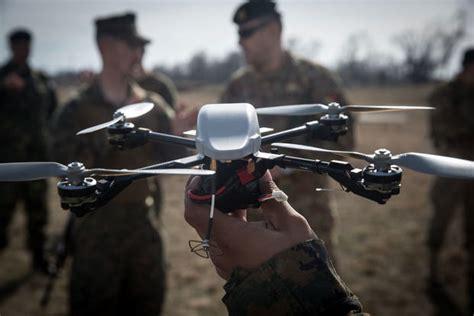
In the evolving landscape of modern warfare, the integration of unmanned aerial systems (UAS) has become a cornerstone of tactical innovation. Among these technologies, the military training quadcopter stands out not for its firepower or surveillance capabilities, but for its practical value in soldier preparedness. Often overlooked in favor of high-end drones with combat-ready specs, training quadcopters occupy a different yet vital space — simulating realistic drone operations in controlled, cost-effective environments.
Understanding the Purpose of Military Training Quadcopters
Training quadcopters are purpose-built to familiarize soldiers with UAS operation under battlefield-like conditions. Unlike their combat-ready cousins, these drones are usually lower in cost, simpler in design, and easier to repair or replace. Their primary function is not combat but skill acquisition — teaching troops how to fly drones, perform reconnaissance maneuvers, and engage in electronic warfare simulations.
Unlike consumer drones, which are often loaded with advanced features like obstacle avoidance, gimbaled cameras, or app-based control systems, military training quadcopters strip the experience to its raw essentials. Troops must manage orientation, stability, altitude, and navigation manually or with basic assistance, much like they would with more complex, mission-critical military UAVs.

Behind the Scenes: Anatomy of a Military Training Quadcopter
While appearing unremarkable at first glance, a closer inspection of these quadcopters reveals their engineered simplicity and tactical intent. Reports from individuals salvaging parts from discarded units, such as those used by the Michigan National Guard, offer intriguing insights. These drones often feature:
- Brushless motors like the Chinese-made VCI SE3517 760kV 6S, valued for their durability and power.
- Custom flight controllers, sometimes modeled after open-source systems like Pixhawk, albeit stripped down to comply with military-grade compliance like NDAA standards.
- Standard XT60 battery connectors, suggesting a modular design aimed at rapid replacement and reduced logistics.
- Fixed cameras, both forward-facing and downward-facing, likely used for navigation and target acquisition simulations.
The lack of a gimbal or stabilization system is not a flaw, but a feature. It forces the operator to control the drone’s physical orientation manually, enhancing skill development. Even elements like power distribution boards, simple GPS units (e.g., Chinese Cirocom), and crushed USB-C ports underscore the expendable, crash-friendly design of these quadcopters.
Low-Tech by Design, High-Impact in Use
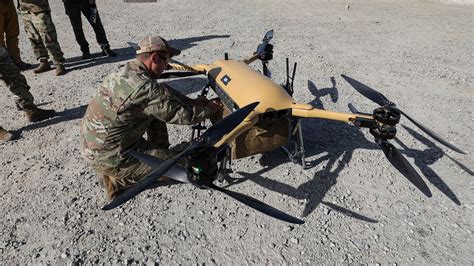
A frequent misconception is that all military drones are high-tech, cutting-edge devices. Training drones defy this narrative deliberately. The consensus among experts is that these platforms are designed for durability, affordability, and realism — not for sophistication.
This design choice serves multiple goals:
- Encouraging high-risk training without financial or operational repercussions.
- Allowing frequent repetition and error tolerance, crucial for skill building.
- Creating realistic adversary drone simulations, including potential enemy FPV suicide drones or commercial UAV threats.
The Michigan National Guard’s use of such drones shows a broader strategic trend: U.S. forces adapting to drone-saturated battlefields. Whether used in OPFOR (opposing force) roles or anti-drone exercises, training quadcopters are now vital in simulating real-world engagements.
Covert Customization and Contract Manufacturing
According to community analysis, many of these drones appear to be custom-made for government use, likely under discreet contracts. The absence of serial-number traceability and manufacturer logos suggests limited production runs, perhaps originating from DoD innovation labs or niche military contractors.
Part numbers, when found, typically yield no public information, reinforcing the idea that these quadcopters are part of non-commercial, classified procurement channels. They often lack documentation, spare part support, or maintenance infrastructure — once broken, they’re discarded.
Simplicity with Strategic Implications
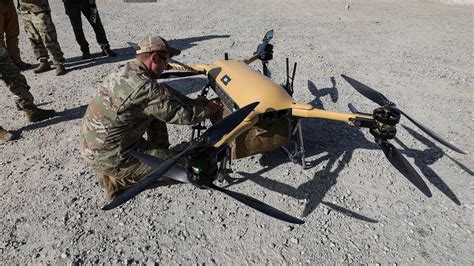
While the technology behind training quadcopters might seem rudimentary, their operational implications are profound. These drones are playing an essential role in shaping the next generation of drone-savvy infantry units. In current deployments:
- Soldiers are learning to fly drones in GPS-denied environments, preparing for electronic warfare.
- Units are using quadcopters to simulate IED delivery scenarios or chemical dispersal threats.
- Teams practice swarming maneuvers and counter-UAS operations, using these inexpensive craft as real-time targets.
The ability to safely crash and recover drones encourages experimental tactics, especially in field exercises involving MILES (Multiple Integrated Laser Engagement System) gear, which augments realism with laser-based weapons feedback.
Training Tool or Test Target? Dual Use Applications
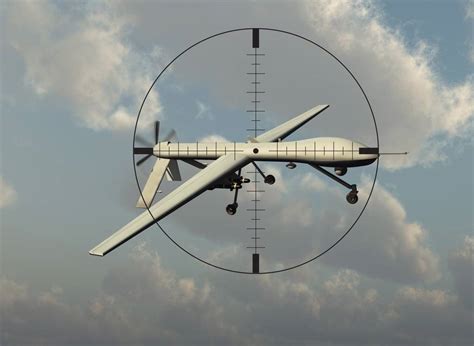
Another notable function of these training quadcopters lies in their use as expendable aerial targets. Equipped with basic GPS return-to-home features and possibly waypoint routing, some quadcopters are released in pre-planned swarms or paths to test counter-drone technologies. This includes jamming devices, anti-UAV rifles, and radar tracking systems.
This dual-use nature makes them ideal for:
- Anti-drone radar calibration
- Electronic warfare simulations
- Testing kinetic or non-kinetic interceptors
In essence, these drones provide both target practice and operator proficiency training, without needing access to expensive or export-controlled platforms.
DIY Vibes: Frankenstein Drones and Tactical Hacking
Several eyewitness reports describe the drones as “Frankenstein’d” together from off-the-shelf and military-grade components. With visible solder points, 3D-printed camera mounts, and what one user likened to “RadioShack-level wiring,” the visual aesthetic is often crude. But this intentional roughness is a strategic decision — the military isn’t training troops for a tech demo, but for the gritty unpredictability of real warfare.
The modularity also allows field repairs or mission-specific tweaks. Want to add a simulated payload drop system? Just 3D-print a release mechanism and plug it into an open servo port. Need to simulate a failed GPS system? Remove the antenna mid-flight. This kind of flexibility breeds ingenuity and adaptability, qualities highly valued in combat scenarios.
Why the Lack of Transparency Makes Sense
Public concern about the legality or secrecy of these training drones is often misplaced. While some Reddit users feared OPSEC violations, others pointed out that none of the classified components — such as encrypted communications or surveillance modules — are present. These quadcopters are intentionally low-tech and stripped of sensitive technology, precisely so they can be used widely without security risks.
Furthermore, much more advanced drone information is publicly available through government programs like the DIU’s Blue UAS Cleared List, which showcases trusted drone systems vetted for Department of Defense use.
A Glimpse Into the Future of Combat Training
What we are seeing today with military training quadcopters is just the beginning. As drone warfare continues to evolve, so too will the systems used to train for it. Expect to see:
- AI-assisted training drones that can mimic enemy flight behavior.
- Simulated drone dogfights between human and AI pilots.
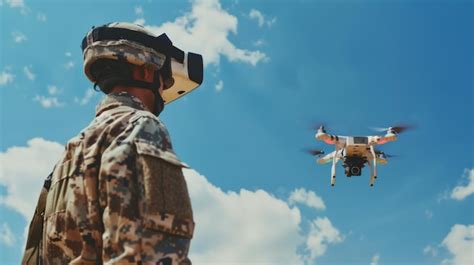
- Virtual-reality integration where drone telemetry and onboard footage are fed directly into immersive HUDs for realistic mission rehearsal.
Already, concepts like swarm training and autonomous flight coordination are being field-tested. The inexpensive, modular, and durable nature of current training drones makes them the perfect foundation for this technological leap.
Conclusion: A Strategic Investment in Airborne Readiness
Military training quadcopters may not be glamorous, weaponized, or stealth-coated, but they are undeniably essential to modern combat readiness. Built from common components, often customized for niche applications, and designed to crash rather than endure, they are cost-effective force multipliers in the military’s ongoing UAS evolution.
As geopolitical threats evolve and the drone warfare paradigm shifts from elite operators to squad-level integration, the ability to train quickly, repeatedly, and affordably becomes paramount. These humble quadcopters — with their rough shells, fixed cameras, and generic motors — are the unsung heroes of tomorrow’s air-dominant infantry force.