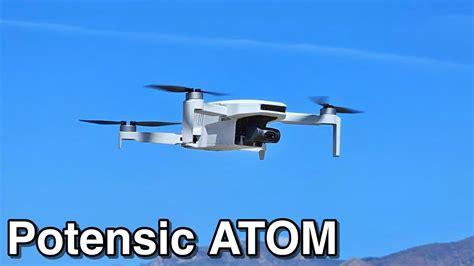
The Potensic Atom has surged in popularity among drone enthusiasts seeking a balance of affordability, performance, and ease of use. As competitors like DJI dominate the consumer drone space, the Atom has carved out a niche by offering high-end features at a fraction of the price. With its sub-249g weight class, 3-axis gimbal, 4K camera, and competitive battery life, the Potensic Atom is not only targeting beginners but also savvy hobbyists who want impressive aerial capabilities without breaking the bank.
The buzz around the Atom is particularly loud in enthusiast forums and user communities where first-hand experiences often trump brand marketing. Based on real-world usage and extended field testing, here’s our in-depth perspective on what makes the Potensic Atom both a compelling value and a drone worth your serious consideration.
Design and Portability: Compact Form Meets Clever Engineering
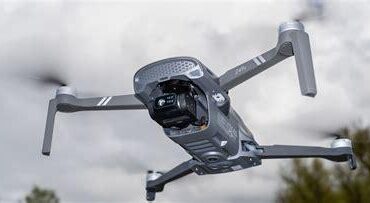
One of the Atom’s most attractive traits is its ultralight frame. Weighing under 249g, it conveniently sidesteps registration requirements in several jurisdictions including the U.S., making it ideal for casual or recreational fliers. This featherlight design, however, doesn’t compromise on build quality. The drone feels sturdy in hand, and its folding arms lend well to portability, easily sliding into a backpack or messenger bag.
The controller deserves special mention for its ergonomic feel and the secure integration of smartphones. Users appreciate how intuitively the device unfolds and locks smartphones into place, maintaining firm connection even during aggressive maneuvering.
Camera and Gimbal Performance: Surprisingly Capable for the Price
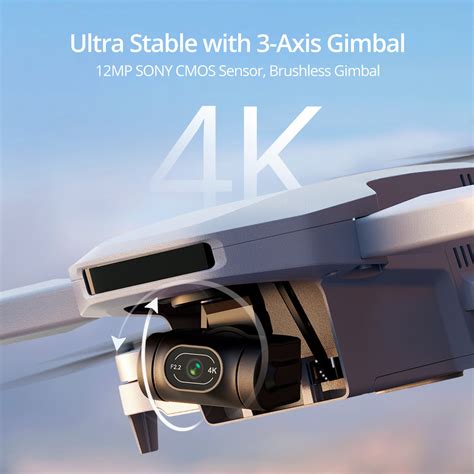
Equipped with a 4K camera at 30fps and a 3-axis mechanical gimbal, the Atom produces footage with a surprising degree of sharpness and stability. While not matching the ultra-polished output of DJI’s higher-end models, the Atom captures clean, vibrant images with only minor jitter noticeable during rapid movement or in windy conditions. The dynamic range is serviceable, and color reproduction leans toward neutral tones, avoiding overly saturated results.
While HDR and AEB (Auto Exposure Bracketing) are noticeably absent, users still report strong satisfaction with the out-of-the-box camera capabilities. Recalibration of the gimbal is simple and often resolves minor balance or drift issues.
Flight Performance and Stability: Built for Real-World Conditions
The Atom’s ability to maintain a stable hover—even in gusty winds up to 30 km/h—is one of its most surprising strengths. Powered by brushless motors and equipped with a reliable GPS lock system, the drone demonstrates confident and consistent performance across open fields, wooded areas, and semi-urban environments.
We found the controls to be responsive, and latency through the app’s live video feed remains low enough to permit accurate manual adjustments in real-time. While obstacle avoidance is absent, the drone’s responsiveness and general flight characteristics allow for confident piloting, particularly with the added assurance of return-to-home functionality.
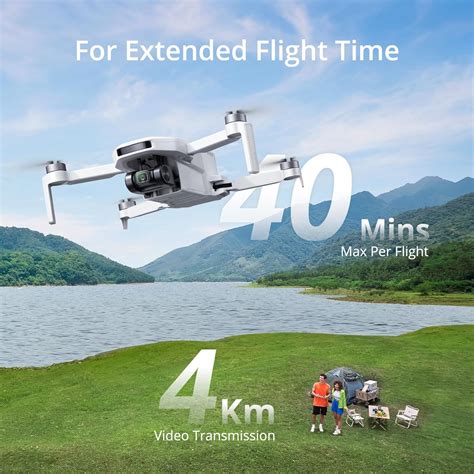
Battery performance also deserves high marks. Each cell provides approximately 32 minutes of flight time, and the Fly More Combo with three batteries effectively delivers 90 minutes of active usage per session. The USB-C charging ports on the batteries themselves are especially convenient for users without access to proprietary hubs while on the go.
Transmission and Range: Reliable Within Limits
The Atom boasts a 6km video transmission range, a spec that initially raised skepticism among users. However, under optimal conditions—clear line of sight and minimal interference—real-world performance approaches this figure. Visual transmission to a smartphone remains clear and consistent up to about 3-4km, after which quality gradually degrades, particularly in suburban areas dense with RF traffic.
Latency is impressively low given the price bracket. FPV mode works well for muscle memory development and casual aerial videography, although latency-sensitive applications such as racing or complex maneuvers may expose the system’s limitations.
User Interface and Firmware Experience
The software interface, though not quite as polished as DJI’s Fly app, is intuitive enough for even beginners to learn quickly. Flight modes like Follow Me, Circle, and Waypoint Navigation are available and function reliably. Users noted a desire for finer control curve adjustments and the ability to configure exponential (S-curve) movements—currently not present but potentially viable with future firmware updates.
An encouraging detail is Potensic’s active online presence. Through communities on platforms like Facebook, the brand frequently solicits user feedback, often implementing suggested changes in firmware updates. This approach not only empowers the user base but also highlights the company’s commitment to evolving the product beyond launch day.
Support and Customer Service: A Tale of Two Experiences
This area is where Potensic has generated mixed feedback. Many users report positive experiences with pre-sales support, prompt delivery, and even effective after-sales assistance via Amazon. Yet others recount frustrating delays, unresponsive email threads, and impractical service expectations—particularly regarding warranty claims or component repairs in Europe.
For example, some European customers discovered that authorized service centers are scarce, and even minor repairs such as a damaged gimbal cable could require costly shipping to Germany. This reflects a growing pain that smaller drone brands often face—strong on hardware, weaker on global support infrastructure.
Potensic Atom vs. DJI Mini Series: Value Proposition Analysis
The closest competitor to the Atom in DJI’s lineup is the DJI Mini 2 SE or Mini 4K, depending on which features are prioritized. DJI models benefit from a robust warranty program, finely tuned software, and access to DJI Care for damage protection. However, they also come at a higher price—often double when accounting for full kits with extra batteries and accessories.
In contrast, the Atom includes generous bundled packages at a lower cost. The Fly More Combo is particularly compelling: three batteries, a multi-battery charger, and a padded carrying case that’s ideal for travel. For budget-conscious buyers or those hesitant to invest heavily upfront, the Atom makes a persuasive case.
While DJI outclasses Potensic in terms of ecosystem and firmware maturity, the Atom stands tall for its hardware-for-dollar value. It’s not trying to be a DJI killer—it’s offering a credible alternative for those who prioritize core functionality, long battery life, and smooth 4K video capture.
Community and Upgradability: A Drone That Grows With You
Potensic’s growing user community is both active and resourceful. From custom 3D-printed accessories to firmware feedback loops, it’s clear the Atom is developing a loyal following. For beginners, this is invaluable; it provides a support structure outside of formal customer service.
The availability of replacement parts, like propellers and batteries, directly from Potensic or through vetted resellers on platforms like eBay, ensures the drone is not a disposable investment. Nonetheless, the lack of native support for more advanced features like AEB, HDR, or obstacle avoidance may cause more ambitious users to eventually outgrow the platform.
Verdict: A Serious Contender in the Budget Drone Market
The Potensic Atom isn’t flawless, but it punches far above its weight class in almost every critical area. It delivers solid camera performance, dependable flight time, and surprisingly good range, all while staying under an accessible price threshold.
For newcomers to drones or experienced pilots looking for a secondary model, the Atom presents a compelling alternative to pricier options. Its key shortcomings—lack of obstacle avoidance, no HDR, and inconsistent customer support—are real but forgivable in light of its many strengths.
Ultimately, this drone is a smart entry point into the aerial video space, particularly for those who value freedom from FAA registration, long battery life, and a reliable flight experience.
If Potensic continues to build out their firmware capabilities and customer service infrastructure, the Atom line may well become a formidable pillar in the sub-$400 drone market.
Final Score: 8.5/10 — Highly Recommended for Budget-Conscious Creators and Enthusiasts