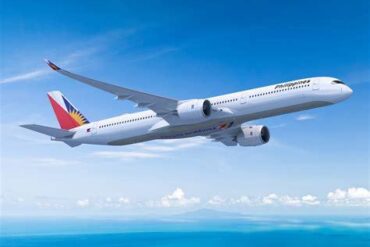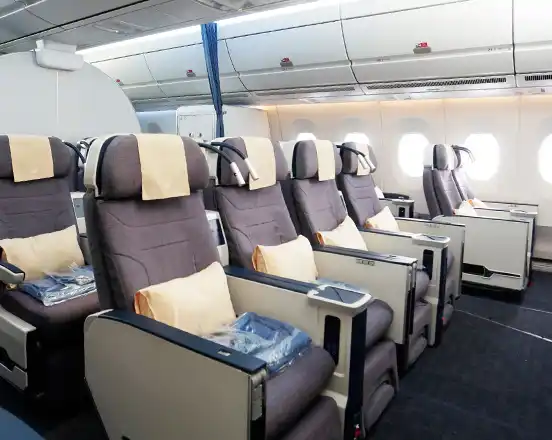
We present an in-depth review of Philippine Airlines Premium Economy, focusing on long-haul comfort, cabin design, service quality, and the real value behind the airline’s elevated mid-tier product. This evaluation draws on the full Manila–Sydney experience aboard the Airbus A330, a route that often defines passenger expectations for PAL’s broader international service. The following analysis aims to capture the authentic strengths and limitations of the product, with emphasis on practicality, comfort, and overall travel satisfaction.
Premium economy on Philippine Airlines occupies a unique niche. It offers a noticeably more comfortable seating arrangement than economy, yet it does not venture far into the luxury territory of business class. What stands out immediately is the spatial improvement—legroom, recline, and cabin separation—which forms the backbone of the product’s appeal. On long overnight flights such as PR212 from Manila to Sydney, this extra space has a direct impact on rest quality and overall endurance during the journey.
The Manila–Sydney flight departs late in the evening, arriving in Australia mid-morning. This timing makes comfort exceptionally important, and premium economy’s slightly more exclusive environment brings genuine value to travellers hoping to sleep or maintain a calmer in-flight experience. Passengers board into a distinct cabin that, while modest in size, feels private compared with standard economy seating.
Airport Ground Experience at Manila
The ground experience at Manila’s Ninoy Aquino International Airport is where expectations and reality diverge. Premium economy passengers do not receive automatic lounge access, and without elite status this becomes a disadvantage, especially when navigating Terminal 2. The limited dining options, lacklustre food quality, and generally congested environment can make long transit waits uncomfortable.
The absence of dedicated premium economy signage at check-in also creates uncertainty, although passengers are often redirected to the business class counter if available. This small benefit helps smooth the departure process, but it does not offset the broader airport shortcomings. The reality is simple: premium economy elevates the flight, not the airport time, and travellers connecting through Manila should be prepared.
Seat Comfort and Cabin Features on the A330
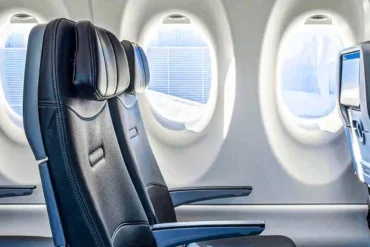
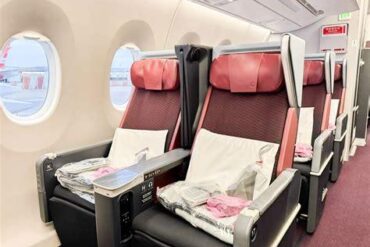
Premium economy on the Philippine Airlines A330 consists of 24 recliner-style seats arranged in a 2-3-2 layout. The product is built around generous proportions for a mid-tier cabin: a 19.55-inch seat width, 38-inch pitch, and 8-inch recline create a markedly more comfortable space than economy. The fabric-covered seats include adjustable calf and foot rests, a useful feature during overnight segments when leg elevation improves rest.
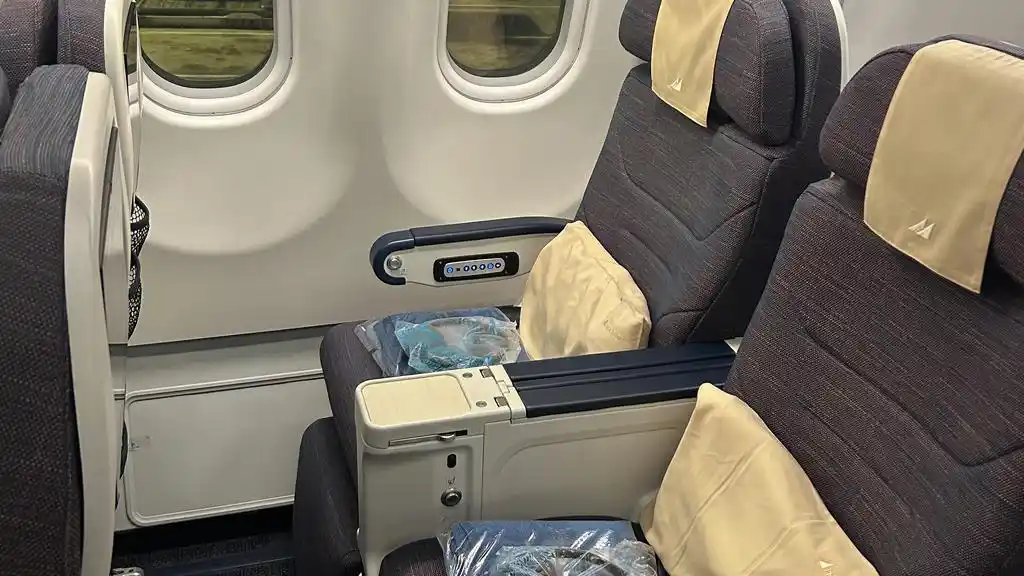
Each seat comes equipped with a 13.3-inch touchscreen, storage pockets, a pull-out tray, cocktail table, USB port, and coat hook. While not luxurious, the setup feels thoughtfully designed for both work and leisure. The provided pillow, blanket, and simple amenity kit give the space enough comfort for sleep without the excess of business class.
Continuous cabin cleaning throughout the flight adds to the overall sense of care. Even toward landing, lavatories remain tidy, an often-overlooked detail that sets a reliable tone for the entire service.
Dining and Beverage Experience
The dining service reveals the most noticeable gap between premium economy and business class. Food options mirror economy selections closely, with dishes presented in larger portions but without significant upgrades in quality or variety. Prior to takeoff, passengers receive a choice of water or juice, followed by a main meal shortly after departure. The choices typically include a rice-based entrée and a pasta option.
The pasta portion is generous but lacks depth of flavour, though the accompanying prawn and noodle salad offers a refreshing contrast. Desserts such as coffee cake and snack bites help add variety, but the overall impression is modest. Beverage choices include a limited wine selection, soft drinks, tea, and coffee, sufficient for casual enjoyment but not enough to elevate the meal into a premium experience.
Before landing, passengers receive a light snack, though the quality can be inconsistent—examples include a tuna melt served warm but lacking texture. Despite these limitations, the crew remain attentive, frequently offering refills and responding quickly to requests.
In-Flight Entertainment and Connectivity
Philippine Airlines provides over 300 hours of entertainment, though the library is smaller than those offered by major international carriers. The content selection covers blockbuster films, new releases, and a mix of TV series, ensuring enough variety for a flight under eight hours. Options such as Top Gun Maverick, Elvis, The Batman, and Dune anchor the movie list, complemented by a handful of TV dramas and comedies.
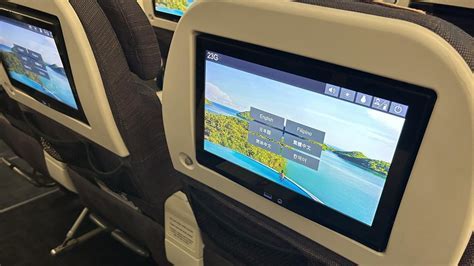
The audio library includes a broad range of genres, from classic rock to modern electronic playlists. Streaming enthusiasts may find the catalogue limited, but casual viewers will be adequately entertained.
Wi-Fi is available through the MyPAL system, offering a small free allotment of data or time. In practice, connection reliability remains inconsistent. Some passengers struggle to log in even when following the onboard guide. Given the modest allowance, most travellers will use it only for messaging or basic emails.
Cabin Crew Service Style
The strongest highlight of the premium economy experience is the crew. Philippine Airlines’ service reputation rests heavily on hospitality, and this flight reinforces that image. Even with mask requirements still observed at the time, the warmth of interactions is unmistakable. Crew members circulate frequently, provide clear communication, and ensure cabin cleanliness remains a priority. Their attentiveness elevates the flight beyond the sum of its parts.
Final Verdict: Is Philippine Airlines Premium Economy Worth It?
The Manila–Sydney sector offers enough flight time to justify the upgrade from standard economy, particularly for travellers who value legroom, recline, and a quieter cabin. Philippine Airlines Premium Economy succeeds where it matters most: space, comfort, and service. It does not compete with the luxury of business class, nor does it promise the elaborate dining or extensive entertainment libraries of larger global carriers. Instead, its value lies in practical comfort and consistent hospitality.
For travellers departing Manila without a long layover, the absence of lounge access may not matter. However, those enduring extended transit should seriously consider the airport’s limitations when planning their route. For long itineraries that involve onward travel to Europe or North America, choosing a carrier with a more modern transit hub may offer greater convenience.
Despite its drawbacks, the combination of seat quality, cabin separation, and excellent service makes Philippine Airlines’ premium economy a worthwhile investment on long-haul routes. It strikes a functional balance, elevating the flight experience enough to reduce fatigue while maintaining an approachable price point. Travellers who prioritize comfort over luxury will find this cabin a strong contender, especially on overnight journeys where space and rest take priority over premium dining or entertainment variety.