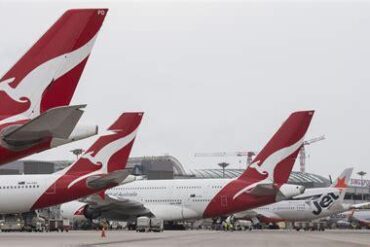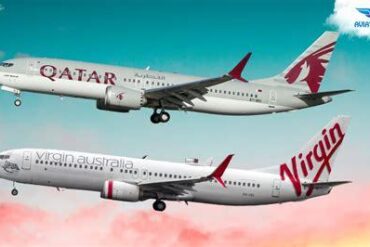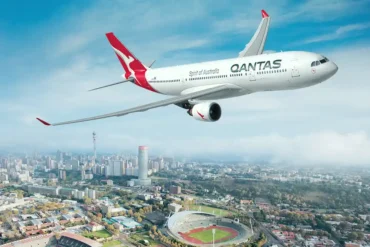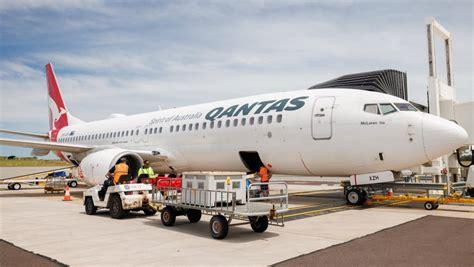
Founded on 16 November 1920 in the remote outback town of Winton, Qantas Airways Limited stands as an enduring symbol of Australia’s national identity and aeronautical innovation. As the world’s third-oldest continuously operating airline, Qantas has evolved from a modest outback mail service into a cutting-edge global aviation powerhouse, now serving 104 destinations and commanding 60.8% of the domestic market as of March 2023.
Today, its headquarters in Mascot, New South Wales support a sprawling operation across its four primary hubs in Sydney, Melbourne, Brisbane, and Perth, with a fleet of 125 aircraft (excluding subsidiaries) and a workforce of nearly 30,000 employees.
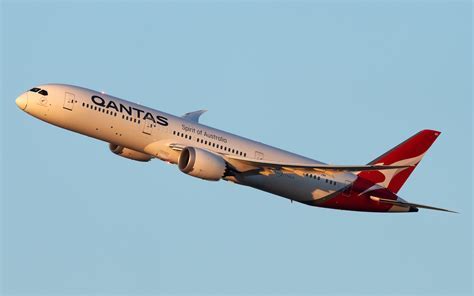
A Century of Flight: The Evolution of Qantas
The story of Qantas—short for Queensland and Northern Territory Aerial Services—is intricately woven into the broader tapestry of 20th-century aviation. The airline’s earliest aircraft, the Avro 504K, took to the skies in a rugged era where regional connectivity was both a challenge and a necessity.
By 1930, Qantas had shifted its headquarters to Brisbane, and in 1934, it entered an ambitious new chapter by forming Qantas Empire Airways (QEA) in partnership with Imperial Airways. This collaboration marked its formal entry into international aviation, culminating in the historic Singapore route in May 1935.
World War II proved a turbulent time for Qantas, with much of its fleet commandeered for military use. Despite this, the post-war period was marked by resilience and innovation. The airline reestablished itself with flying-boat routes to Ceylon (now Sri Lanka) and extended to London, forming what came to be known as the Kangaroo Route, proudly bearing the first iteration of the iconic kangaroo logo in 1944.
Nationalised in 1947, Qantas handed over its domestic operations to Trans-Australia Airlines (TAA) and focused its ambitions on expanding long-haul international services.
Entering the Jet Age and Beyond
The jet age began in earnest for Qantas with the arrival of the Boeing 707-138 in 1959, making it one of the first airlines outside the U.S. to operate jetliners. Over the decades, Qantas steadily expanded its international reach, culminating in the acquisition and merger with Australian Airlines in 1992 and its privatisation by 1997.
In 1998, Qantas solidified its global presence by becoming a founding member of the Oneworld alliance, aligning with major international carriers like British Airways, American Airlines, and Cathay Pacific. The early 2000s ushered in a new competitive era with the rise of Virgin Blue, prompting Qantas to launch Jetstar, a low-cost carrier that would eventually expand across Asia and the Pacific.
One of the airline’s most remarkable achievements came in March 2018, when Flight QF9 flew non-stop from Perth to London, covering 14,498 km in 17 hours. This was followed by an experimental New York to Sydney flight in 2019 that clocked 19 hours and 20 minutes, signaling the dawn of Project Sunrise.
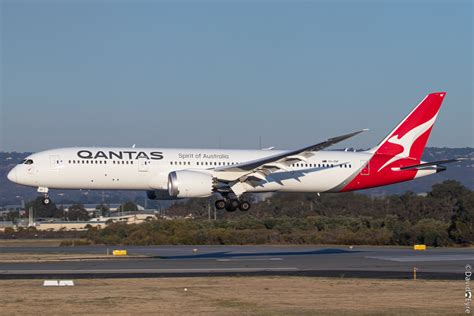
Navigating Crisis: The COVID-19 Era and Recovery
Like the rest of the aviation world, Qantas faced severe disruption during the COVID-19 pandemic. In March 2020, the airline suspended the majority of its services, retrenched 6,000 staff, and retired its last Boeing 747. With international borders closed, Airbus A380s were grounded, though plans to reactivate them emerged in later years.
Qantas responded decisively, becoming one of the first global airlines to mandate employee vaccination by August 2021. As part of its recovery and future-readiness, the airline announced a bold commitment to Project Sunrise, ordering twelve Airbus A350-1000s in May 2022 and initiating plans to acquire Alliance Airlines, further consolidating its regional presence.
Route Network and Strategic Alliances
Qantas’ route map spans all seven continents, a distinction that no other airline holds. Domestically, it connects every Australian state and external territory. Internationally, it maintains an ambitious mix of fifth-freedom routes such as Singapore–London and Auckland–New York, offering customers flexibility and competitive options.
Strategic code-share agreements and joint ventures underpin Qantas’ network expansion. These include:
- American Airlines (JV)
- British Airways
- Emirates (JV)
- Japan Airlines
- Air France
- LATAM
These partnerships allow Qantas to offer seamless connections to key business and leisure markets, strengthening its position in both hemispheres.
Fleet Innovation and Cabin Experience
The Qantas Group—including Jetstar and QantasLink—boasts a combined fleet of 308 aircraft (as of November 2024). Future plans include deliveries across the A220, A320neo, A321XLR, Boeing 787, and Airbus A350 families, tailored for both regional flexibility and ultra-long-haul performance.
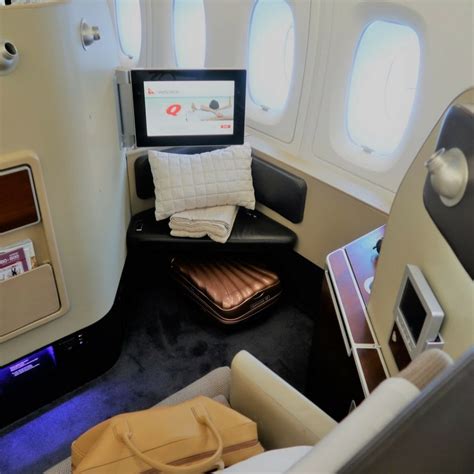
Onboard, Qantas offers a premium passenger experience:
- First Class (A380): 14 luxury suites with a 212 cm flat bed.
- Business Class: Lie-flat “Business Suites” in a 1-2-1 configuration.
- Premium Economy: Wider seats with 38–42″ pitch in a 2-3-2 layout.
- Economy Class: Comfortable 31″ pitch, with upgraded cushioning and headrests.
Entertainment and Connectivity in the Sky
Qantas has invested heavily in in-flight entertainment systems, offering a diverse mix including:
- Total Entertainment System
- Rockwell Collins Mainscreen
- Panasonic iQ
- Q AVOD
- Astrova 4K (launching on A350s): Ultra-HD displays, Bluetooth audio, and USB-C 100W charging
Domestic passengers benefit from complimentary Wi-Fi, a service Qantas began rolling out in 2017. International passengers will soon receive similar access, with full implementation expected by 2026.
Loyalty and Lounge Network
The Qantas Frequent Flyer program is the largest in Australia, with 16.4 million members as of June 2024. Benefits range from flight upgrades to hotel bookings and retail partnerships.
Lounges are a cornerstone of the Qantas experience:
- International First Lounges: Sydney, Melbourne, Auckland, Singapore, Los Angeles, and soon London (2025)
- Domestic Business Lounges and Qantas Clubs: Nationwide presence
- Chairman’s Lounges: Invitation-only exclusivity across six cities
Design Excellence, Culinary Partnerships, and Fashion Forward
Qantas has consistently pushed design boundaries through collaborations with award-winning talents. Marc Newson revolutionized the Skybed and A380 interiors, while David Caon spearheaded cabin design on the 787 and lounge furniture. Both designers contribute to Project Sunrise’s anti-jetlag innovations.
For over 25 years, celebrity chef Neil Perry has crafted Qantas’ onboard dining, offering regionally inspired menus and premium wines. Meals remain complimentary on all domestic flights, with catering operations handled by dnata.
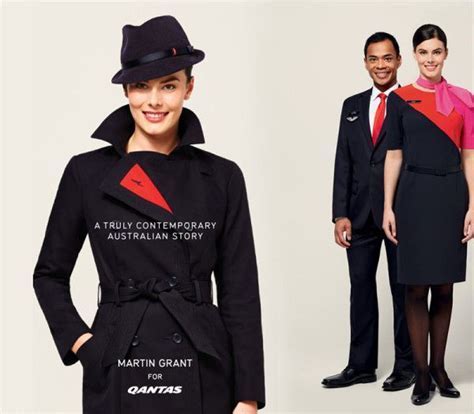
Uniforms, designed by Martin Grant, adopted a gender-neutral policy in 2023, reflecting modern workplace values. A new collection is slated for rollout in 2027.
Liveries and Brand Recognition
Qantas aircraft showcase an array of iconic liveries that reflect its rich heritage and cultural respect:
- Indigenous designs: “Mendoowoorrji” (2013), “Yam Dreaming” (2018), and “Minyma Kutjara Tjukurpa” (2023)
- Retro Roo schemes from 1959 and 1971
- Special editions: Themed aircraft supporting the Socceroos, Wallabies, Sydney Mardi Gras, and Dallas/Fort Worth’s cowboy campaign
Such visual storytelling enhances Qantas’ global recognizability while honoring Australia’s First Nations.
Recognition, Safety, and Future Ambitions
Qantas has earned accolades from SkyTrax, TripAdvisor, and multiple design institutions. More notably, it is regularly cited among the world’s safest airlines, a reputation strengthened since 2014 through rigorous safety standards and staff training.
Looking ahead, Project Sunrise stands as Qantas’ moonshot—a vision to link Sydney directly with New York and London through non-stop ultra-long-haul flights, redefining the boundaries of modern air travel.
As we move deeper into the 21st century, Qantas continues to blend heritage with ambition, engineering excellence with customer satisfaction. It is not merely Australia’s flag carrier—it is a benchmark for what global aviation aspires to be.