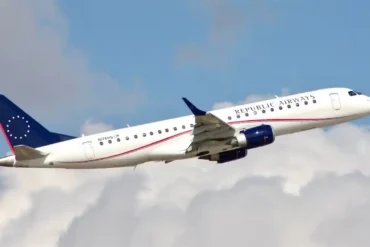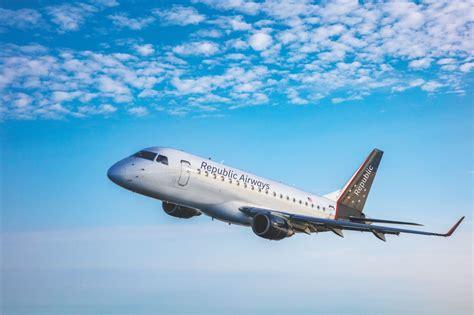
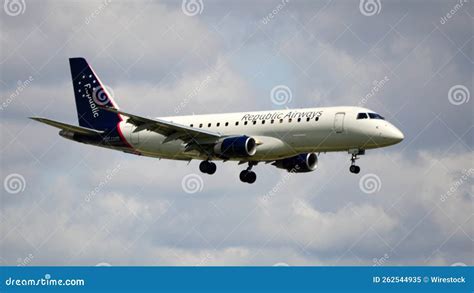
Republic Airways Inc. has quietly powered the backbone of domestic air travel in North America for over two decades. Headquartered in Indianapolis, Indiana, the airline is a major player in the regional sector, flying under three of the largest global carrier banners: American Eagle, Delta Connection, and United Express. With a fleet of 206 Embraer regional jets and operations stretching across the United States and into Canada, Republic has carved a distinctive identity through resilience, strategic pivots, and a deep commitment to regional connectivity.
Origins Rooted in Strategy and Labor Disputes
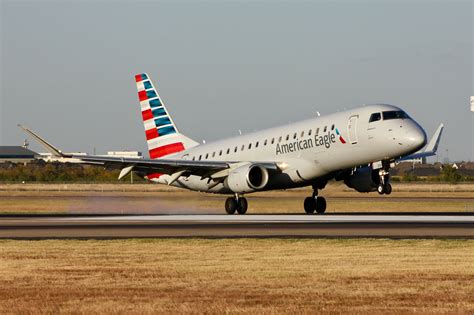
Republic Airways began life not in the skies, but in the strategic minds of its parent company. Incorporated in 1999 but remaining dormant until 2004, Republic was originally brought to life to circumvent a union scope clause involving American Airlines. The clause limited the size of aircraft that could be outsourced to regional partners. To comply, Chautauqua Airlines’ 70-seat jets were transferred to the newly certified Republic Airline, allowing continued operations without breaching the union agreement. In return, Republic Airways Holdings paid $6.6 million to the Allied Pilots Association—a pivotal moment in Republic’s operational genesis.
Fleet Dominance and Strategic Partnerships
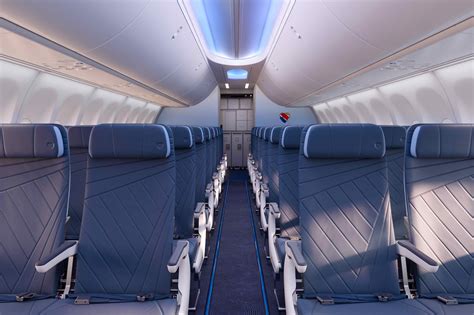
Republic’s rise in the aviation world can largely be attributed to its deliberate investment in Embraer jets, particularly the E170 and E175 series. With a comfortable two-by-two seating configuration, these aircraft are preferred for short-to-medium-haul regional flights, providing both efficiency and a positive passenger experience. Over time, Republic has become the largest operator of Embraer E170 and E175 aircraft globally, a distinction that anchors its competitive advantage.
- 2007: Initiated operation of 36 Embraer E175s for US Airways Express.
- 2013: Received the first E175s for American Eagle; began operations from Chicago.
- 2018: Signed a landmark order for 100 new E175s, signaling long-term confidence in the platform.
- 2019: Acquired 30 E175s from Compass Airlines after their contract termination.
Mergers and Market Consolidation
One of Republic’s most transformative phases came with its acquisition activities. In 2009, it acquired Midwest Airlines for $31 million after a codeshare partnership. Shortly thereafter, it bought a financially struggling Frontier Airlines, integrating operations with its own. Though Republic sold Frontier in 2013, these acquisitions significantly broadened its operational expertise and fleet management capabilities.
A turning point came in 2016 when Republic filed for Chapter 11 bankruptcy, citing an industry-wide pilot shortage. At the time, the airline held $2.97 billion in liabilities against $3.56 billion in assets. By early 2017, it had not only restructured its debt but also merged Shuttle America into its fold, streamlining operations and reinforcing its position as the premier regional carrier in the U.S.
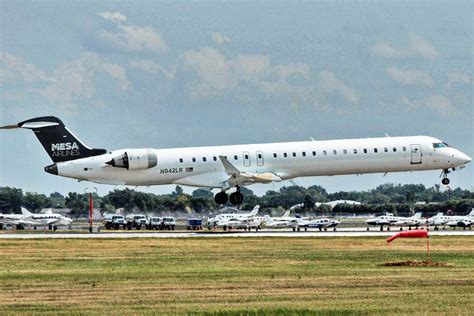
In a bold move announced in April 2025, Republic revealed plans to merge with Mesa Airlines, aiming to further consolidate the regional airline sector and expand route flexibility under mainline partnerships.
Nationwide Reach with Continental Impact
Republic Airways’ geographic footprint is impressively extensive. As of April 2025, it services destinations across Canada and the United States, enhancing interconnectivity between major metropolitan hubs and underserved regional communities. Under the banners of American Eagle, Delta Connection, and United Express, Republic ensures that passengers from cities like Little Rock, Arkansas, or Bangor, Maine, can seamlessly access international flights via gateways like Chicago O’Hare or New York–LaGuardia.
Canadian operations include service to:
- Toronto (YYZ)
- Montreal (YUL)
- Ottawa (YOW)
- Quebec City (YQB)
- Halifax (YHZ)
U.S. destinations span nearly every state east of the Rockies, with particularly dense operations in:
- Northeast Corridor: New York, Philadelphia, Boston, Washington D.C.
- Midwest: Chicago, Indianapolis, Columbus
- Southeast: Charlotte, Atlanta, Nashville, Miami
Innovations in Infrastructure and Headquarters Expansion
In September 2021, Republic Airways announced a $200 million relocation and expansion of its corporate headquarters to Carmel, Indiana, set to open in Summer 2025. This development is not just a physical relocation but a strategic repositioning that aims to create 2,000 new jobs and centralize the company’s training, simulation, and executive functions. The campus is designed to be a hub for aviation workforce development, reflecting Republic’s commitment to resolving future staffing challenges proactively.
Incidents That Shaped Public Perception
Though Republic’s safety record is strong, several high-profile incidents have impacted its public image. Notably, the April 2017 United Express incident, where a passenger was forcibly removed from a Republic-operated flight in Chicago, sparked international outrage and led to sweeping policy reviews industry-wide.
Other notable incidents include:
- June 2018: An E170 aircraft caught fire during maintenance in Columbus.
- May 2019: A suicidal passenger attempted to open the door mid-flight on Delta Connection 5935.
- November 2019: Flight 4439 had to return to Atlanta due to a mechanical trim issue.
- June 2022: Smoke detection forced the evacuation of an E175 on takeoff in Indianapolis.
These events, while serious, have prompted Republic to reinforce safety protocols and emergency response training, maintaining high standards of passenger care.
Competitive Edge Through Operational Flexibility
What sets Republic Airways apart in the hyper-competitive regional airline space is its operational agility. Its unique ability to seamlessly switch aircraft between three major carriers—American, Delta, and United—gives Republic unparalleled route flexibility, allowing it to quickly respond to market demand shifts, aircraft rotations, and seasonal route adjustments.
This model also protects Republic from the financial instability of any single mainline partner. Should one major airline reduce regional flying, Republic can reallocate capacity to another partner, ensuring aircraft and crew remain active and profitable.
Looking Ahead: The Future of Regional Aviation
As the regional aviation market consolidates, Republic Airways is positioning itself not just to survive, but to define the future of the industry. The pending merger with Mesa Airlines could create a behemoth in regional aviation, combining fleets, personnel, and infrastructure to enhance route efficiency and cost management.
Its investment in pilot training academies, proactive fleet modernization, and environmental initiatives place it in a strategic position to lead. The expansion into longer-haul regional operations—now possible thanks to Extended Overwater Operations (EOW) approval for E175s—means Republic may soon serve routes deeper into the Caribbean and Central America.
As it enters this next phase, Republic Airways remains a silent powerhouse in North American aviation—rarely in the headlines, but always in the skies, ensuring millions of passengers reach their destinations safely and efficiently.