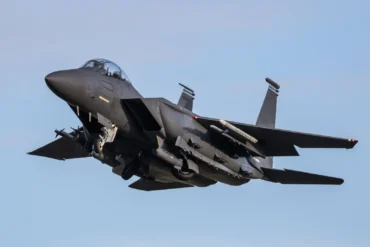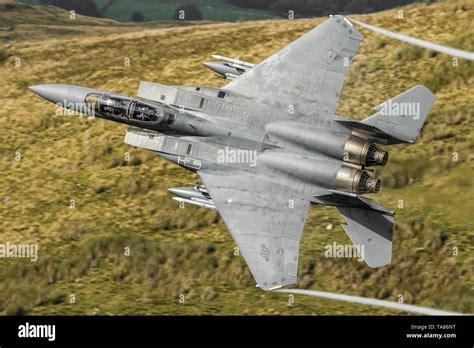
In one of the most breathtaking spectacles of modern military aviation, an F-15E Strike Eagle tore through the famed Mach Loop in Wales, leaving onlookers awestruck and cameras buzzing. The video, shared on Reddit’s r/aviation community, captures the American multirole strike fighter slicing through the narrow, winding valleys with precision and raw power—an unmistakable demonstration of both aerodynamic prowess and pilot skill.
F-15E strike eagle goes through the Loop.
by
u/Snoo99928 in
aviation
The Legendary F-15E Strike Eagle: A Powerhouse in the Sky
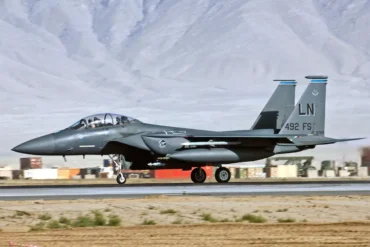
The F-15E Strike Eagle, developed by McDonnell Douglas (now Boeing), is an all-weather multirole strike fighter derived from the original F-15 air superiority aircraft. Unlike its predecessors, the Strike Eagle is designed to carry out deep strike missions, combining air-to-air dominance with air-to-ground lethality. It features conformal fuel tanks, terrain-following radar, and an array of smart munitions, making it a go-to aircraft for precision engagement far behind enemy lines.
With twin Pratt & Whitney F100-PW-229 engines, the F-15E can achieve speeds in excess of Mach 2.5, while still carrying heavy payloads. Its two-seat cockpit configuration allows for a pilot and a weapons systems officer (WSO), streamlining high-intensity missions that require multitasking between targeting and maneuvering.
Flying the Mach Loop: A Rite of Passage
The Mach Loop, also known as the Machynlleth Loop, is a series of valleys in Snowdonia National Park, Wales, where military pilots from around the world hone their low-level flying techniques. This training ground is iconic due to its public accessibility—aviation photographers and enthusiasts regularly perch on hilltops to catch stunning visuals of fighter jets zooming through the canyons, sometimes below eye level.
What makes the Mach Loop so revered is its challenging terrain. With sudden elevation changes, tight turns, and unpredictable weather, the area demands meticulous flight planning and real-time situational awareness. For an aircraft like the F-15E Strike Eagle to fly through the Loop with agility and finesse is a testament to both machine and aviator.
A Rare Treat: Catching the F-15E on Video
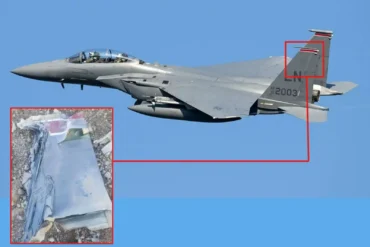
The video posted to Reddit is a prime example of aviation spotter serendipity. It captures a low-level pass at the 0:31 second mark that drew particular attention, as users debated whether the artwork on the airbrake was custom or part of a squadron insignia. While it remains unclear, many believe it to be a morale-boosting nose art often painted for deployments or commemorative flights.
In the comments, one user quipped: “I like to imagine airforces from around the world looking for reasons to get a posting to Lakenheath or Mildenhall, just so they can blast the Loop!” This sentiment reflects a broader fascination within military aviation circles about the chance to tackle this famed valley route.
RAF Lakenheath: Home of the Loop Warriors
The F-15E in the video likely hails from RAF Lakenheath, a key United States Air Force installation in the UK and home to the 48th Fighter Wing—also known as the Liberty Wing. It houses multiple F-15E squadrons, including the 492nd “Madhatters,” 493rd “Grim Reapers,” and 494th “Panthers.”
RAF Lakenheath’s proximity to the Mach Loop makes it a frequent contributor to its air traffic, especially for low-flying training missions. The base is strategically vital not only for the U.S. military presence in Europe but also for NATO interoperability and rapid-response capabilities across multiple theaters.
Technical Maneuvering: How the F-15E Owns the Loop
Flying through the Mach Loop isn’t just a show of speed. It’s about energy management, terrain following, and kinetic discipline. The F-15E, with its powerful engines and digital flight controls, excels at these maneuvers. Pilots descend into the loop at speeds upwards of 400 knots, throttling up just enough to maintain lift while hugging the terrain mere feet above the ground.
Flying such tight turns in a heavy fighter requires precise use of the aircraft’s flight control surfaces and variable geometry inlets, ensuring optimal engine performance at varying altitudes and airspeeds. The aircraft’s digital fly-by-wire systems assist with control responsiveness, giving the pilot immediate feedback and enhanced agility in constricted airspace.
Photographing the Thunder: Spotting Culture Around the Loop
Despite the intensity of these military exercises, spotters and aviation photographers around the Mach Loop have become part of its lore. Armed with long lenses, radios, and local knowledge, they track training schedules and flight chatter to predict when aircraft will make a pass.
Many of these spotters aren’t just hobbyists—they’re part of a robust network of enthusiasts who share information, maintain photography logs, and even provide feedback to aircrews. Some notable hilltops like Cad West, Cad East, and Bwlch Exit offer panoramic views of the action, allowing cameras to freeze these fleeting seconds of aviation art.
Why Low-Level Training Still Matters in the Jet Age
In the age of stealth bombers and high-altitude drones, some may question the relevance of low-level flight training. Yet, it remains vital for modern combat operations. Terrain masking—flying below radar detection thresholds—continues to be a primary method for penetrating hostile airspace, especially in contested environments where radar and surface-to-air missile systems dominate.
Additionally, low-level flight gives aircrews experience with visual navigation, target acquisition, and split-second decision-making—all indispensable when GPS systems are jammed or satellite-based communications are compromised. The F-15E’s capability to deliver precision strikes at low altitude, regardless of weather, makes it a lethal tool in complex combat scenarios.
Reddit and Viral Aviation Content: New Eyes on Old Traditions
The Reddit thread discussing the F-15E’s loop run underscores how digital platforms have changed how aviation feats are shared and appreciated. What was once the domain of niche forums or official military releases now gets instant visibility thanks to communities like r/aviation, where professionals and laypersons alike dissect frame-by-frame footage.
Comments ranged from admiration of the pilot’s finesse to curiosity about the aircraft’s configuration. One user asked whether these passes are scheduled—highlighting the mystique around catching such rare moments. In truth, while some training flights are posted in advance, many passes through the Loop are opportunistic and depend on mission needs, weather, and airspace availability.
Aerial Artistry Meets Combat Readiness
What makes this moment with the F-15E so compelling is that it straddles two worlds: the poetic and the tactical. The footage doesn’t just capture an aircraft flying fast—it encapsulates a legacy of engineering brilliance, pilot excellence, and the enduring allure of human flight within nature’s constraints.
The Strike Eagle’s presence in the Loop is more than a show—it’s a reminder that behind every roaring flyby is a pilot mastering a dangerous ballet, a machine pushed to its aerodynamic limits, and a strategy reaffirming the U.S. Air Force’s commitment to dominance in any domain.
Conclusion: The Loop Lives On
As long as aircraft like the F-15E Strike Eagle exist, and as long as the valleys of Snowdonia beckon, the Mach Loop will remain a rite of passage, a theater for elite training, and a living stage for aviation enthusiasts. This latest pass is more than viral content—it’s a reaffirmation of what makes aviation thrilling: power, purpose, and precision in motion.
Whether you’re watching from a hilltop or behind a screen, the sight of a Strike Eagle slicing through the Welsh mountains is a visceral reminder of the awe-inspiring capabilities of modern fighter aviation.