In the scorching vastness of Nevada’s desert, nestled among sun-baked rocks and boundless dust, lies a military installation that has become the epicenter of America’s most persistent and intoxicating modern mythology. Area 51 is where conspiracy theorists swear the government hides aliens, where unidentified flying objects vanish into the mountain haze, and where the line between national defense and science fiction blurs into near-legend. But what truly lies beneath the shimmering heat of the Nevada sands isn’t a crashed saucer—it’s a Cold War deception of astonishing scale, one engineered not by Martians, but by men.
A Desert Mirage: How Lies Took Flight
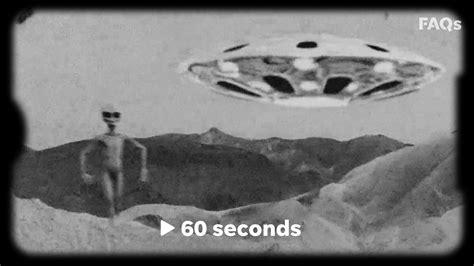
The origin of Area 51’s mythos dates back to the height of Cold War paranoia. As tensions escalated between the United States and the Soviet Union, so too did the race for aerial and technological superiority. In the 1980s, in a move both cunning and surreal, the U.S. military weaponized the public’s imagination. According to recently revealed documents and testimonies, U.S. Air Force officers were instructed to seed alien conspiracy theories in civilian spaces—including local bars near the base.
One striking example involves an Air Force colonel who casually left doctored photographs of UFOs with a bar owner, encouraging them to spread the word. The intent? To misdirect Soviet agents and journalists, steering them away from actual classified developments like the F-117 Nighthawk, the world’s first operational stealth fighter.
Instead of admitting to experimental jet programs, the government let the public chase glowing orbs and silver disks. The idea was simple: aliens were easier to swallow—and dismiss—than the truth.
Engineering Illusion: The True Origins of Area 51
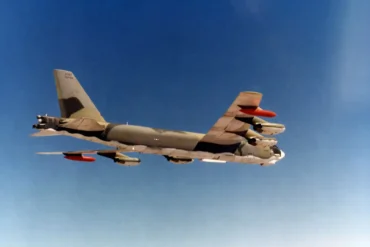
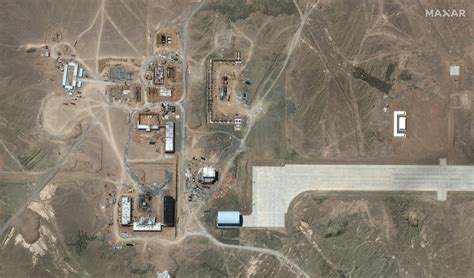
Officially designated as part of the Nevada Test and Training Range, Area 51 was established in 1955 for a very earthly purpose: to support the testing of the Lockheed U-2 reconnaissance aircraft. Over time, it became a secret haven for military aviation projects, birthing some of the most advanced planes in U.S. history—the SR-71 Blackbird, A-12 Archangel, and later the F-117.
But for the outside world, these innovations were cloaked in total silence. The CIA refused to even acknowledge Area 51’s existence until 2013, when documents about the U-2 program were released under a Freedom of Information Act request. For decades prior, the base was so secretive that it didn’t appear on maps and was only jokingly referred to as “Paradise Ranch”—a marketing ploy to attract engineers to a desolate stretch of desert.
By the time its existence was confirmed, the myths had already taken root too deeply. Secrecy bred speculation, and speculation evolved into folklore.
UFOs as a Smokescreen: Psychological Warfare in Plain Sight
When the Pentagon created the All-Domain Anomaly Resolution Office (AARO) in 2022, many hoped it would finally unravel decades of UFO lore. But what AARO’s findings exposed was something more sobering than aliens—it revealed how frequently UFO sightings were used as deliberate misdirection.
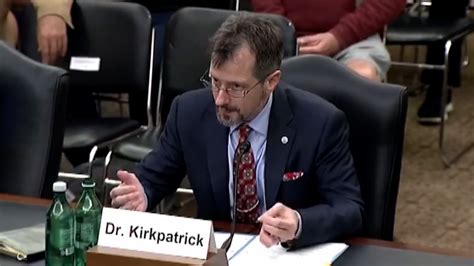
Dr. Sean Kirkpatrick, the AARO’s first director, uncovered multiple instances where the military fed the UFO frenzy to distract the public and foreign intelligence from secret projects. One such instance was Project Yankee Blue, an internal psychological operation in which new recruits were told about a non-existent division that investigated alien spacecraft. The recruits were ordered to keep quiet, unaware the story was entirely fabricated.
Even more chilling is the story of Robert Salas, a former Air Force captain who swore a UFO disabled ten nuclear missiles at a Montana base in 1967. According to AARO, the truth may have been more mundane—and more disturbing. Evidence points to a secret EMP vulnerability test, performed without notifying Salas or his team. He wasn’t silenced for witnessing aliens—he was kept in the dark about human technology.
The Lore That Escaped Control
Ironically, the success of the disinformation campaign became its greatest liability. What began as a clever camouflage for black-budget aerospace projects turned into a cultural leviathan. From “The X-Files” to Roswell tourism, Area 51 was no longer a base—it was a brand.
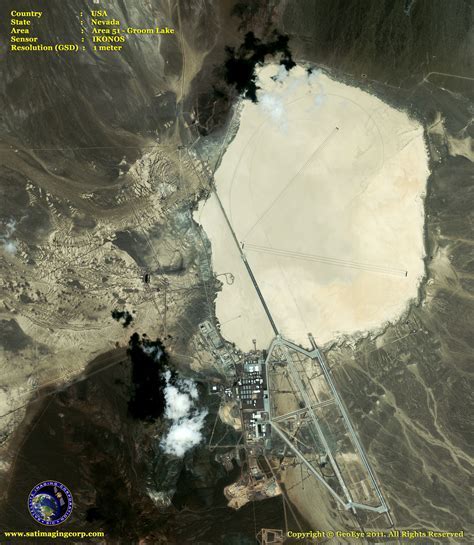
The government’s tight-lipped stance only added fuel to the fire. Satellite images showed strange airstrips. Security forces arrested trespassers. Civilian pilots reported lights and phenomena they couldn’t explain. This vacuum of verified information allowed the myth to flourish uncontrollably.
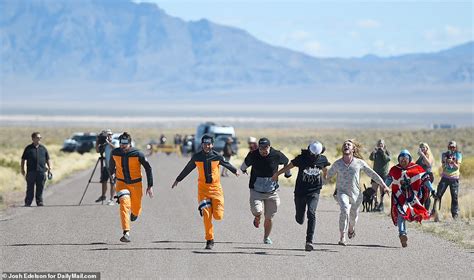
In 2019, the bizarre internet movement “Storm Area 51, They Can’t Stop All of Us” epitomized how far the narrative had spun. Millions clicked “attending” to the online joke, but hundreds actually traveled to Rachel, Nevada, prompting military warnings and elevated security. The public’s yearning to know the truth had crossed from curiosity to obsession.
Beneath the Legend: What Area 51 Actually Does
Despite the cloud of extraterrestrial intrigue, Area 51’s real purpose remains military and strategic. Historians and defense analysts agree the base has been indispensable in developing advanced aerospace technologies. The secrecy is not whimsical—it’s essential.
Multiple cutting-edge aircraft, drone systems, and classified surveillance technologies are believed to have been conceptualized or tested there. The airspace above Area 51 is a permanent no-fly zone, and ground access is strictly prohibited. Anyone approaching the perimeter risks arrest—or worse.
Though the CIA’s 2013 disclosures shed some light, many operations remain hidden. The facility’s layout, personnel, and projects are sealed behind layers of legal and physical security. It’s a fortress of knowledge, not because it holds alien corpses, but because it safeguards the blueprints to future warfare.
The Real Legacy: Fiction Built on Fact
The genius of the Area 51 myth lies in its duality: it’s both a cover and a mirror. By encouraging belief in the unbelievable, the government constructed a narrative that distracted, entertained, and protected. But in doing so, they underestimated the story’s power to evolve.
What started as Cold War misdirection grew into an enduring symbol of distrust in authority, a lightning rod for those seeking truth beyond government lines. The irony is unmistakable: the lie created to obscure secrets became a larger, more viral truth—one the architects of deception could no longer contain.
A Riddle Wrapped in Steel and Silence
So, are there aliens hidden in Nevada’s sands? Not likely. But there’s something just as compelling: a complex, decades-long psychological operation that reveals the depth of state secrecy and the vulnerability of public perception. The real mystery isn’t extraterrestrial—it’s how fiction was weaponized as truth.
Today, Area 51 remains a functioning military site, its runways humming with the ghostly echoes of experimental engines. Its gates stay locked, its skies empty of public aircraft, and its purpose still shrouded. But outside those gates, in every whispered theory and midnight road trip, the myth lives on.
And perhaps that’s the greatest testament to its power. The aliens were never real. The mystery always was.