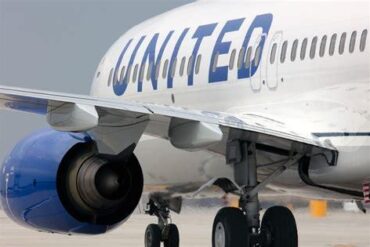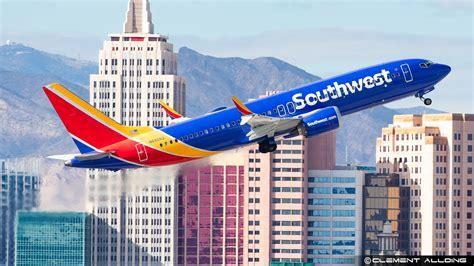
Southwest Airlines has launched a bold new chapter in its evolution, transitioning from a predominantly domestic low-cost carrier into a player with transatlantic reach. Without purchasing long-haul aircraft or altering its fundamental operating model, Southwest has inked a groundbreaking partnership with Turkish Airlines, enabling global connectivity through a seamless integration of their networks. This deal, effective January 2026, marks one of the most significant moves in the airline’s history.
A Transatlantic Leap Without Long-Haul Aircraft
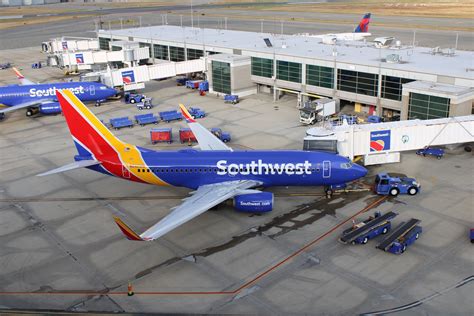
What sets this development apart is Southwest’s ability to expand globally without modifying its all-Boeing 737 fleet. Instead of investing in wide-body aircraft and new international bases, Southwest will leverage Turkish Airlines’ hub-and-spoke operation at Istanbul Airport (IST), one of the world’s most strategically located aviation crossroads.
Travelers booking through Turkish Airlines, select travel agents, or major platforms will be able to buy single-ticket itineraries, combining Southwest’s robust US network with Turkish Airlines’ long-haul flights across Europe, Asia, and Africa. This innovative strategy gives Southwest access to 350+ global destinations in 132 countries virtually overnight, without assuming the enormous operational risks of going it alone.
A Network Built on Hubs and Smart Connectivity
The partnership will focus on ten key US gateway airports that connect easily to Southwest’s short-haul domestic flights:
- Hartsfield-Jackson International Airport (ATL)
- Boston Logan International Airport (BOS)
- Chicago O’Hare International Airport (ORD)
- Denver International Airport (DEN)
- Detroit Metropolitan Wayne County Airport (DTW)
- Los Angeles International Airport (LAX)
- Miami International Airport (MIA)
- San Francisco International Airport (SFO)
- Seattle-Tacoma International Airport (SEA)
- Washington Dulles International Airport (IAD)
This hub-focused model means that smaller U.S. cities gain global access, routing passengers through a single connection rather than the traditional patchwork of domestic and international bookings. The efficiency of Turkish Airlines’ timed arrival and departure banks in Istanbul ensures a smooth transit to over three continents.
Strategic Growth with Minimal Capital Risk
The brilliance of this arrangement lies in its low-capital footprint. Southwest doesn’t need to purchase or lease new aircraft, train crews on long-haul operations, or establish maintenance infrastructure overseas. Instead, it plugs into a globally respected, full-service carrier already built to handle the demands of international travel.
For Turkish Airlines, the benefit is equally significant. Southwest’s dense domestic coverage across secondary and tertiary U.S. markets provides feeder traffic that fills long-haul flights originating in major cities. This creates a symbiotic ecosystem, optimizing both carriers’ load factors and yield without high marketing costs.
Customer Experience: A Unified Journey
A key feature of this partnership is the single-ticket experience, which simplifies travel for customers. Gone are the days of piecing together separate domestic and international segments. Now, travelers can:
- Book one itinerary from a regional U.S. airport to almost any global city
- Enjoy reduced connection times via strategic hubs
- Avoid rechecking baggage in most cases (details pending confirmation)
- Potentially earn loyalty points across both carriers (subject to program integration)
These changes elevate the experience, especially for leisure and small-business travelers who value convenience but can’t afford traditional premium fares.
What This Means for the Airline Industry
This announcement represents more than a network expansion—it signals a structural shift in how low-cost carriers may operate globally. Historically, budget airlines have thrived on point-to-point routes, often avoiding alliances and partnerships. Southwest, long known for its independence, now appears to be embracing selective collaboration as a growth vehicle.
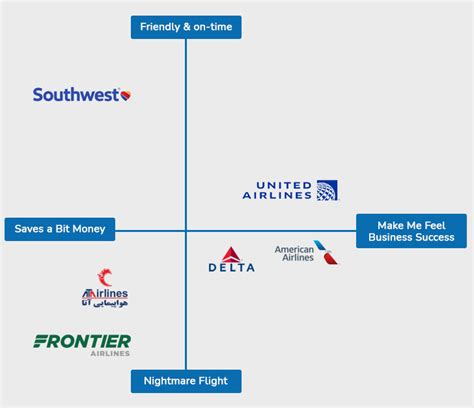
This move also challenges legacy carriers, particularly those in the U.S. like American, United, and Delta, who have built global connectivity through alliances like oneworld, Star Alliance, and SkyTeam. Southwest is forging a hybrid path, where its affordability model meets the full-service world through modular partnerships, without becoming an alliance member itself.
Timing and the 2026 Horizon
Set to launch in January 2026, the Southwest–Turkish Airlines collaboration provides time for both carriers to align systems, adjust schedules, and market their new offerings. Travelers should expect joint booking portals, potentially co-branded promotions, and clear travel documentation explaining transfer, baggage, and loyalty integration policies.
While many operational specifics remain under wraps—such as exact policies on flight disruptions, loyalty redemptions, and in-flight amenities—the foundation is unmistakably solid. Both carriers stand to gain from traffic diversification and higher asset utilization.
The Bigger Picture: Southwest’s New Identity
Southwest has historically built its brand on simplicity, affordability, and reliability. With this partnership, it ventures into new strategic territory: being a domestic super-connector to a global airline. By aggregating U.S. demand from underserved cities and pairing it with a powerful global hub like IST, Southwest is redefining what it means to be a low-cost carrier in the 21st century.
The move is reminiscent of code-share arrangements seen in Europe and Asia, where low-cost and full-service airlines partner to deliver unified experiences. The success of this model will hinge on customer satisfaction, seamless integration, and competitive pricing.
Could Long-Haul Aircraft Still Be in Southwest’s Future?
While Southwest executives have not announced any intention to acquire wide-body aircraft, this new venture raises the question: Will the airline eventually operate its own long-haul fleet? The market response to this partnership may influence future decisions. If passenger demand justifies it, and if Southwest wants to capture premium revenues from business travelers, a pivot toward Boeing 787s or Airbus A330s could someday enter the conversation.
For now, however, Southwest remains loyal to its Boeing 737 strategy, confident in its ability to create global value through smart partnerships rather than costly fleet expansion.
Conclusion: A New Era of Global Travel for U.S. Flyers
The Southwest-Turkish Airlines partnership is more than a business deal—it’s a disruptive force in the aviation industry. It offers travelers from smaller U.S. cities the ability to fly almost anywhere in the world through a single booking, without the high costs or logistical headaches traditionally associated with global air travel.
In doing so, Southwest Airlines has proven that agility, strategy, and collaboration can be as powerful as capital investment. As the world becomes more interconnected, this deal could set a new precedent for how low-cost carriers think about growth—not by going it alone, but by going global, together.