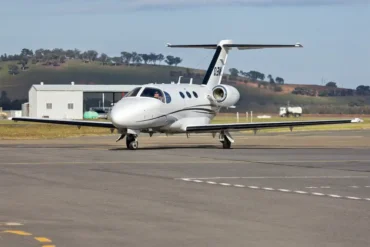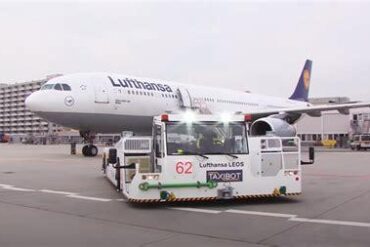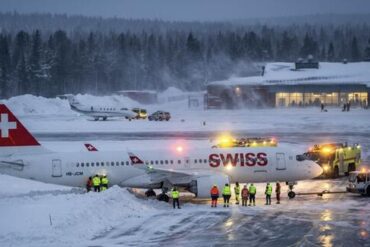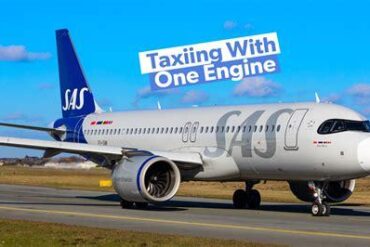
Taxiing refers to the movement of an aircraft on the ground at an airport, using its own power. This excludes take-offs and landings. For helicopters or vertical take-off and landing (VTOL) aircraft, air-taxiing is the term used when they hover above the ground, typically at speeds under 37 km/h (20 knots). Depending on the helicopter type, air-taxiing may require flying at heights above 8 meters (25 feet) to avoid turbulence from the ground effect.
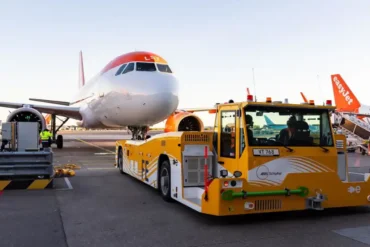
For departing aircraft, taxiing begins when the plane leaves its parking stand and ends when it reaches the runway holding position. Sometimes, this means moving along the active runway, a process known as backtracking. Depending on the airport layout, taxiing can start right after the aircraft has powered up. In some cases, a pushback maneuver is necessary before taxiing begins. For arriving aircraft, taxiing starts once the plane slows down sufficiently and continues until it reaches its designated parking area. Additionally, taxiing can also serve to reposition aircraft within the airport.
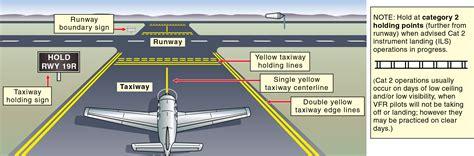
Before any taxi movement occurs, air traffic control (ATC) must grant a clearance. This requirement holds true even for movements taking place solely on the apron. Taxi clearances provide clear instructions to help pilots navigate correctly, avoid collisions, and prevent accidental entry onto an active runway. If a taxi clearance includes a limit beyond a runway, it must specify whether to cross that runway or to hold short of it.
Taxiing is not confined to taxiways; controllers may allow aircraft to taxi on runways to keep traffic flowing smoothly, provided it does not delay or pose a risk to other aircraft.
Several risks are associated with taxiing. These include ground collisions with other aircraft, vehicles, or obstacles, often caused by insufficient wingtip clearance or the sudden movement of another aircraft. For example, in Seville, Spain, in 2012, two B738 aircraft collided due to poor parking. Other incidents have occurred when vehicles failed to yield to aircraft or when taxiways were mistakenly identified as runways.
Runway incursions can happen if a taxi clearance is misunderstood or vague, leading to potential dangers. Air-taxiing can generate significant turbulence, especially with larger helicopters, adding to the risks.
Factors contributing to taxiing incidents often include confusing airport layouts, low visibility conditions such as fog or snow, distractions during communication, and inadequate procedures for pushback operations.
To reduce these risks, several strategies can be implemented. Enhancing equipment, developing effective procedures, and ensuring everyone remains vigilant are crucial. For instance, installing Surface Movement Radar (SMR) can improve situational awareness, especially in low visibility. Issuing departure clearances before taxi clearances helps minimize copying errors. Including explicit instructions regarding runway crossings in taxi clearances is also essential. Using progressive taxi instructions can aid pilots in complex airport layouts, and strict adherence to speed limits and right-of-way rules is vital. Lastly, small aircraft should be instructed to avoid taxiing too close to helicopters.