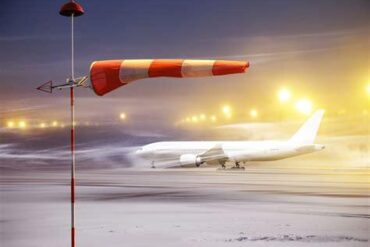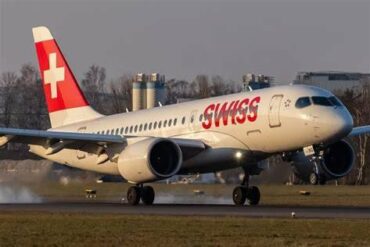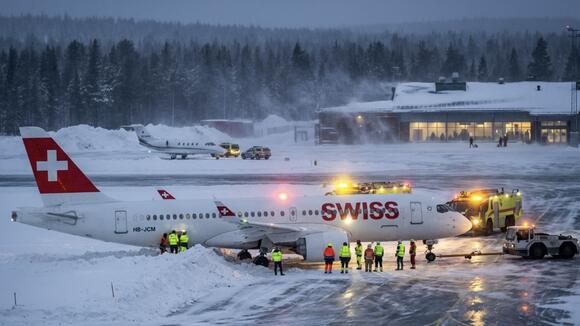
A SWISS Airbus A220-300, arriving in the icy grip of Lapland’s harsh winter, was swept into a snowbank by severe gusts shortly after landing at Kittilä Airport (KTT) in Northern Finland. The aircraft, operating as Flight LX8904 from Geneva Airport (GVA), was already stationary on the taxiway with its brakes applied when intense wind conditions overwhelmed the aircraft’s inertia and pushed it sideways into deep snow, sparking a logistical and operational ordeal that lasted several hours.
Landing in Lapland: A Harsh Winter Welcome
The Airbus A220-300, registered HB-JCM, carried approximately 150 passengers on the nearly four-hour journey to one of Finland’s most remote yet scenic destinations. As the aircraft touched down in Kittilä just after 4:00 pm local time, it appeared to land safely despite prevailing blizzard-like conditions. However, the calm was quickly broken. With wind speeds reported at 29 knots and gusts peaking at 41 knots, the aircraft—sitting stationary on the snow-slicked taxiway—was unable to resist a crosswind that forcefully pivoted the jet sideways, pushing it off-course and into a snowbank.
Three Hours Trapped Onboard Amid Arctic Winds
As snow flurried across the dimming arctic landscape and temperatures hovered near freezing, the aircraft remained stuck at the taxiway’s edge. For over three hours, passengers remained onboard. Airport ground crews and emergency services worked against the elements to dig the jet free and reposition it to a safe stand. The freezing conditions and heavy snow significantly hampered ground operations, as taxiing speeds were reduced to under three knots and braking action was degraded, making every movement a hazard.
A SWISS spokesperson confirmed the difficulty in a statement:
“After landing, the aircraft of flight LX8904 from Geneva to Kittilä was stationary on the taxiway with the brakes applied. A gust of wind turned it into a sideways position. After the wind calmed down, the aircraft was towed to stand, with a total taxi-in time of approximately three hours.”
“There was no danger to passengers or crew. Nevertheless, we deeply and sincerely regret the inconvenience caused to our passengers.”

Weather Chaos Disrupts Regional Operations
The chaos wasn’t limited to the Swiss narrowbody. Almost simultaneously, a private business jet arriving at Kittilä experienced a similar fate. Carrying ten people, it too was forced into a snowbank by high winds and required emergency assistance for recovery. The back-to-back incidents illustrate the relentless ferocity of arctic weather, which overwhelmed even robust aviation protocols and seasoned pilots.
Elsewhere on the tarmac, a waiting airBaltic jet was grounded as recovery operations unfolded. Meanwhile, an inbound Finnair flight aborted its approach altogether and returned to Helsinki, underlining the breadth of disruption caused by the storm system that gripped Northern Finland.
Passengers Disembark at 7:20 PM: Stairs vs. Storm
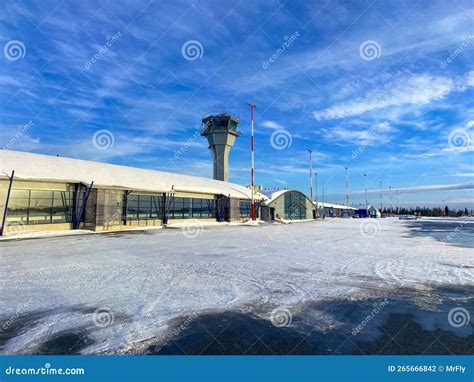
Once the A220 had been extricated from the snow and towed to the apron, the challenge shifted to safely disembarking the passengers. But the severe wind persisted, making the deployment of mobile stairs hazardous. Only after conditions stabilized could ground crews maneuver stairs into position, allowing disembarkation to begin at 7:20 pm—over three hours after the scheduled landing.
Passengers were reportedly calm but understandably fatigued, bundled in winter gear and peering out frost-covered windows as snowplows and tugs worked around the aircraft. Despite the long wait, there were no injuries reported, and all passengers and crew were safe.
Aircraft Details and Aftermath
The A220-300 involved is seven years old, having joined the SWISS fleet in 2018. According to Flightradar24 data, the aircraft remained at Kittilä Airport through the following day. Fortunately, no structural damage was reported from the incident, a testament to both the aircraft’s resilience and the pilots’ adherence to safety protocols during landing.
The return leg of the flight back to Geneva was initially delayed, and later canceled, leaving passengers and crew to rebook via alternate means or await further operational decisions. The winter storm continued to affect multiple carriers operating into and out of Lapland, further complicating recovery plans.
Understanding the Meteorological Risks
Lapland is no stranger to extreme weather. During winter, Kittilä regularly experiences sub-zero temperatures, whiteouts, and strong crosswinds exacerbated by the region’s open geography and surrounding mountainous terrain. Wind direction on the day of the incident nearly aligned with the runway orientation, intensifying the risk of lateral sliding during taxiing.
Aircraft on snowy runways face a trifecta of risk factors: reduced friction, poor braking, and sudden gusts. While airports like KTT are equipped to handle winter operations with de-icing rigs, plows, and friction testers, real-time wind shifts and whiteout conditions can still outpace response capabilities. This incident stands as a stark reminder that aviation in polar environments demands heightened vigilance and adaptable contingency plans.
Airport Response and Broader Operational Impact
Kittilä Airport’s ground teams were stretched thin, dealing not only with the SWISS A220 but also the private jet mishap and diverted flights. While local crews are trained for such occurrences, the simultaneous nature of the events underscored the logistical fragility of operating in low-infrastructure zones during extreme weather.
Flight operations in and out of Kittilä were halted for several hours, creating ripple effects across airline schedules in Finland and parts of Central Europe. With one runway, limited taxi routes, and modest ground support equipment, regional airports like KTT are especially vulnerable when multiple aircraft require simultaneous recovery.
Aviation Lessons From the Lapland Incident
The events at Kittilä serve as a learning opportunity for the global aviation community. The following insights are worth noting:
- Stationary aircraft are still vulnerable: Despite full brake application, severe wind can overpower lightweight narrowbodies, especially if the wind direction compromises lateral stability.
- Taxiway conditions require as much monitoring as runways: Operators and ATC must consider real-time braking performance not only on landing strips but also during ground movements.
- Airport emergency planning must scale for multi-aircraft incidents: Small airports need contingency resources for rare yet impactful events that affect more than one aircraft at once.
Ultimately, the safe outcome—no injuries, no damage—is a credit to the professionalism of the flight crew, ground personnel, and emergency responders. Yet it also reinforces the need for dynamic weather modeling, responsive infrastructure, and improved passenger contingency communication, particularly in destinations prone to volatile seasonal weather.