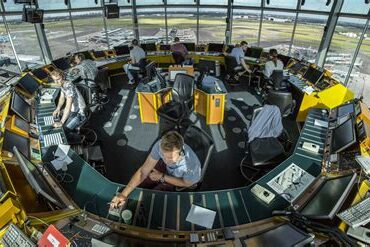
The ATC assistant, also known as a control assistant or flight data assistant, plays a key role in supporting air traffic controllers. While they do not have the authority to issue clearances or advice to aircraft, they perform various essential tasks that help ensure smooth operations in air traffic management. Their duties can range from routine activities to more complex ones that are not suitable for active controllers.
Depending on local circumstances, such as the level of automation, ATC assistants may work in a single sector or at a separate location, assisting all controllers in the operations room. Since the role of the ATC assistant is not clearly defined in ICAO documents, their responsibilities can differ significantly between countries and even among different air traffic service units within the same country.
Some common tasks assigned to ATC assistants include exchanging flight data with neighboring ATS units, fixing issues related to flight data, and manually entering flight plans that have not been automatically received. They also handle AFTN message exchanges and collect aeronautical data like NOTAMs and information about special use airspace. Additionally, they coordinate with neighboring sectors and prepare flight progress strips, either regularly or as a backup when automation fails.
It is important to note that ATC assistants are distinct from air traffic controllers. They do not provide air traffic services and typically communicate only with ground staff, not pilots. However, they must possess extensive knowledge of ATC procedures, air law, aircraft performance, and ATM equipment. Proficiency in radiotelephony phraseology is also essential for effective communication.